Introduction
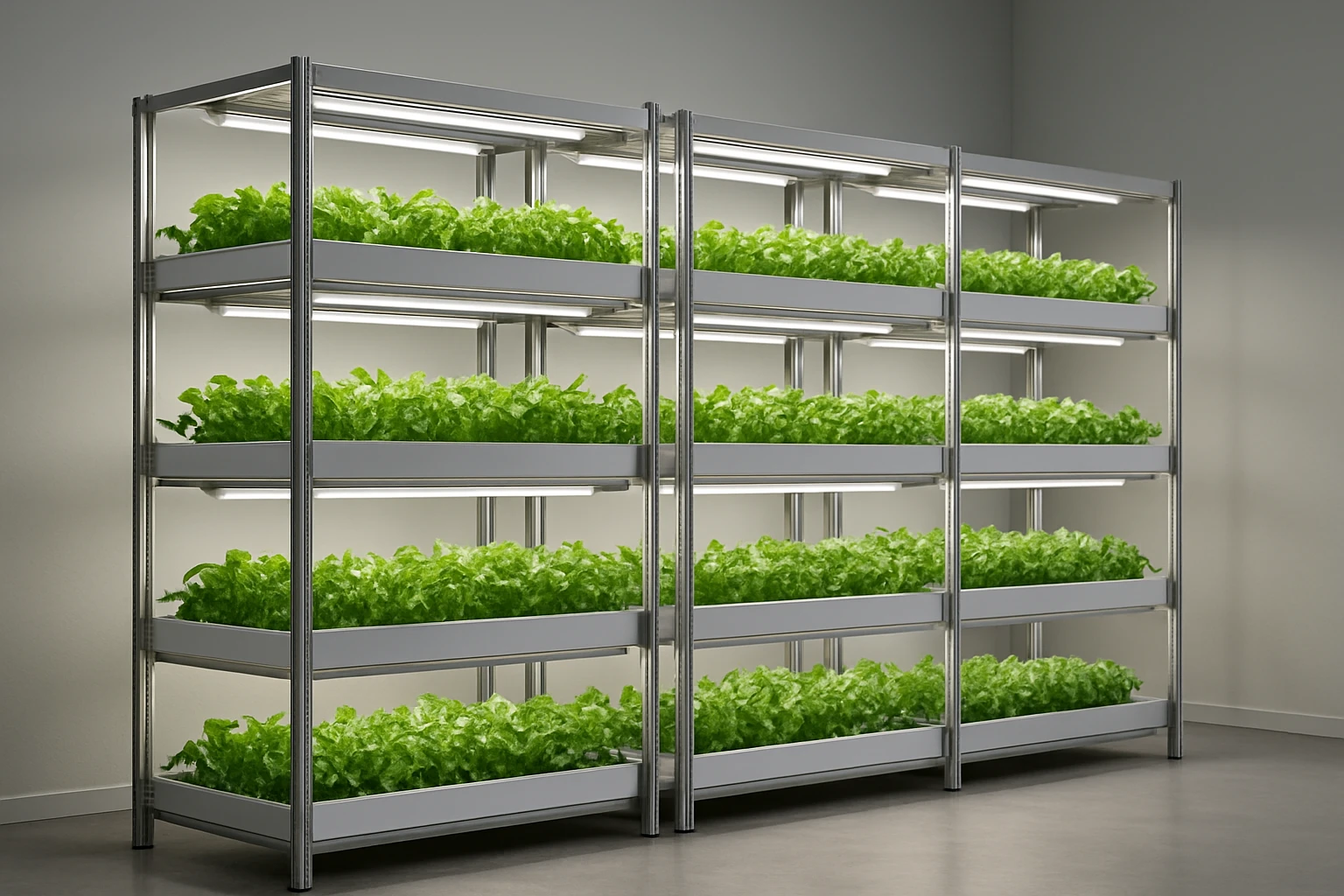
This guide provides a comprehensive overview of indoor vertical hydroponic rack design. Readers will learn foundational principles, step‑by‑step planning methods, space‑saving techniques, and strategies for maximizing yield. The article also recommends proven commercial systems that simplify construction and maintenance. By the end of the guide, one will possess the knowledge required to design, build, and operate an efficient vertical hydroponic rack in any indoor environment.
Background and Context
Hydroponics is a soilless cultivation method that delivers nutrients directly to plant roots via water. Vertical configurations exploit height rather than floor area, allowing a larger number of plants per square foot. The nutrient film technique (NFT) and aeroponic misting are common approaches, each requiring precise water flow and oxygenation. Understanding water circulation, light distribution, and plant spacing is essential before embarking on a rack design.
Key variables include pump capacity, timer settings, grow‑light spectrum, and the type of growing media. Selecting components that match the intended crop type—leafy greens, herbs, fruiting vegetables, or ornamental plants—determines overall productivity. The following sections break down each element and illustrate how commercial kits can accelerate implementation.
Designing the Rack Structure
The first step is to determine the available footprint and ceiling height. A typical residential kitchen offers 1 to 2 square meters of floor space and a ceiling clearance of 2.4 meters. By arranging PVC or metal frames vertically, one can host multiple tiers while preserving floor area for other activities.
Structural considerations include:
- Material durability: Food‑grade PVC‑U or stainless steel resists corrosion and is safe for consumable crops.
- Load distribution: Each tier must support the weight of water, growing media, and mature plants.
- Modularity: Interchangeable layers simplify cleaning and allow future expansion.
When planning the slope of NFT channels, a gradient of 1:40 (one inch drop per 40 inches of pipe) ensures continuous flow without pooling. Adjustable brackets enable fine‑tuning after installation.
Lighting Strategies for Vertical Systems
Full‑spectrum LED grow lights provide the wavelengths necessary for photosynthesis. Blue light promotes vegetative growth, while red and far‑red stimulate flowering and fruiting. For multi‑tier racks, independent light panels allow each level to receive customized photoperiods.
Recommended practice is a 12‑ to 18‑hour light cycle for leafy greens and a 14‑ to 16‑hour cycle for fruiting plants. Adjustable height mechanisms prevent light burn and enable optimal light intensity as plants mature.
Water Circulation and Nutrient Delivery
Effective circulation relies on a pump with appropriate flow rate (gallons per hour) and compatible tubing diameter. A timer that runs the pump for short intervals—such as five minutes every fifteen minutes—conserves energy while maintaining a thin nutrient film.
Systems that incorporate separate pumps for each tier improve redundancy; a failure in one pump does not halt the entire rack. Adding air stones or diffusers increases dissolved oxygen, which is critical for root health in NFT configurations.
Recommended Commercial Systems
While a custom rack can be fabricated from raw materials, several ready‑made kits simplify the process and provide proven performance.
For beginners seeking a modular, three‑layer design, VIVOSUN 3‑Layer 90‑Plant Hydroponic System offers 90 planting sites, a built‑in timer, and food‑grade PVC pipes. The system includes a water pump, timer, planting baskets, and a one‑year warranty. Users report yields of up to six pounds of lettuce per cycle, and the timer operates five minutes every thirty minutes by default. The kit is priced at $71.99 and holds a 4‑star rating from 1,288 reviews.
For growers requiring higher density within a small footprint, the DPROOTS 45‑Pod Hydroponic Tower System provides 45 planting positions in a 45‑inch tall tower that occupies only one square foot. It features a 59‑inch head pump, a 10‑liter water reservoir, and a timer for automated watering cycles. The tower is modular, allowing each layer to be removed for cleaning, and it is priced at $129.99 with a 4‑star rating from 36 reviews.
For larger indoor installations, the Lifello 36‑Spot Vertical Hydroponic Tower delivers 36 plant spots across nine layers. It includes an auto‑watering pump that runs five minutes every fifteen minutes and a 30‑liter base bucket for stability. The tower operates quietly and offers adjustable height. The price is $166.88 and it carries a 3.6‑star rating from 21 reviews.
For premium, multi‑tier solutions, the Growell 81‑Pod Vertical Hydroponic Garden features three tiers of 27 pods each, full‑spectrum 26‑watt LED panels, and three independent 14‑liter water tanks with auto‑circulating pumps. Dual light modes allow users to switch between vegetative and flowering settings, and the timer can be set from 12 to 23 hours. Although priced at $429.99, the system holds a 4.6‑star rating from 26 reviews and includes lockable casters for mobility.
Comparison and Selection Guide
| Feature | VIVOSUN 3‑Layer | DPROOTS 45‑Pod | Lifello 36‑Spot | Growell 81‑Pod |
|---|---|---|---|---|
| Plant Capacity | 90 | 45 | 36 | 81 |
| Footprint | ~2 ft² | 1 ft² | ~2.3 ft² | ~3 ft² |
| Water Reservoir | Integrated PVC channels | 10 L bucket | 30 L base bucket | Three 14 L tanks |
| Lighting | None (requires external lights) | None (requires external lights) | None (requires external lights) | Three 26 W full‑spectrum LEDs |
| Timer | Built‑in pump timer | Built‑in pump timer | Built‑in pump timer | Adjustable 12‑23 h timer |
| Price | $71.99 | $129.99 | $166.88 | $429.99 |
| Average Rating | 4/5 (1,288 reviews) | 4/5 (36 reviews) | 3.6/5 (21 reviews) | 4.6/5 (26 reviews) |
Choosing the appropriate system depends on three primary factors: available space, desired yield, and budget. For hobbyists with limited floor area, the DPROOTS tower offers the highest density per square foot. For users who prioritize modularity and easy maintenance, the VIVOSUN kit provides a straightforward three‑layer layout. Larger households seeking continuous harvests and integrated lighting will benefit most from the Growell solution.
Best Practices and Optimization Tips
- Maintain a consistent nutrient solution temperature between 18 °C and 22 °C to promote optimal root metabolism.
- Monitor pH daily; a range of 5.5 to 6.5 is ideal for most leafy greens and herbs.
- Implement a weekly flush with plain water to prevent salt buildup in the reservoir.
- Use rockwool cubes or high‑density sponge plugs for seedling stability; they retain moisture while allowing oxygen exchange.
- Periodically inspect pump tubing for clogs; replace sections that show wear to avoid flow interruptions.
- Adjust light height as plants grow to maintain a 30‑40 cm distance for seedlings and 15‑20 cm for mature foliage.
Applying these practices reduces the risk of root rot, nutrient deficiencies, and uneven growth. Combining proper water management with precise lighting schedules yields the fastest growth rates, often three times faster than conventional soil cultivation.
Frequently Asked Questions
What is the ideal pump flow rate for a 90‑plant vertical system?
A pump delivering 80 GPH (gallons per hour) or less provides sufficient flow for NFT channels without creating excessive turbulence. The VIVOSUN system recommends a pump within this range.
Can I use the same nutrient formula for leafy greens and fruiting vegetables?
Leafy greens thrive on a nitrogen‑rich solution, while fruiting plants require higher potassium and phosphorus. It is advisable to switch formulas when transitioning between crop types.
How often should I replace the grow lights?
LED panels retain usable intensity for 30 000 to 50 000 hours. For a typical 16‑hour daily schedule, replacement is expected after 5 to 8 years.
Is it necessary to have a separate air pump?
Air stones increase dissolved oxygen, which is beneficial for NFT systems. While not mandatory, an air pump improves root health and can prevent stagnation during pump downtime.
What safety measures should I observe when using electrical components indoors?
All equipment must be rated for indoor use, with grounded outlets and surge protectors. Keep water reservoirs away from direct contact with cords to prevent electrical hazards.
Conclusion
Indoor vertical hydroponic rack design merges engineering precision with horticultural science. By understanding water flow, lighting, and structural requirements, one can create a high‑yield system that maximizes limited space. Commercial kits such as the VIVOSUN 3‑Layer, DPROOTS 45‑Pod, Lifello 36‑Spot, and Growell 81‑Pod provide reliable foundations, while best‑practice guidelines ensure long‑term success. Whether cultivating fresh herbs for a kitchen garden or scaling production for a small business, the principles outlined in this guide enable efficient, sustainable indoor farming.
Products Featured in This Guide
VIVOSUN 3‑Layer 90‑Plant Hydroponic System
Price: $71.99 | Rating: 4/5 (1,288 reviews)
Featured for its affordable three‑layer design, built‑in timer, and high plant capacity suitable for beginners and small‑scale growers.
DPROOTS 45‑Pod Hydroponic Tower System
Price: $129.99 | Rating: 4/5 (36 reviews)
Featured for its vertical footprint, powerful water circulation, and modular design that enables rapid assembly and cleaning.
Lifello 36‑Spot Vertical Hydroponic Tower
Price: $166.88 | Rating: 3.6/5 (21 reviews)
Featured for its nine‑layer configuration, auto‑watering pump, and quiet operation suitable for home and educational settings.
Growell 81‑Pod Vertical Hydroponic Garden
Price: $429.99 | Rating: 4.6/5 (26 reviews)
Featured for its three‑tier, 81‑pod capacity, integrated full‑spectrum LED lighting, and dual‑mode timer that supports advanced indoor horticulture.