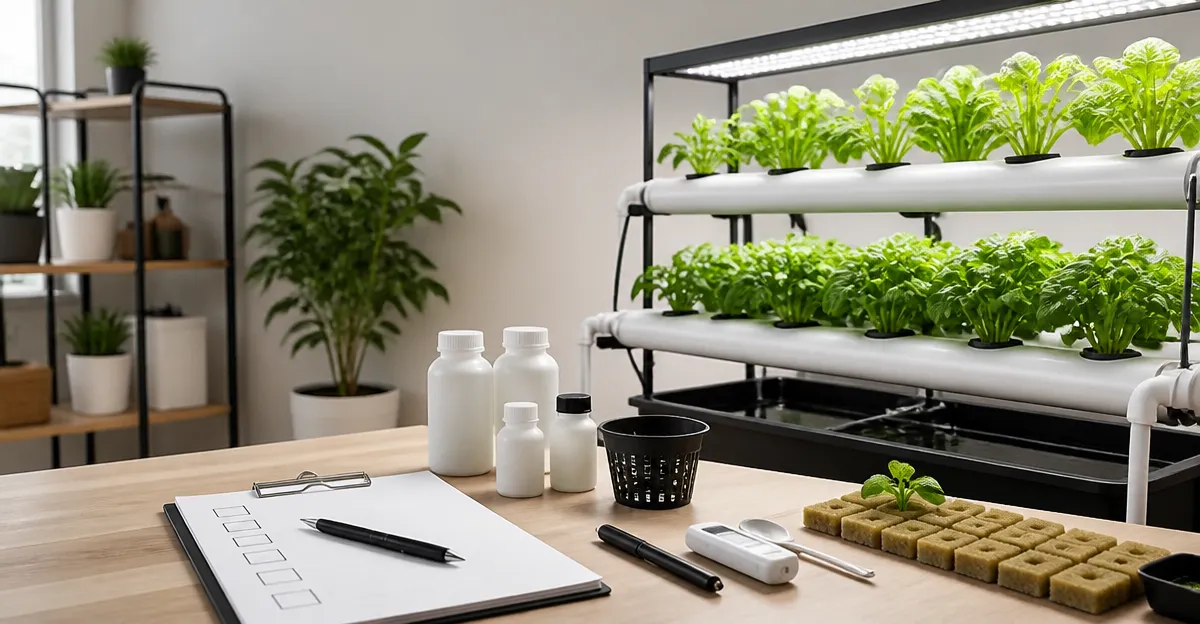
How to Start an Indoor Hydroponic System: A Step‑By‑Step Startup Checklist for New Homeowners
Introduction
One will discover the essential concepts of indoor hydroponics, a soil‑free method that delivers nutrients directly to plant roots. This guide explains why hydroponics offers faster growth, higher yields, and year‑round cultivation in limited spaces. Readers will learn how to select equipment, assemble a functional system, and maintain healthy plants without overwhelming technical jargon. By following the checklist, a new homeowner can create a reliable garden that enhances indoor air quality and provides fresh produce.
What You’ll Need
- Growing container or reservoir (plastic tote, bucket, or commercial kit)
- Hydroponic nutrient solution
- Air pump and air stone for oxygenation
- pH test kit and adjustment solutions
- LED grow lights with full‑spectrum output
- Net pots, growing medium (rockwool or coco coir), and seedlings
- Measuring tools (scale, measuring cups) and timer for lights
These items constitute the core toolkit; optional accessories such as temperature controllers or CO₂ injectors can be added later as the system expands.
Step 1 – Assess Space and Light Availability
One should begin by measuring the intended location, ensuring at least 3‑4 feet of vertical clearance and sufficient electrical outlets for lighting and pumps. Natural daylight can supplement LED fixtures, but a dedicated light source is essential for consistent growth. The Beginner's Guide to Hydroponic Growing System provides a concise overview of space planning, including diagrams that illustrate optimal shelf arrangements. This paperback costs $7.99, holds a perfect 5‑star rating from two reviewers, and offers step‑by‑step illustrations that simplify layout decisions.
After confirming the space, one should draft a simple floor plan indicating where the reservoir, pump, and lights will reside. Keeping the system near a window reduces the need for supplemental lighting in the early stages, while a stable temperature zone prevents root shock. Ensure that the chosen area can support the weight of water‑filled containers, typically 8‑10 pounds per gallon.
Step 2 – Choose a Hydroponic System Type
There are several system designs, including nutrient film technique (NFT), deep water culture (DWC), and ebb‑and‑flow. For beginners, DWC offers the simplest setup: a reservoir filled with nutrient solution and an air stone that oxygenates the roots. The Hydroponic Gardening Secrets explains the advantages of each method, allowing one to match the system to available space and desired crops. Priced at $11.99 with a 4.6‑star rating from ten reviewers, the book includes a comparison chart and troubleshooting tips that reduce trial‑and‑error.
When selecting a system, consider the plant types you intend to grow. Leafy greens thrive in NFT because of rapid nutrient flow, while fruiting plants such as tomatoes benefit from DWC’s larger root zone. Write down the chosen design alongside required components, so the subsequent shopping list remains organized.
Step 3 – Assemble the Reservoir and Aeration Equipment
Begin by cleaning the reservoir with a mild bleach solution (one tablespoon per gallon) and rinsing thoroughly to prevent contamination. Install the air stone at the bottom of the tank, then connect it to the air pump using tubing; this ensures dissolved oxygen levels remain above 5 mg/L, which is critical for root health. The Beginner’s Guide to Hydroponics and Aeroponics audiobook, available free of charge, offers a narrated walkthrough of assembly, emphasizing safety checks such as secure pump placement and leak testing. Although the audio format does not have a physical price, it boasts a 4.9‑star rating from over three hundred listeners, indicating high instructional quality.
After assembling the aeration system, fill the reservoir with water and add the recommended dose of hydroponic nutrients, following the manufacturer’s chart. Use the pH test kit to adjust the solution to a range of 5.5‑6.5, which maximizes nutrient uptake. Record the initial pH and EC (electrical conductivity) values; these metrics will serve as baselines for future adjustments.
Step 4 – Install Lighting and Set a Growth Schedule
LED grow lights should be positioned 12‑18 inches above the plant canopy, providing 18‑24 hours of light for vegetative growth and 12‑14 hours for flowering phases. Connect the lights to a programmable timer to maintain consistent photoperiods, which stabilizes plant hormone cycles. The previously mentioned guidebooks include recommended light intensities measured in µmol·m⁻²·s⁻¹ for various crops, allowing one to fine‑tune the setup without purchasing additional equipment.
Before turning on the lights, verify that the electrical circuit can handle the wattage; most residential outlets support up to 15 amps, equivalent to roughly 1800 watts. Start with a lower intensity for seedlings and gradually increase as the plants mature. Monitor leaf coloration; yellowing may indicate insufficient light or nutrient imbalance, prompting a quick review of the guide’s diagnostic tables.
Step 5 – Transplant Seedlings and Begin Ongoing Maintenance
Place seedlings into net pots filled with a sterile growing medium, then lower the pots into the nutrient solution so that the roots contact the water. Ensure that the medium remains moist but not waterlogged, as excessive saturation can lead to root rot. The Beginner's Guide to Hydroponic Growing System provides a detailed planting chart that matches seedling age to optimal root immersion depth.
Maintenance tasks include daily visual inspections, weekly pH and EC checks, and monthly solution replacement to prevent salt buildup. Clean the reservoir and air stone every two weeks to avoid biofilm formation. By keeping a logbook, one can track growth rates and adjust nutrient concentrations, ultimately improving harvest yields.
Tips & Pro Tips
- Use distilled or reverse‑osmosis water to eliminate unwanted minerals that may interfere with nutrient balance.
- Rotate plant positions weekly to ensure uniform light exposure and prevent leaning.
- Incorporate a small fan to improve air circulation, reducing the risk of fungal diseases.
- Start with fast‑growing lettuce or herbs; their short life cycle provides rapid feedback on system performance.
Advanced growers often add a calibrated CO₂ injector to boost photosynthesis, but beginners should master basic nutrient and pH management first.
Troubleshooting
| Problem | Possible Cause | Solution |
|---|---|---|
| Yellowing leaves | Low nutrient concentration or pH out of range | Check EC and pH; adjust nutrient dosage or add pH up/down solution. |
| Root rot | Insufficient oxygen or stagnant water | Increase air pump flow, replace solution, and clean air stone. |
| Stunted growth | Inadequate light intensity | Raise lights closer to canopy or increase wattage. |
Refer to the troubleshooting chapters in the guidebooks for additional symptom charts and step‑by‑step remedies.
Conclusion
One now possesses a clear, actionable checklist for launching an indoor hydroponic garden, from space assessment to ongoing maintenance. By employing the recommended resources, a new homeowner can avoid common pitfalls and achieve consistent, high‑quality harvests. The knowledge gained also empowers one to experiment with advanced techniques such as aeroponics or automated dosing. Begin today, and experience the satisfaction of fresh, home‑grown produce all year round.
Products Mentioned in This Guide
Beginner’s Guide to Hydroponics and Aeroponics
Price: $0.00 (Free Audible) | Rating: 4.9/5 (307 reviews)
Frequently Asked Questions
What equipment is essential for a beginner indoor hydroponic system?
You need a reservoir, nutrient solution, air pump with stone, pH test kit, full‑spectrum LED lights, net pots with a growing medium, and a timer.
How do I choose the right LED grow lights for indoor hydroponics?
Select full‑spectrum LEDs that match the plant’s light intensity needs (generally 30–50 watts per square foot) and provide adjustable height and timer control.
Why is monitoring pH important and how often should I check it?
Correct pH (5.5–6.5 for most crops) ensures nutrient uptake; test the solution daily and adjust as needed.
What are the best growing media for starter seedlings?
Rockwool and coco coir are popular because they retain moisture, provide good aeration, and support healthy root development.
How can I maintain oxygen levels in the nutrient solution?
Run an air pump with an air stone continuously, and consider adding a water chiller or circulation pump to keep the solution cool and well‑oxygenated.