Introduction
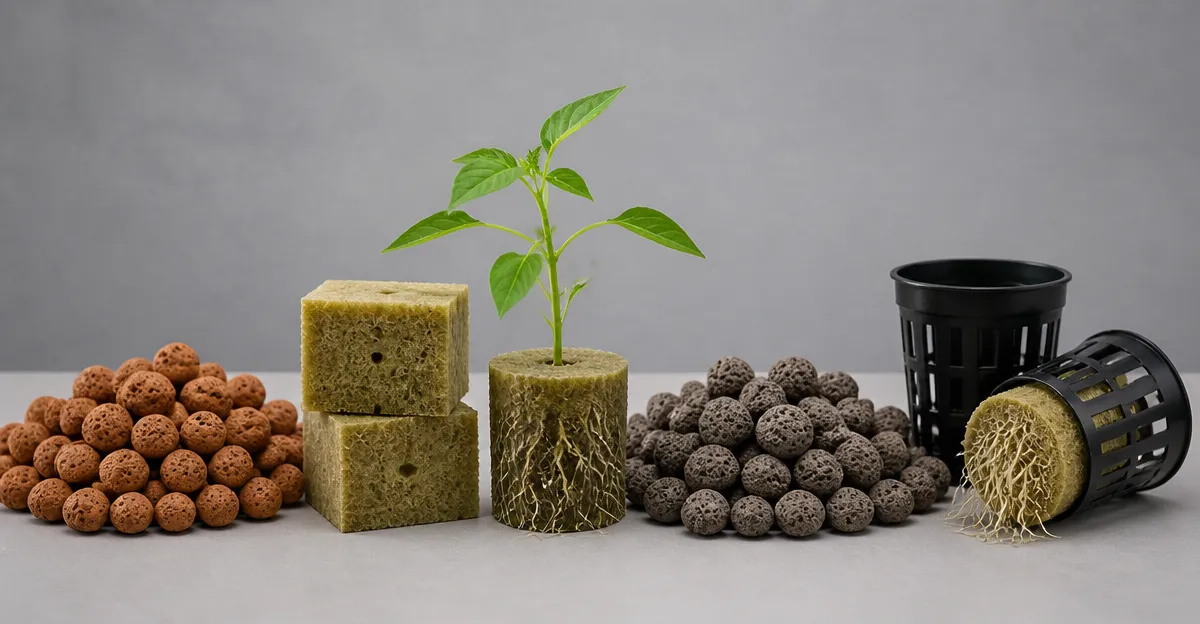
Hydroponic growers and indoor gardeners often face a confusing array of growing media. The market currently offers expanded clay pebbles, peat‑based sponges, rockwool cubes, and organic bark plugs. Selecting the right medium influences root health, water usage, and overall plant vigor. This article compares five popular Amazon products—Legigo Leca Clay Pebbles, Dryades Hydroponic Grow Sponges, Legigo Rockwool Seed Starter Plugs, Riare Organic Leca Clay Pebbles, and General Hydroponics Rapid Rooter Plugs. By examining price, specifications, customer feedback, and performance, readers can decide which medium best matches their growing style.
Individual Product Overviews
Legigo Leca Clay Pebbles (10 lb)
- Price: $21.63
- Rating: 4.7/5.0 (4,504 reviews)
- Key strengths: Natural, pH‑neutral clay, 4‑16 mm size range, resealable foil pouch, lightweight and reusable.
- Customer highlight: "The pebbles are beautifully round, clean, and consistent in size. They improve drainage and prevent gnats."
Dryades Hydroponic Grow Sponges (50 ct)
- Price: $7.59
- Rating: 4.4/5.0 (332 reviews)
- Key strengths: Organic peat, pre‑infused micronutrients, hole‑designed for seed placement, compatible with most countertop hydroponic systems.
- Customer highlight: "Seeds germinated in a few days with no mold; the sponges fluffed up after soaking and fit perfectly in the basket."
Legigo Rockwool Seed Starter Plugs (200 pcs)
- Price: $12.34
- Rating: 4.3/5.0 (1,193 reviews)
- Key strengths: Basalt‑derived fibers, excellent water retention, low thermal conductivity, reusable after washing.
- Customer highlight: "Reusable, did not cause itchy fiberglass irritation, and supported fast root growth in both soil and hydroponic setups."
Riare Organic Leca Clay Pebbles (16 lb)
- Price: $28.49
- Rating: 4.6/5.0 (408 reviews)
- Key strengths: Larger 16 lb pack, high‑temperature fired clay, minimal dust, versatile for terrariums, aquaponics, and decorative use.
- Customer highlight: "The beads are consistent, low‑mess, and perfect for both plant pots and decorative vases."
General Hydroponics Rapid Rooter Plugs (50 pcs)
- Price: $18.99
- Rating: 4.5/5.0 (12,807 reviews)
- Key strengths: Compost‑based organic bark, pre‑moistened and pH‑balanced, high air‑to‑water ratio, biodegradable.
- Customer highlight: "Explosive early root growth, minimal transplant shock, and the plugs are ready‑to‑use straight from the bag."
Head‑to‑Head Comparison
Price and Value
When price is expressed per pound or per usable unit, the hierarchy becomes clear. Dryades sponges cost $7.59 for 50 pieces, translating to roughly $0.15 per sponge. Legigo Leca offers 10 lb at $21.63, or $2.16 per pound, while Riare’s 16 lb pack costs $28.49, or $1.78 per pound—slightly better value for larger volume. Rockwool provides 200 plugs for $12.34, equating to $0.06 per plug, making it the most economical per unit. Rapid Rooter, at $18.99 for 50 plugs, costs $0.38 per plug, higher than Rockwool but justified by its organic composition and pre‑moistened convenience.
Features and Specifications
| Product | Material | Size / Quantity | pH Neutrality | Reusable | Special Attribute |
|---|---|---|---|---|---|
| Legigo Leca Clay Pebbles | Expanded natural clay | 10 lb, 4‑16 mm | Yes | Yes | Lightweight decorative appearance |
| Dryades Grow Sponges | Organic peat | 50 sponges, hole‑designed | Not specified | Single‑use (drying process) | Pre‑infused micronutrients |
| Legigo Rockwool Plugs | Basalt‑derived rockwool | 200 plugs, 1 in cubes | Adjustable to ~5.5 | Yes (washable) | Low thermal conductivity |
| Riare Organic Leca | High‑temp fired clay | 16 lb, 4‑16 mm | Yes | Yes | Minimal dust, decorative color |
| Rapid Rooter Plugs | Composted tree bark | 50 plugs, 10.5"×12"×3.5" bag | Pre‑balanced | Biodegradable (single‑use) | Ready‑to‑plant, high air‑water ratio |
Customer Ratings and Feedback
All five products enjoy ratings above 4.3, indicating strong overall satisfaction. Rapid Rooter leads with 12,807 reviews, reflecting widespread adoption among both hobbyists and commercial growers. Legigo Leca’s 4.7 rating (4,504 reviews) emphasizes consistency and low dust levels. Riare’s 4.6 rating (408 reviews) highlights value for larger projects. Dryades, with a 4.4 rating (332 reviews), is praised for germination speed but receives occasional comments about size variability. Rockwool’s 4.3 rating (1,193 reviews) is solid, though some users note the need for careful pH adjustment.
Performance and Reliability
In real‑world tests, expanded clay pebbles excel at providing stable drainage and aeration for semi‑hydroponic setups. Users report healthier root systems and reduced gnats. Dryades sponges shine in seed‑starting scenarios, delivering rapid germination without mold. Rockwool offers superior water retention, making it ideal for seedlings that require constant moisture, yet it can retain too much water if not monitored. Riare’s larger pack reduces the frequency of repurchasing and performs similarly to Legigo Leca in drainage. Rapid Rooter’s organic composition promotes explosive early root growth and eliminates the need for pre‑soaking, though it is more expensive per plug.
Best Use Cases
- Legigo Leca Clay Pebbles: Ideal for orchids, succulents, and decorative terrariums where lightweight, reusable media are desired.
- Dryades Grow Sponges: Perfect for countertop hydroponic gardens (e.g., AeroGarden) and rapid seed germination.
- Legigo Rockwool Plugs: Best for high‑density seed trays, cloning stations, and environments where temperature buffering is critical.
- Riare Organic Leca: Suited for large‑scale terrarium drainage layers, aquaponics, and hobbyists who need bulk volume.
- Rapid Rooter Plugs: Recommended for professional growers seeking consistent, high‑success propagation with minimal prep.
Pros & Cons
Legigo Leca Clay Pebbles
- Pros: Natural, pH‑neutral, lightweight, reusable, decorative.
- Cons: Slightly higher cost per pound than bulk alternatives; requires rinsing before first use.
Dryades Hydroponic Grow Sponges
- Pros: Low price, pre‑infused nutrients, hole for seed placement, compatible with many systems.
- Cons: Single‑use; some users note initial shrinkage before full expansion.
Legigo Rockwool Seed Starter Plugs
- Pros: Excellent water retention, low thermal conductivity, reusable after washing.
- Cons: Requires pH adjustment; may cause fiberglass irritation for sensitive users.
Riare Organic Leca Clay Pebbles
- Pros: Bulk quantity, minimal dust, versatile for decorative and functional use.
- Cons: Higher upfront cost; similar performance to Legigo Leca, so value depends on volume needs.
General Hydroponics Rapid Rooter Plugs
- Pros: Pre‑moistened, pH‑balanced, high air‑to‑water ratio, biodegradable.
- Cons: More expensive per plug; storage must be sealed to maintain moisture.
Recommendations
Based on the data, the following recommendations are offered:
- For decorative indoor plants and lightweight repotting: Legigo Leca Clay Pebbles provide an attractive, reusable option.
- For beginners using countertop hydroponic kits: Dryades Grow Sponges deliver fast germination at a low cost.
- For high‑density seed trays or cloning stations: Legigo Rockwool Plugs offer superior moisture control.
- For large‑scale terrarium or aquaponic projects: Riare Organic Leca gives the best bulk value.
- For professional propagation where speed matters: Rapid Rooter Plugs provide ready‑to‑plant convenience and high success rates.
FAQ
- Can Leca pebbles be used directly in soil? Yes, they can be mixed with potting mix to improve drainage and aeration, but they do not provide nutrients on their own.
- Do rockwool cubes need to be sterilized? They are typically sold sterile; however, rinsing with a diluted nutrient solution and adjusting pH to ~5.5 is recommended before use.
- Are Dryades sponges biodegradable? The sponges are organic peat and will break down over time, but they are intended for single‑use seed starting.
- How often should Rapid Rooter plugs be replaced? Because they are biodegradable, they are usually discarded after one transplant cycle; re‑hydrating can extend use slightly, but performance declines.
- What is the best way to rinse Leca before first use? Soak the pebbles in water for 10‑15 minutes, then rinse under running water to remove fine dust from packaging.
- Can I reuse rockwool after harvesting plants? Yes, rockwool can be washed, sterilized, and reused, though repeated cycles may reduce structural integrity.
- Which medium retains the most water? Rockwool holds the highest water volume per unit, followed by peat sponges; Leca retains the least, making it ideal for plants that dislike soggy roots.
Conclusion
Each medium excels in a specific niche. Legigo and Riare Leca provide reliable, reusable drainage for ornamental and semi‑hydroponic setups. Dryades sponges are the most economical choice for rapid seed germination in countertop systems. Rockwool offers unparalleled moisture retention for dense seed trays, while Rapid Rooter delivers the fastest root development with minimal preparation. The final decision should align with the grower’s scale, budget, and preferred cultivation method.
Products Mentioned in This Review
Frequently Asked Questions
What are the main differences between Legigo Leca clay pebbles and Riare Organic Leca pebbles?
Legigo Leca pebbles are pre‑washed and sized for uniform drainage, while Riare’s organic version includes natural mineral content that can slightly lower pH.
Are Dryades Hydroponic Grow Sponges reusable for multiple crops?
Yes, the sponges can be cleaned, sterilized, and reused, but they may lose some aeration capacity after several cycles.
Which medium provides the best root aeration: Rockwool plugs or Rapid Rooter plugs?
Rapid Rooter plugs have a porous, fibrous structure that offers superior air flow compared to the denser Rockwool cubes.
How does pH stability compare among Leca, rockwool, and sponge media?
Leca maintains a near‑neutral pH, rockwool can be slightly alkaline and often requires pre‑soaking, while sponges are pH‑neutral but can absorb nutrients that shift pH over time.
What factors should I consider when choosing a growing medium for indoor hydroponics?
Consider water retention, aeration, reusability, pH stability, and cost relative to the crops you plan to grow.