Introduction
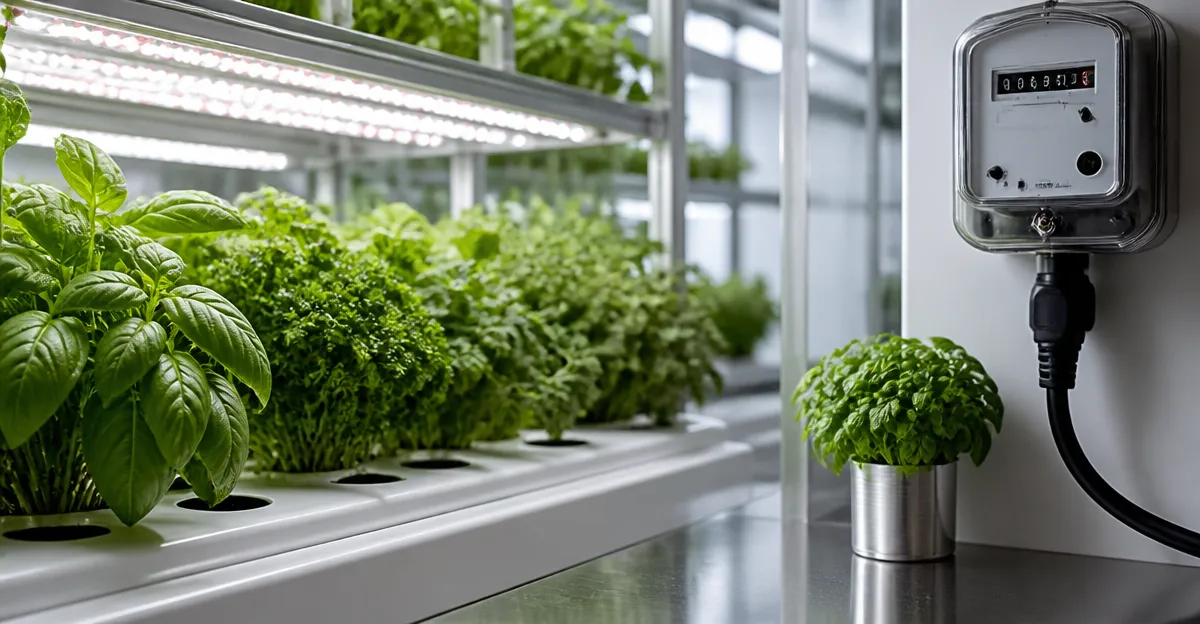
This guide explains how to measure the energy intensity of hydroponic herb production in kilowatt‑hours per pound. Readers will learn to calculate energy use, compare systems, and apply cost‑saving tactics while maintaining high yields. The article also recommends five Amazon products that simplify measurement and improve efficiency. By the end of the guide, growers will be able to make data‑driven decisions that protect the wallet and the environment.
Background
Hydroponics replaces soil with nutrient‑rich water, allowing plants to grow faster and with less water. However, artificial lighting, pumps, and climate control consume electricity. Energy consumption is typically expressed as kilowatt‑hours (kWh), the amount of power used over one hour. When this figure is divided by the harvested weight, growers obtain a metric known as kWh per pound. This metric enables direct comparison between indoor farms, greenhouse setups, and traditional soil gardens.
Understanding kWh per pound is essential for two reasons. First, it reveals hidden operating costs that can erode profit margins. Second, it highlights opportunities to reduce carbon footprints by optimizing lighting schedules, pump cycles, and temperature regulation. The following sections break down the calculation process and provide actionable strategies.
Understanding kWh per Pound
Energy use in a hydroponic system can be divided into three primary categories: lighting, water circulation, and climate control. Lighting usually dominates, accounting for 60‑80 % of total consumption. Water pumps and aeration devices consume modest power, while heaters or coolers add variable loads depending on ambient conditions. To compute kWh per pound, growers must first record total kWh over a defined period, then measure the total harvested weight during the same interval.
For example, a 24‑hour LED fixture rated at 150 W uses 3.6 kWh per day (150 W ÷ 1000 × 24 h). If the system produces 2 lb of basil in that time, the energy intensity equals 1.8 kWh per pound. This simple ratio becomes a benchmark for future improvements.
Calculating Energy Use
Step 1: Install a plug‑in power meter on each major component. Devices such as the Ahopegarden 12‑Pod Hydroponic Garden include an LCD panel that displays real‑time wattage, making manual logging straightforward. Step 2: Record daily kWh for lighting, pumps, and climate devices for at least one full growth cycle. Many growers use spreadsheet software to sum the values.
Step 3: Weigh the harvested herbs after drying or before packaging. Use a digital kitchen scale for accuracy. Step 4: Divide the total kWh by the total pounds harvested. The resulting figure represents the system’s energy efficiency.
Below is a sample calculation table for a 30‑day basil cycle:
| Component | Average Power (W) | Hours per Day | kWh per Day |
|---|---|---|---|
| LED Light | 150 | 16 | 2.4 |
| Water Pump | 10 | 24 | 0.24 |
| Heater (optional) | 200 | 4 | 0.8 |
| Total | 3.44 |
If the cycle yields 5 lb of basil, the kWh per pound equals 3.44 ÷ 5 = 0.688 kWh/lb. This benchmark can be compared with other systems or with historical data from the same setup.
Reducing Energy Consumption
Three proven strategies lower kWh per pound without sacrificing yield. First, optimize light spectra and duration. Full‑spectrum LEDs such as those on the URUQ 8‑Pod Hydroponic Garden provide 24 W of light that can be programmed for 16‑hour cycles, reducing unnecessary electricity during dark periods.
Second, adjust pump cycles to match plant demand. The HOME GROWN Herb Seeds Variety Pack includes a growing guide that recommends a 30‑minute on/off schedule for most herbs, which conserves power while maintaining oxygen levels.
Third, insulate water reservoirs and use temperature‑controlled rooms. The Ahopegarden 10‑Pod Hydroponic Garden features a see‑through water‑level window that helps growers monitor temperature and avoid over‑heating, thereby reducing the need for active cooling.
Product Recommendations
Choosing the right equipment accelerates the adoption of energy‑efficient practices. The following products have been selected based on their energy‑saving features, user ratings, and suitability for both beginners and experienced growers.
- HOME GROWN Herb Seeds Variety Pack – Provides 3,000+ non‑GMO heirloom seeds, a planting guide, and markers. Rated 4.4 / 5 from 7,792 reviews, it supports rapid germination and reduces waste, which indirectly lowers energy per pound.
- Ahopegarden 12‑Pod Hydroponic Garden – Offers an LCD control panel, adjustable height, and a 5 L water tank. At $59.99 and a 4.6 / 5 rating, it delivers precise lighting and pump control for accurate energy tracking.
- URUQ 8‑Pod Hydroponic Garden – Features a 24‑W LED, quiet pump (<20 dB), and a 3‑L reservoir with a viewing window. Priced at $39.99 with a 4.5 / 5 rating, it is ideal for compact spaces and offers an automatic 16‑hour light timer.
- Ahopegarden 10‑Pod Hydroponic Garden – Includes dual light modes (vegetable and fruit), a height‑adjustable pole, and a transparent water‑level window. Its 4.6 / 5 rating and $59.99 price make it a versatile family‑friendly option.
- Sereniseed Organic Herb Seed Pack – Certified organic, non‑GMO seeds with a germination guarantee. At $9.99 and a 4.4 / 5 rating, it ensures high sprouting rates, which improve overall energy efficiency.
Comparison / Selection Guide
When selecting a hydroponic system, consider three criteria: energy efficiency, scalability, and ease of use. The table below compares the five featured products across these dimensions.
| Product | Energy‑Saving Features | Scalability | User Rating |
|---|---|---|---|
| HOME GROWN Herb Seeds Variety Pack | High germination reduces wasted cycles | Seed‑only, works with any system | 4.4 |
| Ahopegarden 12‑Pod | LCD panel, adjustable height, 22‑hr mode | 12 pods, suitable for small kitchens | 4.6 |
| URUQ 8‑Pod | 24 W LED, 16‑hr timer, quiet pump | 8 pods, compact for apartments | 4.5 |
| Ahopegarden 10‑Pod | Dual light modes, transparent water window | 10 pods, family‑size | 4.6 |
| Sereniseed Organic Seed Pack | Germination guarantee improves yield per kWh | Seed‑only, compatible with all kits | 4.4 |
Growers focused on minimizing kWh per pound should prioritize systems with programmable lighting and efficient pumps. For those with limited space, the URUQ 8‑Pod offers a compact footprint while still delivering a full light cycle.
Best Practices & Tips
1. Conduct a baseline energy audit before making changes. Record kWh for a full growth cycle and calculate the initial kWh per pound.
2. Use reflective surfaces such as Mylar to increase light utilization by up to 15 %, thereby reducing the required wattage.
3. Schedule lighting during off‑peak electricity hours when utility rates are lower. Many smart plugs allow automated start times.
4. Maintain water temperature between 68 °F and 72 °F to avoid excessive heating or cooling loads.
5. Regularly clean pump filters to ensure efficient water flow and prevent motor over‑consumption.
FAQ
Q1: How many kWh does a typical LED grow light consume?
A: A 150‑W LED running 16 hours per day uses 2.4 kWh daily. Adjusting the duration or using lower‑wattage LEDs can cut this figure.
Q2: Can I calculate kWh per pound without a power meter?
A: Yes. Use the manufacturer’s wattage rating and multiply by hours of operation. This provides an estimate, though a meter yields more accurate results.
Q3: Does using organic seeds affect energy consumption?
A: High‑germination organic seeds, such as those in the Sereniseed Organic Herb Seed Pack, reduce the number of failed cycles, thereby lowering the average kWh per pound.
Q4: What is the ideal pump cycle for most herbs?
A: A 30‑minute on/off cycle provides sufficient oxygenation while conserving power, as recommended by the HOME GROWN Herb Seeds Variety Pack guide.
Q5: How often should I replace LED modules?
A: High‑quality LEDs retain 70‑80 % of output after 50,000 hours. Replace them when light intensity drops noticeably to maintain energy efficiency.
Q6: Is it worth investing in a smart power strip?
A: Absolutely. Smart strips can automatically cut power to lights during daylight hours, reducing idle consumption by up to 10 %.
Q7: Can I grow fruiting plants with the same kWh per pound target?
A: Fruit‑bearing varieties require longer light periods and higher wattage, so their kWh per pound will be higher. Adjust expectations accordingly.
Conclusion
Calculating kWh per pound provides a clear metric for evaluating the efficiency of hydroponic herb production. By measuring energy use, selecting energy‑savvy equipment, and applying best‑practice techniques, growers can lower operating costs while maintaining high yields. The featured products—seed packs and hydroponic kits—offer reliable tools to implement these strategies and achieve sustainable indoor gardening.
Products Featured in This Guide
HOME GROWN Herb Seeds Variety Pack
Price: $7.99 | Rating: 4.4/5 (7,792 reviews)
Featured because the high germination rate and large seed count improve yield per energy unit, directly lowering kWh per pound.
Ahopegarden 12‑Pod Hydroponic Garden
Price: $59.99 | Rating: 4.6/5 (979 reviews)
Featured for its LCD control panel, adjustable height, and 22‑hour light mode that enable precise energy tracking.
URUQ 8‑Pod Hydroponic Garden
Price: $39.99 | Rating: 4.5/5 (647 reviews)
Featured because its low‑wattage 24 W LED and ultra‑quiet pump reduce baseline electricity consumption.
Ahopegarden 10‑Pod Hydroponic Garden
Price: $59.99 | Rating: 4.6/5 (3,271 reviews)
Featured for its dual light modes and transparent water‑level window, which help maintain optimal temperature and reduce cooling loads.
Sereniseed Organic Herb Seed Pack
Price: $9.99 | Rating: 4.4/5 (7,510 reviews)
Featured because certified organic, non‑GMO seeds guarantee high germination, which improves overall energy efficiency of any hydroponic system.
Frequently Asked Questions
What does kWh per pound measure in hydroponic herb production?
It quantifies the electricity used to grow one pound of herbs, showing energy intensity of the system.
How can growers calculate kWh per pound for their setup?
Divide the total kilowatt‑hours consumed (lighting, pumps, climate control) by the harvested weight in pounds over the same period.
Why is kWh per pound important for profitability?
It reveals hidden electricity costs that affect margins, allowing growers to identify savings opportunities.
What are common ways to reduce kWh per pound in hydroponics?
Use energy‑efficient LEDs, optimize pump schedules, improve insulation, and monitor usage with smart meters.
Which Amazon tools can help track and lower kWh per pound?
Smart plug energy monitors, LED grow light controllers, water flow meters, temperature/humidity sensors, and data‑logging power strips simplify measurement and efficiency.