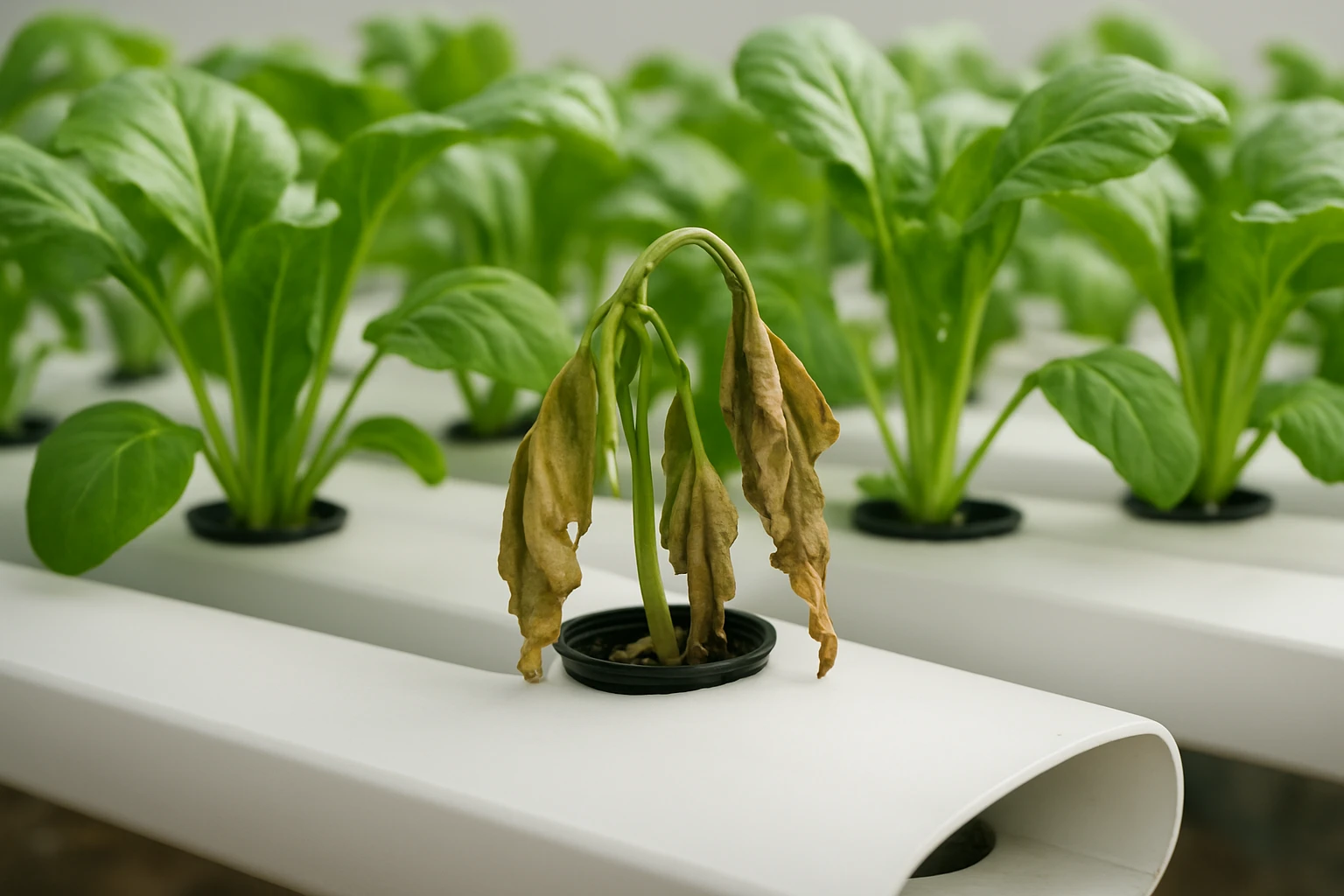
Hydroponic Crop Failure: Causes, Troubleshooting & Step‑by‑Step Recovery Guide
Introduction
This guide examines the most common reasons that hydroponic crops experience decline or loss, and it provides a systematic approach for growers to identify, correct, and prevent future failures. Readers will learn how to evaluate water quality, nutrient balance, environmental parameters, and biological threats. The article also recommends two Amazon products that can accelerate recovery when used correctly. By following the procedures outlined herein, growers can restore healthy growth and protect their investment.
Background and Context
Hydroponics is a soil‑free cultivation method that relies on a precisely controlled nutrient solution, aeration, and environmental stability. Because plants receive water and minerals directly through their roots, any deviation from optimal conditions can manifest quickly as stress symptoms. Understanding the basic components—reservoir, pump, growing medium, lighting, and climate control—provides the foundation for effective troubleshooting. Knowledge of plant physiology, such as transpiration rates and nutrient uptake pathways, further enables growers to interpret visual cues accurately.
Common Causes of Hydroponic Crop Failure
One of the most frequent sources of failure is improper nutrient formulation. When the ratio of macro‑ and micronutrients does not match the developmental stage, plants may exhibit chlorosis, stunted growth, or necrotic leaf tips. Another critical factor is water quality; high salinity, incorrect pH, or the presence of dissolved metals can impair root function. Temperature extremes, both in the root zone and ambient air, also disrupt metabolic processes and can lead to root rot or wilting. Finally, biological contaminants such as fungi, bacteria, or algae can proliferate in warm, stagnant solutions, overwhelming plant defenses.
Diagnosing Nutrient Imbalance
Effective diagnosis begins with a visual inspection of leaf coloration, vein prominence, and growth uniformity. A systematic leaf‑tissue test can quantify nitrogen, phosphorus, potassium, calcium, magnesium, and trace elements, revealing deficiencies or toxicities. Growers should also measure the electrical conductivity (EC) of the reservoir; values that are too high indicate excess salts, while low values suggest dilution or under‑feeding. Adjustments are made by adding the appropriate component of a balanced nutrient system.
For growers seeking a reliable three‑part nutrient solution, the General Hydroponics Flora Series offers a proven formula. FloraMicro supplies nitrogen, calcium, and trace minerals, FloraBloom delivers phosphorus, potassium, magnesium, and sulfur for flowering, and FloraGro supports vegetative growth with additional nitrogen and potassium. The series is rated 4.8 out of 5 stars based on 1,367 reviews, indicating broad satisfaction among hydroponic practitioners.
Managing Water and pH Issues
Maintaining a stable pH range of 5.5‑6.5 is essential for optimal nutrient availability. Frequent pH testing with a calibrated meter, followed by adjustments using food‑grade acids or bases, prevents lockout conditions. Temperature control of the reservoir, ideally between 18‑22 °C (65‑72 °F), reduces the risk of dissolved oxygen depletion. Aeration devices, such as air stones or inline diffusers, increase dissolved oxygen and mitigate root hypoxia.
The sjzxuv Hydroponic Tower incorporates a 12‑liter reservoir with an integrated pump and a three‑mode timer, allowing growers to schedule circulation every 3, 6, or 12 hours. This feature helps maintain oxygenation and uniform nutrient distribution, especially during periods of high temperature. The tower is rated 4.1 out of 5 stars from 100 reviews and is priced at $179.99.
Preventing Pathogen Outbreaks
Pathogenic fungi such as Pythium and Fusarium thrive in warm, poorly aerated water. Regularly cleaning the reservoir, replacing old nutrient solution, and sterilizing equipment with hydrogen peroxide or diluted bleach reduces inoculum load. Biological control agents, including beneficial Bacillus spp., can be introduced to outcompete harmful microbes. Monitoring for early signs of root discoloration or foul odor enables rapid intervention before systemic infection spreads.
Product Recommendations for System Recovery
When a crop shows signs of stress, a rapid response is required. The sjzxuv Hydroponic Tower provides a self‑contained, space‑efficient platform that can be deployed in a corner of a kitchen or balcony. Its six‑layer design accommodates 36 plants, allowing growers to replace lost crops while maintaining a compact footprint. The built‑in timer reduces the likelihood of over‑watering, and the large reservoir supports several days of autonomous operation, making it suitable for vacation‑proof cultivation.
Complementing the tower with a balanced nutrient regimen is crucial. The General Hydroponics Flora Series enables precise tailoring of nutrient ratios throughout the plant life cycle. By starting with FloraMicro, followed by FloraGro during vegetative growth, and finishing with FloraBloom during flowering, growers can supply the exact elements required for each stage. The series’ high rating reflects its reliability in both hobbyist and commercial settings.
Comparison and Selection Guide
| Feature | sjzxuv Hydroponic Tower | General Hydroponics Flora Series |
|---|---|---|
| Primary Function | Vertical growing system with integrated water circulation | Three‑part nutrient solution for all growth stages |
| Capacity | 36 planting sites, 12 L reservoir | Three 1‑qt bottles (approx. 0.95 L each) |
| Price (USD) | $179.99 | $38.79 |
| Customer Rating | 4.1/5 (100 reviews) | 4.8/5 (1,367 reviews) |
| Key Advantage | Space‑saving vertical design, timer‑controlled circulation | Customizable nutrient ratios, proven track record |
| Ideal User | Beginner to intermediate growers with limited space | Growers who need precise nutrient management |
Choosing between the two products depends on the specific failure mode. If the primary issue is uneven water distribution or limited growing area, the tower offers an immediate hardware solution. If the problem stems from nutrient deficiencies or toxicities, the Flora Series provides the chemical flexibility required for correction.
Best Practices & Tips
- Maintain a regular monitoring schedule: check pH, EC, temperature, and visual plant health at least once daily.
- Replace the nutrient solution every two weeks to prevent salt buildup and pathogen proliferation.
- Calibrate pumps and timers; the three‑mode timing on the sjzxuv Hydroponic Tower should be set according to ambient temperature and plant demand.
- Use the Flora Series in the recommended order: start with FloraMicro, stir thoroughly, then add FloraGro and/or FloraBloom as needed.
- Implement a backup power source for pumps and timers to avoid solution stagnation during outages.
- Document all adjustments in a grow journal; this record assists in identifying patterns that lead to failure.
Frequently Asked Questions
- What pH range is optimal for most hydroponic vegetables?
- The ideal range is 5.5 to 6.5; staying within this window maximizes nutrient uptake for lettuce, herbs, and most fruiting crops.
- How often should I change the water in a 12‑liter reservoir?
- For a system like the sjzxuv Hydroponic Tower, replace the solution every 10‑14 days, or sooner if EC rises sharply.
- Can I use the Flora Series with a pre‑mixed nutrient solution?
- No; the Flora Series is intended to be mixed from concentrated stock solutions. Using a pre‑mixed formula may result in incorrect EC and nutrient ratios.
- What is the most common sign of root rot in hydroponics? \n
- Root tissues become soft, brown, and emit a foul odor; leaves may wilt despite adequate water in the reservoir.
- Is it safe to grow edible herbs in a system that has experienced a fungal outbreak?
- Only after thorough sterilization of the entire system and replacement of the nutrient solution; otherwise, spores may persist and contaminate harvests.
Conclusion
Hydroponic crop failure is often the result of a cascade of manageable errors, including nutrient imbalances, water quality issues, temperature fluctuations, and pathogen intrusion. By employing systematic diagnostics, maintaining rigorous environmental control, and utilizing reliable products such as the sjzxuv Hydroponic Tower and the General Hydroponics Flora Series, growers can recover lost crops and prevent future losses. Consistent monitoring, proper sanitation, and informed nutrient management constitute the cornerstone of successful hydroponic cultivation.
Products Featured in This Guide
sjzxuv Hydroponic Tower
Price: $179.99 | Rating: 4.1/5 (100 reviews)
Featured because it provides a compact, timer‑controlled vertical growing platform with a 12‑liter reservoir, ideal for rapid recovery of lost plants.
General Hydroponics Flora Series
Price: $38.79 | Rating: 4.8/5 (1,367 reviews)
Featured because it offers a versatile three‑part nutrient system that enables precise adjustment of macro‑ and micronutrients throughout the plant life cycle.