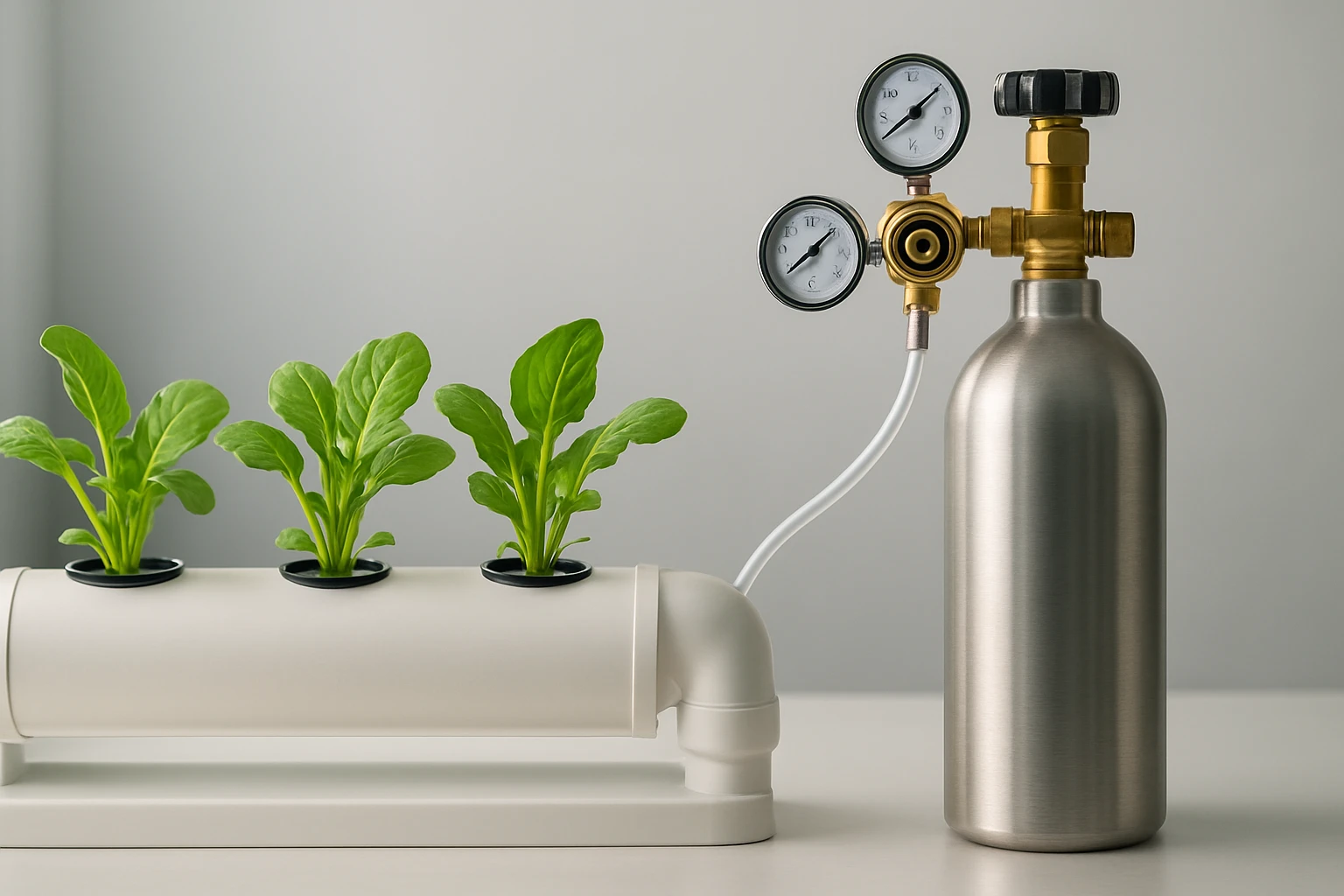
How to Use CO2 Enrichment for Home Hydroponics: A Complete Guide to Boost Growth, Yields, and Safety
Introduction
Carbon dioxide (CO2) is the third most essential element for photosynthesis after light and water. In a closed or semi‑closed hydroponic system, the ambient CO2 concentration often limits plant productivity, especially when high‑intensity LEDs or supplemental lighting are used. This guide explains the science behind CO2 enrichment, walks through the equipment required, and provides actionable strategies to increase yields while maintaining safety. Readers will finish with a clear plan for selecting the right CO2 source, installing it correctly, and troubleshooting common issues.
Whether one is cultivating lettuce on a kitchen countertop or managing a multi‑tiered basil tower, the principles remain the same. The article balances theoretical background with practical product recommendations, ensuring that even a grower who has never touched a CO2 regulator can implement the techniques confidently. By the end, the reader will understand how to calculate optimal CO2 levels, integrate the enrichment system with existing hydroponic components, and monitor performance for consistent results.
Background and Context
Photosynthesis converts carbon dioxide and water into glucose and oxygen, using light as energy. In most indoor environments, CO2 concentrations hover around 400 ppm (parts per million), which is sufficient for low‑light crops but far below the 800‑1200 ppm range that maximizes growth under strong lighting. Raising CO2 levels shortens the time to harvest, increases leaf mass, and can improve nutrient uptake, provided temperature, humidity, and pH remain within optimal ranges.
Two scientific concepts are essential for successful enrichment. First, the law of diminishing returns: once CO2 exceeds the plant’s photosynthetic capacity, additional CO2 yields no further growth and merely wastes resources. Second, the safety threshold: concentrations above 5,000 ppm become hazardous to humans, requiring ventilation and monitoring. Understanding these limits helps growers design systems that are both effective and compliant with indoor air‑quality standards.
Key Components of a CO2 Enrichment System
Three core components form a functional CO2 enrichment setup: a CO2 source, a delivery mechanism, and a control unit. Each component can be purchased individually or as part of an integrated kit, and the choice depends on grow‑space size, budget, and desired automation level.
CO2 Sources
- ExHale CO2 Grow Bag – a passive, maintenance‑free bag that releases CO2 for up to nine months, with peak production lasting six months. It is ideal for small tents (up to 128 ft³) and eliminates the need for electricity or compressors.
- Compressed CO2 cylinders – provide immediate, high‑volume output but require regulators and regular refills.
- Yeast‑based DIY generators – low‑cost but inconsistent and best suited for hobbyists experimenting with small volumes.
The ExHale bag is especially attractive for beginners because it delivers a steady CO2 stream without the complexity of pressure regulation. Its rating of 4.1/5.0 from over 2,300 reviews demonstrates reliability in real‑world grow rooms.
Delivery Mechanisms
CO2 must be evenly distributed throughout the grow space to avoid pockets of high concentration and ensure all plant foliage receives adequate exposure. Common delivery methods include:
- Tubing connected to a submersible pump that circulates CO2‑enriched water or air. The PULACO 400GPH Submersible Pump provides a quiet, adjustable flow of up to 400 GPH, making it suitable for small aquaponic loops or for pushing CO2‑rich water through a drip system.
- Inline diffusers that atomize CO2 into fine bubbles, increasing dissolution efficiency in hydroponic nutrient solutions.
- Ventilation fans equipped with CO2‑injection ports, which blend CO2 directly into the air stream.
The PULACO pump’s low power consumption (25 W) and adjustable flow valve allow growers to fine‑tune delivery rates without excessive noise, a factor confirmed by its 4.3‑star rating from nearly 5,000 users.
Control Units
Automation ensures CO2 is supplied only when plants can use it, typically during the photoperiod. The Elaphodus CO2 Controller offers dual‑channel output, enabling independent regulation of a CO2 regulator and an exhaust fan. Its NDIR sensor provides precise, low‑drift measurements, while the built‑in light‑sensing auto‑switch conserves gas during dark periods.
With a 4.2‑star rating from 13 verified reviews, the controller is praised for its straightforward knob‑adjusted set points, LCD readout of CO2, humidity, and temperature, and alarm function that warns of unsafe concentrations.
Integrating CO2 Enrichment with Nutrient Management
CO2 enrichment amplifies the plant’s demand for macro‑ and micronutrients. Providing the right nutrient balance prevents deficiencies that could otherwise limit the benefits of elevated CO2. The General Hydroponics Flora Series is a three‑part nutrient system that covers all growth stages, from vegetative vigor to robust flowering.
FloraMicro supplies nitrogen, calcium, and trace minerals; FloraGro adds additional nitrogen and potassium for structural growth; FloraBloom delivers phosphorus, potassium, magnesium, and sulfur for fruiting and flowering. Using these nutrients in the recommended ratios ensures that the plant can convert the extra carbon into biomass efficiently.
Growers should begin each nutrient cycle with a clean reservoir, add FloraMicro first, stir thoroughly, then incorporate FloraGro and FloraBloom as directed. Maintaining a pH between 5.5 and 6.2 and an EC (electrical conductivity) appropriate for the crop type further optimizes nutrient uptake under high CO2 conditions.
Comparison and Selection Guide
| Feature | ExHale CO2 Grow Bag | PULACO Submersible Pump | Elaphodus CO2 Controller | General Hydroponics Flora Series |
|---|---|---|---|---|
| Primary Function | Passive CO2 release (up to 9 months) | Water circulation, adjustable flow | CO2 measurement & dual output control | Three‑part nutrient delivery |
| Ideal Grow‑Space Size | Up to 128 ft³ (4 × 4 ft) | Medium tanks, small ponds, hydroponic loops | Any size with external regulator | All hydroponic systems |
| Power Requirement | None (passive) | 25 W | Plug‑in (≈10 W) | None (manual mixing) |
| Price (USD) | $34.99 | $18.99 | $104.90 | $44.99 |
| Average Rating | 4.1/5 (2,318 reviews) | 4.3/5 (4,985 reviews) | 4.2/5 (13 reviews) | 4.7/5 (6,342 reviews) |
| Key Advantage | Zero‑maintenance, silent | Quiet, adjustable flow, easy cleaning | Precise dual‑channel control, alarm safety | Complete nutrient spectrum, proven performance |
Choosing the right combination depends on the grower’s scale and automation preference. For a compact tent, pairing the ExHale bag with the PULACO pump creates a low‑cost, low‑maintenance loop that distributes CO2‑rich water to plant roots. Larger commercial‑style rooms benefit from the Elaphodus controller, which can modulate a high‑capacity CO2 regulator while preventing excess buildup.
Best Practices and Tips
- Target CO2 Level: Maintain 800‑1,200 ppm during the light cycle. Use a calibrated sensor (such as the one in the Elaphodus controller) to verify concentrations.
- Ventilation Management: Ensure fresh‑air intake does not dilute CO2 below the target level, but also provide enough exchange to keep humidity below 80 % and prevent mold.
- Timing: Begin CO2 injection at the start of the photoperiod and cease at lights‑off. Light‑sensing controllers automate this process.
- Safety Checks: Install a CO2 alarm if the space is occupied for extended periods. Never exceed 5,000 ppm in occupied areas.
- Integration with Nutrients: Increase nitrogen concentration slightly (10‑15 %) when operating at higher CO2 to avoid nitrogen limitation.
- Equipment Placement: Position the PULACO pump at the base of the reservoir, using its 5 ft tubing to route water to a diffuser near the canopy for optimal gas exchange.
- Maintenance Routine: Clean the pump’s impeller monthly (the PULACO pump disassembles tool‑free) and replace the ExHale bag after the six‑month peak period.
Frequently Asked Questions
1. How much CO2 is needed for a 4 × 4 ft grow tent?
A tent of this size typically requires 1‑2 L/min of CO2 to reach 1,000 ppm under 400‑W LED lighting. The ExHale CO2 Grow Bag delivers roughly 0.5 L/min on average, which is sufficient when combined with occasional supplemental injection.
2. Can I use the PULACO pump with a CO2 cylinder?
Yes. Connect the cylinder’s regulator to a venturi injector or a CO2‑soluble diffuser, then run the pump to circulate the enriched water. Ensure all fittings are rated for the cylinder’s pressure.
3. Is the Elaphodus controller compatible with any CO2 regulator?
The controller’s dual‑output ports accept standard ¼‑inch threads common to most regulators. Verify that the regulator’s voltage and pressure range match the controller’s specifications.
4. Will high CO2 levels affect nutrient pH?
CO2 dissolves to form carbonic acid, which can lower pH by 0.2‑0.3 units. Regularly monitor reservoir pH and adjust with calcium carbonate or potassium hydroxide as needed.
5. Are there health risks when using CO2 enrichment at home?
Prolonged exposure to concentrations above 5,000 ppm can cause headaches, dizziness, and respiratory distress. Proper ventilation, alarms, and periodic air‑quality testing mitigate these risks.
6. How often should I replace the ExHale bag?
The bag provides peak CO2 output for six months; after that, output gradually declines. Replace it annually for consistent performance.
Conclusion
CO2 enrichment is a powerful lever for increasing hydroponic yields, but it must be applied with scientific rigor and safety awareness. By understanding the relationship between light, CO2, and nutrients, selecting appropriate equipment, and following the best‑practice checklist, growers can achieve faster growth cycles and larger harvests without compromising indoor air quality. The products highlighted in this guide—ExHale CO2 Grow Bag, PULACO 400GPH Submersible Pump, Elaphodus CO2 Controller, and General Hydroponics Flora Series—represent a balanced mix of affordability, reliability, and performance for both hobbyists and serious indoor cultivators.
Products Featured in This Guide
PULACO 400GPH Submersible Pump
Price: $18.99 | Rating: 4.3/5 (4,985 reviews)
Featured for its quiet operation, adjustable flow up to 400 GPH, and tool‑free disassembly, making it ideal for circulating CO2‑enriched water in small hydroponic loops.
General Hydroponics Flora Series
Price: $44.99 | Rating: 4.7/5 (6,342 reviews)
Featured because it supplies a complete three‑part nutrient regimen that supports the increased carbon demand of plants under elevated CO2 conditions.
ExHale CO2 Grow Bag
Price: $34.99 | Rating: 4.1/5 (2,318 reviews)
Featured as a low‑maintenance, passive CO2 source that delivers consistent enrichment for up to nine months, perfect for small grow tents.
Elaphodus CO2 Controller
Price: $104.90 | Rating: 4.2/5 (13 reviews)
Featured for its dual‑channel NDIR sensor, light‑sensing auto‑switch, and alarm function, providing precise, automated CO2 regulation for larger or more sophisticated setups.