How to Grow Aromatic Herbs Hydroponically for Maximum Fragrance: A Complete Step‑by‑Step Guide
Introduction
Hydroponic gardening has transformed the way indoor growers cultivate herbs, offering precise control over water, nutrients, and light. This guide explains how to grow aromatic herbs hydroponically so that their fragrance is maximized, while providing practical product recommendations that simplify each stage of the process. Readers will learn the science behind scent production, how to select the right system, and the maintenance routines that keep plants thriving year‑round.
Background / Context
Unlike soil‑based cultivation, hydroponics delivers nutrients directly to the root zone, eliminating the variability caused by soil composition. Aromatic herbs such as basil, mint, rosemary, and thyme produce essential oils when they receive optimal light intensity, temperature, and nutrient balance. Understanding the biochemical pathways of oil synthesis helps growers manipulate conditions for stronger aroma. For example, higher light exposure stimulates the production of terpenes, the compounds responsible for most herb fragrances.
Understanding Hydroponic Systems
There are several hydroponic configurations, but the most beginner‑friendly are the nutrient‑film technique (NFT) and deep‑water culture (DWC). Both rely on a water‑tight reservoir, an air pump or circulation system, and a grow light. The choice of system influences plant spacing, root oxygenation, and maintenance frequency.
- Deep‑water culture (DWC): Roots are suspended in a nutrient‑rich solution, with an air stone providing oxygen. This method is ideal for herbs with shallow root systems.
- Nutrient‑film technique (NFT): A thin film of nutrient solution continuously flows over the roots, offering excellent oxygen exposure but requiring more precise flow control.
Both systems can be implemented using countertop kits that combine a reservoir, pump, and LED grow light. For most home growers, a ready‑made kit reduces the learning curve and ensures consistent performance.
Selecting Aromatic Herbs
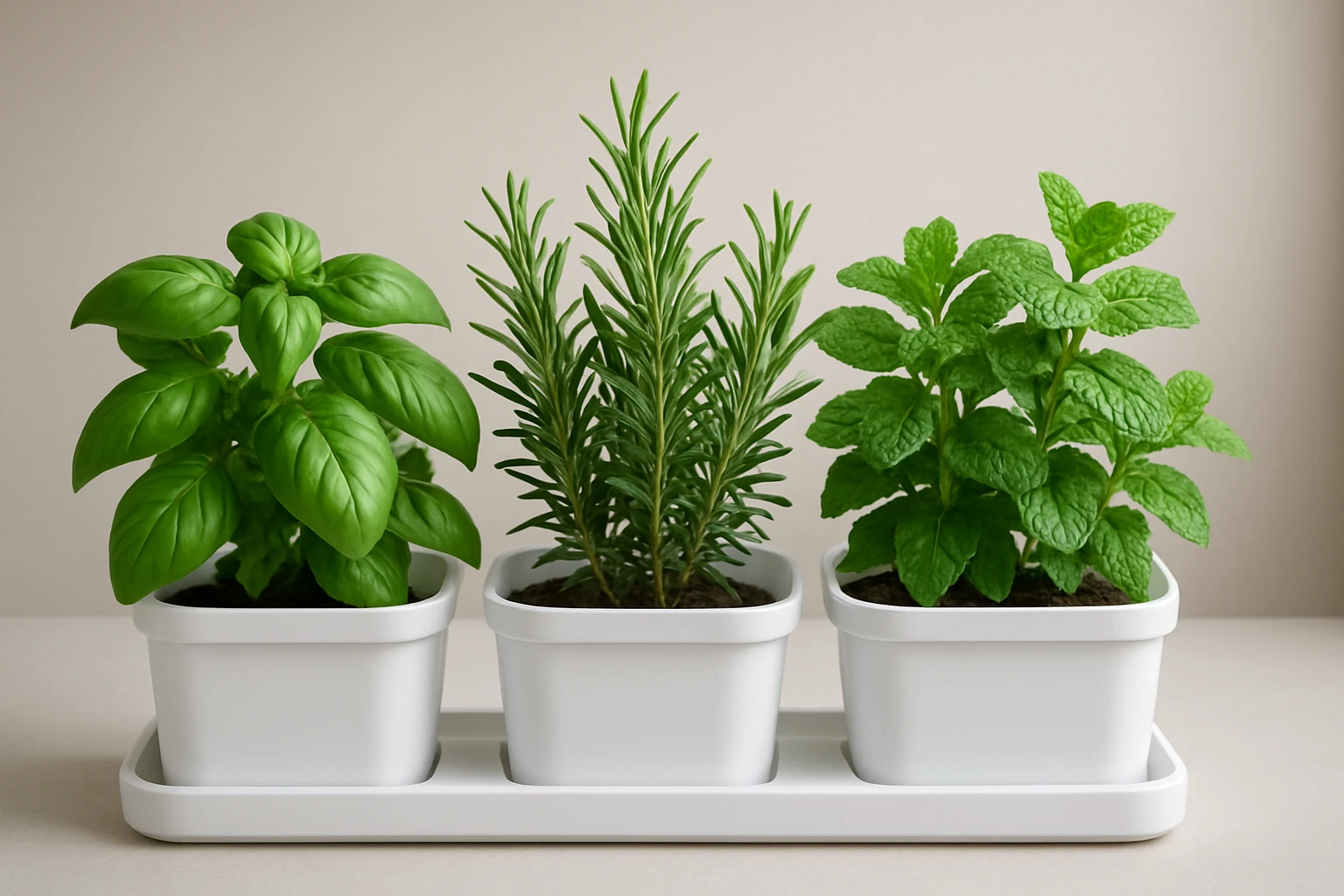
Not all herbs respond identically to hydroponic conditions. The following list pairs common aromatic herbs with the optimal hydroponic environment:
- Basil (Ocimum basilicum): Thrives under 16‑hour light cycles with temperatures between 70‑80°F. High nitrogen levels promote leaf growth, while moderate potassium enhances oil content.
- Mint (Mentha spp.): Requires cooler temperatures (65‑75°F) and a slightly higher calcium concentration to prevent leaf tip burn.
- Rosemary (Salvia rosmarinus): Prefers a 22‑hour light schedule and a well‑aerated root zone; excess moisture can diminish its woody aroma.
- Thyme (Thymus vulgaris): Grows best with a 16‑hour light period and a balanced nitrogen‑phosphorus ratio.
By matching each herb’s temperature and nutrient preferences, growers can maximize essential‑oil synthesis.
Setting Up Your Hydroponic System
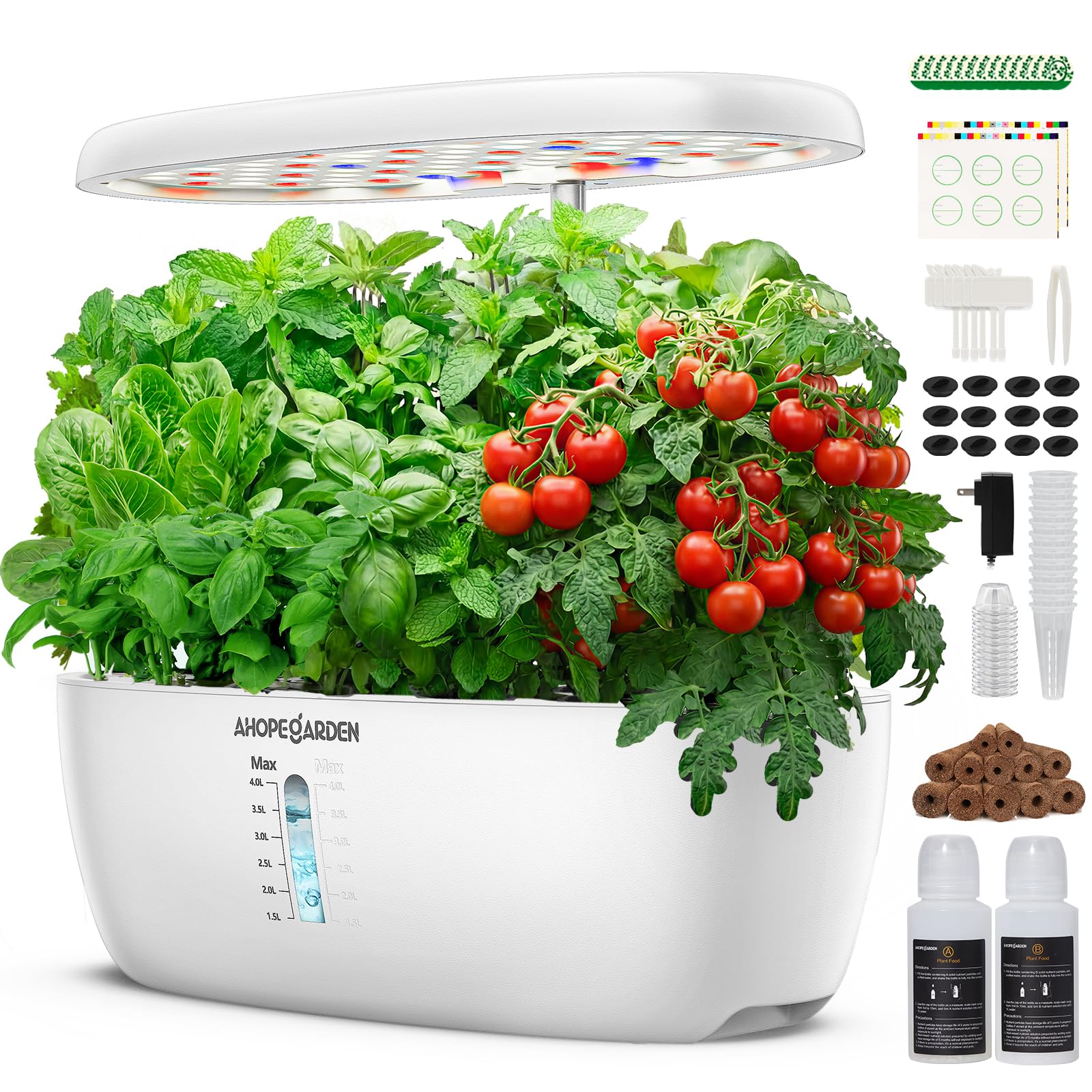
For a compact indoor garden, the Ahopegarden 12‑Pod Hydroponic Grow System offers a versatile platform. Its 12 grow stations accommodate multiple herb varieties, while the see‑through water window allows quick monitoring of reservoir levels. The system includes a height‑adjustable light post (up to 14.2 inches) and a silent pump that cycles on for 30 minutes every hour, providing oxygenated circulation without excessive energy use.
Key specifications:
- Four‑liter reservoir supporting 2‑3 weeks of growth without refilling.
- Full‑spectrum LED with 16‑hour or 22‑hour automatic timer modes.
- Adjustable light height for seedlings to mature plants.
- Rating: 4.6/5 from 1,039 reviews, indicating reliable performance.
If countertop space is limited, the Ahopegarden 10‑Pod Hydroponic Garden Kit provides a slightly smaller footprint while retaining essential features such as a water‑level window and dual light modes (vegetable vs. flower). Its 14.5‑inch adjustable light post and 16‑hour on/8‑hour off timer make it suitable for herbs that prefer a shorter photoperiod, such as mint.
Nutrient Management for Fragrance
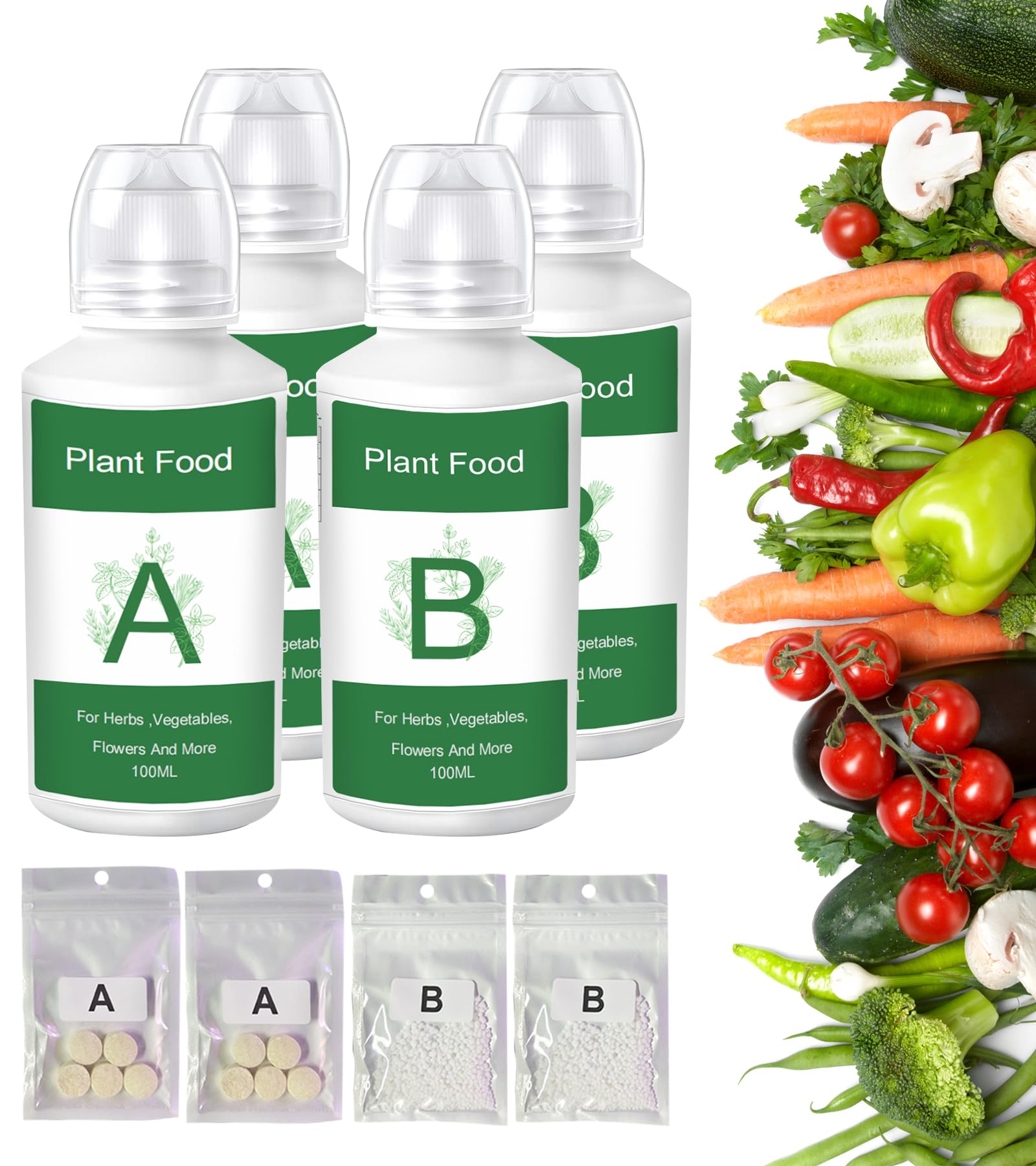
Hydroponic nutrients are delivered in two parts: Base A and Base B. The VIVOSUN Hydroponic Fertilizer A&B Bundle supplies a complete macro‑ and micronutrient profile, suitable for both vegetative and flowering stages. Each bottle should be mixed separately with water at the recommended ratio (usually 1 ml per liter) before combining in the reservoir.
For aromatic herbs, a slightly higher potassium (K) level encourages essential‑oil production, while maintaining adequate nitrogen (N) for leaf growth. A typical feeding schedule for basil might be:
- Weeks 1‑2: 75 % of the recommended N‑P‑K ratio (e.g., 3‑1‑2) to promote rapid foliage.
- Weeks 3‑4: Increase potassium to 3‑1‑3, encouraging terpene synthesis.
- Harvest: Flush with plain water for 24 hours to remove excess salts that could mask aroma.
The Ambgrow Hydroponic Nutrients A&B 800ml is a cost‑effective alternative for growers who need smaller volumes. Its 8‑pack configuration provides enough solution for several cycles, and the included dispensing cup simplifies accurate dosing.
Lighting Strategies to Enhance Scent
Light quality directly influences photosynthetic efficiency and secondary‑metabolite production. Full‑spectrum LEDs that mimic natural sunlight are ideal. The 12‑Pod system’s LED offers two programmable modes: a “vegetable” setting (blue‑rich) for leafy growth and a “fruit & flower” setting (red‑rich) that stimulates terpene pathways. For herbs that benefit from a higher red component—such as rosemary—select the 22‑hour cycle with a greater proportion of red light.
Maintain a distance of 6‑12 inches between the light canopy and the top of the foliage. Adjust the height post as plants mature to avoid light burn while ensuring sufficient intensity. A light intensity of 200‑300 µmol m⁻² s⁻¹ is generally optimal for aromatic herbs.
Maintenance and Harvesting
Regular maintenance ensures consistent fragrance:
- Check the water level daily via the visual window; top up with pH‑adjusted water as needed.
- Replace the nutrient solution every 2‑3 weeks to prevent salt buildup.
- Trim lower leaves to improve airflow and reduce the risk of fungal growth.
- Harvest herbs in the early morning when essential‑oil concentrations peak. Use clean scissors to avoid contaminating the plant.
Both Ahopegarden kits feature silent pumps that operate on a 30‑minute on/off cycle, which reduces energy consumption while keeping roots oxygenated. The 4‑liter tank of the 12‑Pod system supports longer intervals between refills, making it ideal for busy households.
Comparison / Selection Guide
| Feature | Ahopegarden 12‑Pod | Ahopegarden 10‑Pod |
|---|---|---|
| Number of Pods | 12 | 10 |
| Reservoir Capacity | 4 L | ~3 L (not specified) |
| Light Post Height | Adjustable up to 14.2 in | Adjustable up to 14.5 in |
| Timer Modes | 16‑hour or 22‑hour automatic | 16‑hour on / 8‑hour off |
| Price | $69.99 | $69.99 |
| Average Rating | 4.6/5 (1,039 reviews) | 4.6/5 (3,167 reviews) |
| Ideal For | Growers who want maximum pod capacity and extended light cycles for high‑oil herbs. | Growers with limited space who prefer a shorter photoperiod. |
Both kits receive high marks for ease of use and durability. Choose the 12‑Pod model if you plan to grow a larger variety of herbs simultaneously, especially those that benefit from the 22‑hour light mode (e.g., rosemary). Opt for the 10‑Pod version if countertop space is at a premium and you prefer a simpler timer configuration.
Best Practices & Tips
- Monitor pH regularly: Maintain a pH of 5.8‑6.2 for most aromatic herbs. Use a calibrated meter and adjust with pH‑up or pH‑down solutions.
- Employ a flushing cycle: Once a month, replace the nutrient solution with plain, pH‑balanced water for 24 hours to prevent nutrient lockout and preserve flavor.
- Rotate crops: Change the herb species every 6‑8 weeks to avoid pathogen buildup and to keep the nutrient solution balanced.
- Use a humidity tray: Placing a shallow tray of water beneath the system raises ambient humidity, which can enhance leaf softness and oil retention.
- Prune strategically: Remove the lower third of each plant once it reaches 6‑8 inches tall. This encourages upward growth and concentrates essential oils in the upper foliage.
- Consider supplemental CO₂: In sealed rooms, a modest CO₂ enrichment (400‑600 ppm) can increase photosynthetic rates, leading to richer aroma profiles.
FAQ
1. Can I grow herbs hydroponically without a commercial kit?
Yes, a DIY DWC setup using a bucket, air pump, and LED strip can work, but commercial kits provide integrated pumps, timers, and water‑level windows that simplify maintenance.
2. How often should I change the nutrient solution?
Replace the solution every 2‑3 weeks for most herbs. For high‑oil varieties, a monthly flush with plain water helps preserve fragrance.
3. Do aromatic herbs need more light than leafy greens?
They generally benefit from slightly longer photoperiods (18‑22 hours) and higher light intensity to stimulate terpene production.
4. Is the 22‑hour light mode safe for all herbs?
Most herbs tolerate extended light, but those prone to legginess—such as mint—may require occasional dark periods to maintain structural strength.
5. Can I use the same nutrient formula for both vegetative and flowering stages?
The VIVOSUN A&B bundle is formulated for the entire growth cycle, but adjusting the ratio toward higher potassium during the final weeks enhances aroma.
6. What temperature range is optimal for fragrance?
Maintain ambient temperatures between 65‑80°F. Cooler nights (around 60°F) can increase essential‑oil concentration in some herbs.
7. How do I prevent algae growth in the reservoir?
Cover the reservoir with an opaque lid, limit light exposure, and change the water regularly. The visual water window on the Ahopegarden kits helps you monitor without opening the tank.
Conclusion
Growing aromatic herbs hydroponically offers unparalleled control over the factors that determine fragrance intensity. By selecting a suitable system—such as the Ahopegarden 12‑Pod Hydroponic Grow System—and pairing it with balanced nutrients like the VIVOSUN Hydroponic Fertilizer A&B Bundle, growers can achieve consistent, high‑quality herb harvests. Consistent monitoring of pH, light, and nutrient levels, combined with strategic pruning and harvesting, ensures that each leaf delivers maximum aroma. Whether you are a culinary enthusiast or a hobbyist seeking fresh fragrance, the steps outlined in this guide provide a reliable roadmap to success.
Products Featured in This Guide
Ahopegarden 12‑Pod Hydroponic Grow System
Price: $69.99 | Rating: 4.6/5 (1,039 reviews)
Featured for its 12 grow stations, adjustable light post, visual water window, and dual timer modes that support high‑oil herb production.
Ahopegarden 10‑Pod Hydroponic Garden Kit
Price: $69.99 | Rating: 4.6/5 (3,167 reviews)
Featured for its compact footprint, 10‑pod capacity, and 16‑hour on/8‑hour off timer, making it suitable for smaller spaces and herbs preferring shorter photoperiods.
VIVOSUN Hydroponic Fertilizer A&B Bundle
Price: $39.99 | Rating: 4.6/5 (784 reviews)
Featured for its comprehensive macro‑ and micronutrient profile, ease of use, and suitability for both vegetative and flowering stages of aromatic herbs.
Ambgrow Hydroponic Nutrients A&B 800ml
Price: $10.39 | Rating: 4.5/5 (198 reviews)
Featured as an affordable, small‑volume nutrient option that includes a dispensing cup for precise dosing, ideal for hobbyists experimenting with scent‑focused herb cycles.
Frequently Asked Questions
What hydroponic system works best for aromatic herbs like basil and mint?
A simple deep‑water culture or NFT (nutrient film technique) system provides ample oxygen and consistent nutrient flow, ideal for fast‑growing fragrant herbs.
How does light intensity affect the scent of hydroponic herbs?
Higher light intensity boosts terpene production, so aim for 12‑16 hours of 200‑400 µmol m⁻² s⁻¹ PPFD to maximize fragrance.
Which nutrients are essential for strong essential‑oil development?
Maintain a balanced N‑P‑K ratio (e.g., 20‑10‑20) with added calcium, magnesium, and micronutrients like iron and zinc to support oil synthesis.
When should I harvest aromatic herbs to preserve maximum fragrance?
Harvest just before the plant flowers, cutting stems in the morning after the lights turn on, when essential‑oil concentrations peak.
What common issues reduce herb fragrance in hydroponics and how can I prevent them?
Over‑watering, low light, or nutrient imbalances can dull scent; monitor EC, pH, and provide adequate lighting and airflow to keep plants healthy.