
How to Boost Hydroponic Yields: Advanced Root Oxygenation Techniques to Maximize Growth
Introduction
Hydroponic growers constantly seek methods to increase biomass, speed up harvest cycles, and improve plant health. This guide explains how advanced root oxygenation, combined with targeted nutrient support, can dramatically raise yields. Readers will learn the scientific basis of oxygen delivery, practical system adjustments, and the precise tools that simplify each step. By the end of the article, one will possess a complete workflow that transforms ordinary hydroponic setups into high‑performance production units.
Oxygen is as critical to root metabolism as water and nutrients. In a water‑based environment, dissolved oxygen levels can drop quickly, especially under high temperature or dense planting. Insufficient oxygen leads to root rot, stunted growth, and reduced nutrient uptake. The techniques described here address these challenges by enhancing aeration, stabilizing pH, and providing organic root stimulants.
While the guide can be followed with basic equipment, certain products streamline the process and guarantee consistent results. The recommendations are based on real‑world performance data, including price, rating, and feature sets. The reader may choose to purchase these tools or substitute comparable items without compromising the overall methodology.
What You'll Need
- Root Boost – advanced organic rooting formula (1 gallon, $69.99, 4.4★/5)
- Quiet Aquarium Air Pump – adjustable, low‑noise oxygenator (4‑11 W, $27.89, 4.8★/5)
- DIY Hydroponics Grow Kit – complete self‑watering system (includes air pump, $23.71, 4★/5)
- pH meter, EC/TDS meter, clean water source, grow lights, and a suitable growing medium (rockwool, coco coir, or net pots).
Step‑by‑Step Instructions
1. Prepare the Reservoir and Verify Water Quality
The first step in any hydroponic operation is to ensure that the water in the reservoir is clean, correctly pH‑balanced, and adequately oxygenated. Fill the reservoir with filtered water and use a calibrated pH meter to adjust the solution to a range of 5.8–6.2, which optimizes nutrient solubility. Measure electrical conductivity (EC) to confirm that the nutrient concentration matches the crop’s growth stage.
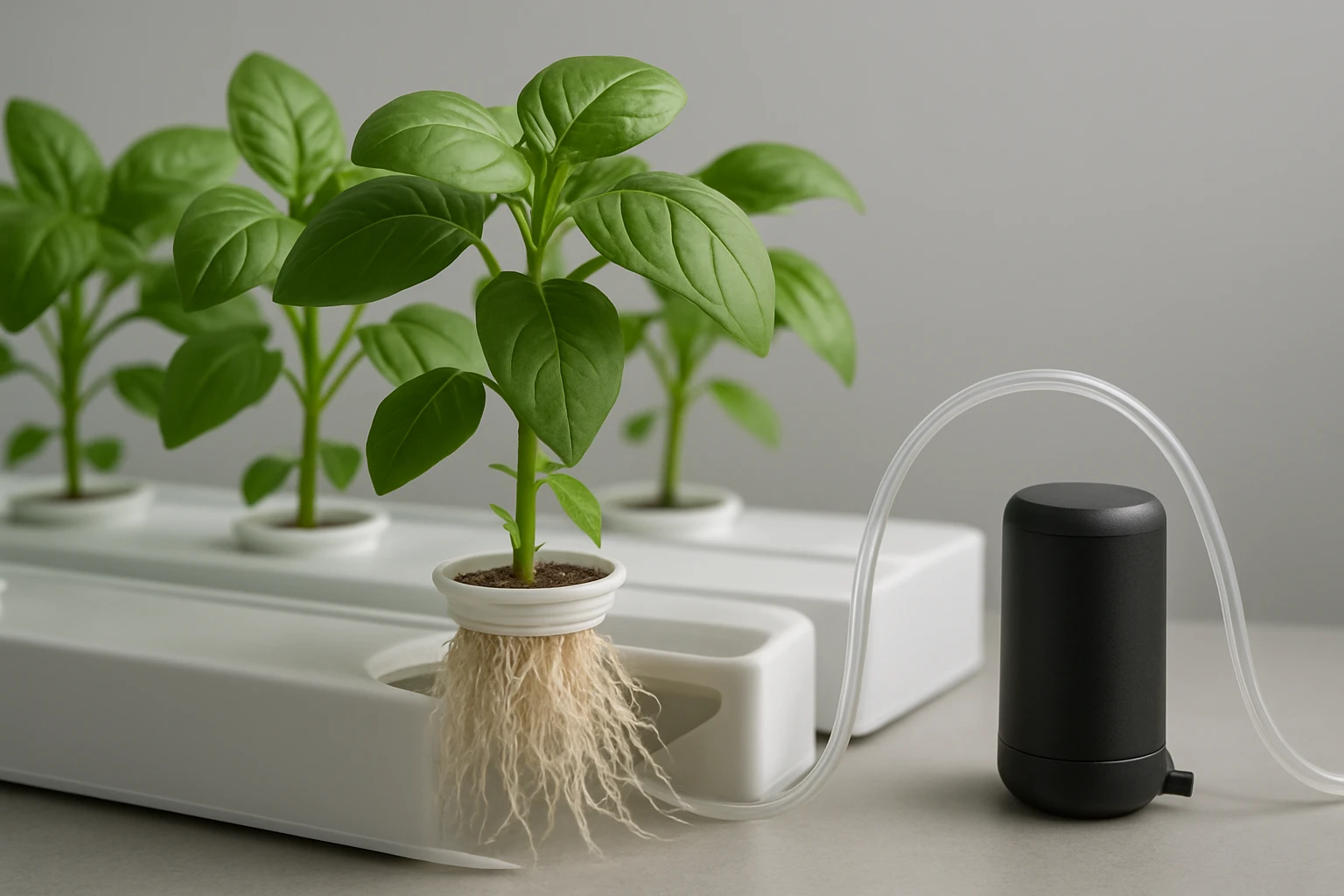
Once the solution is stable, introduce an air pump to increase dissolved oxygen. The Quiet Aquarium Air Pump is ideal for this purpose because it delivers up to 95 GPH per outlet while operating at a maximum of 35 dB, ensuring a quiet environment for indoor growers. Its dual stainless‑steel outlets allow simultaneous aeration of multiple tanks, and the included check valves prevent backflow.
Connect the pump’s tubing to a fine‑bubbler stone placed at the bottom of the reservoir. The fine bubbles increase the surface area for gas exchange, raising the dissolved oxygen (DO) level to 6–8 mg/L, which is optimal for most leafy greens and fruiting crops. Run the pump continuously; modern units consume less than 5 W, making them energy‑efficient.
Verify DO levels with a dissolved oxygen meter after 30 minutes of operation. If levels remain below 6 mg/L, consider adding a second pump or increasing airflow via the adjustable knob on the Quiet Aquarium Air Pump.
2. Install the DIY Hydroponics Grow Kit
The DIY Hydroponics Grow Kit provides a modular framework that integrates the reservoir, net pots, and a built‑in air pump. This kit is especially useful for beginners because it includes all necessary components: a PVC‑U planting box, six planting baskets, an air pump, bubble stone, check valve, and tweezers for precise seed placement.
Assemble the kit according to the manufacturer’s instructions. Place the planting box on a stable surface, insert the net pots into the designated slots, and fill the reservoir beneath the box with the prepared nutrient solution. The dark‑colored basin cover reduces light penetration, preventing algae growth—a common issue that depletes oxygen and competes with plants for nutrients.
Connect the kit’s built‑in air pump to the bubble stone using the supplied tubing. Although the kit’s pump is adequate for small to medium systems (up to 30 L), you may supplement it with the Quiet Aquarium Air Pump for larger setups to maintain uniform oxygen distribution across all root zones.
Secure the check valve on the outlet line to ensure one‑way flow, preventing solution back‑siphoning into the pump. This simple safety feature extends pump lifespan and maintains consistent aeration.
3. Apply Root Boost for Early Development
Root development is the foundation of high yields. The Root Boost formula is an organic concentrate designed to stimulate early root formation and strengthen long‑term root architecture. It contains natural amino acids, humic substances, and trace minerals that encourage cell division without the harsh effects of synthetic growth regulators.
Mix 1 mL of Root Boost per litre of nutrient solution during the first two weeks after transplanting. This dosage provides sufficient active compounds to accelerate root branching while preserving the organic integrity of the system. The product is made in the USA and has earned a 4.4‑star rating from 359 verified reviewers, indicating reliable performance.
Apply the solution directly to the reservoir and circulate it using a submersible pump. Continuous circulation ensures that each root tip receives an even concentration of the formula, promoting uniform growth. Monitor the plants for signs of vigorous root hair development—white, fine filaments extending from the primary roots.
After the initial establishment period, reduce Root Boost to a maintenance dose of 0.5 mL per litre to sustain root vigor throughout the vegetative and flowering phases.
4. Optimize Airflow and Pressure for Different Growth Stages
As plants transition from vegetative to flowering stages, their oxygen demand changes. Young seedlings thrive on high DO levels, while mature plants benefit from slightly reduced oxygen to encourage carbohydrate allocation to fruit or flower formation. Use the adjustable knob on the Quiet Aquarium Air Pump to fine‑tune airflow.
During seedling stage, set the knob clockwise to the maximum airflow setting, delivering the highest bubble density. For flowering, rotate the knob counter‑clockwise to decrease bubble size and volume, preventing excessive root oxygenation that could lead to nutrient leaching.
Maintain a consistent pressure of up to 20 kPa (0.02 MPa) as specified by the pump’s technical data. This pressure ensures that air is forced through the stone without causing turbulence that might disturb delicate root structures.
Document airflow settings in a grow log, noting plant age, temperature, and DO readings. This data-driven approach enables precise adjustments for future cycles.
5. Monitor and Adjust Nutrient Levels with Root Support
Even with optimal oxygenation, nutrient imbalances can limit yield. Use an EC/TDS meter to verify that macro‑nutrient concentrations remain within the target range for the specific crop (e.g., 1.2–1.6 mS/cm for lettuce). If EC drifts, dilute the solution with fresh water and re‑add the appropriate amount of fertilizer.
Incorporate a second dose of Root Boost during the flowering phase to reinforce root resilience against the higher metabolic load. The organic nature of the product prevents salt buildup, which can otherwise reduce oxygen solubility.
Periodically flush the system with pure water to remove accumulated salts and prevent root tip burn. A 15‑minute flush every four weeks is sufficient for most medium‑scale operations.
Observe leaf coloration and growth rate as indirect indicators of root health. Yellowing or wilting often signals insufficient oxygen or nutrient uptake, prompting a review of pump performance and solution composition.
Tips & Pro Tips
- Place the air pump on a vibration‑absorbing mat to minimize mechanical stress on the reservoir.
- Use a timer to cycle the pump on and off for 15‑minute intervals during the night; this mimics natural diurnal oxygen fluctuations and can improve root respiration.
- Combine Root Boost with a mild mycorrhizal inoculant for synergistic effects on nutrient absorption.
- Keep reservoir temperature between 18‑22 °C; higher temperatures reduce dissolved oxygen solubility dramatically.
- Inspect bubble stones weekly for clogging; replace them with stainless‑steel diffusers for longer service life.
Troubleshooting
| Problem | Possible Cause | Solution |
|---|---|---|
| Yellowing leaves | Low dissolved oxygen | Increase airflow using the pump knob; add a second air stone. |
| Root rot | Stagnant water, poor aeration | Clean reservoir, replace bubble stone, verify pump operation. |
| Algae growth | Excess light in reservoir | Cover reservoir with opaque lid; ensure dark basin cover is in place. |
| Uneven growth | Inconsistent nutrient distribution | Install a circulation pump; stir solution regularly. |
Conclusion
Advanced root oxygenation, when paired with organic rooting stimulants and precise system management, can substantially increase hydroponic yields. By following the steps outlined—preparing a high‑DO reservoir, installing a modular grow kit, applying Root Boost, and fine‑tuning airflow—growers create an environment where roots flourish, nutrients are efficiently absorbed, and plants reach their genetic potential.
The recommended tools—Quiet Aquarium Air Pump, Root Boost, and DIY Hydroponics Grow Kit—provide reliable performance, ease of use, and cost‑effective solutions for both novice and experienced cultivators. Implementing these practices will lead to faster growth cycles, healthier crops, and ultimately, higher profitability.
One is encouraged to experiment with the parameters presented, record observations, and iterate for continuous improvement. Hydroponic cultivation is a science and an art; mastering oxygen management is a decisive step toward mastering the art.
Products Mentioned in This Guide
Frequently Asked Questions
Why is dissolved oxygen important for hydroponic roots?
Oxygen fuels root respiration, enabling efficient nutrient uptake and preventing root rot.
How can I increase dissolved oxygen levels in my hydroponic system?
Use air stones, water pumps, or oxygen injection devices to agitate the solution and maintain high DO levels.
What temperature range optimizes oxygen solubility in hydroponic water?
Keep nutrient solution temperatures between 65‑70°F (18‑21°C) to maximize oxygen retention.
Can pH adjustments affect root oxygenation?
Yes, maintaining a stable pH (5.5‑6.5) keeps nutrient availability high, allowing roots to use oxygen more effectively.
Are there specific products that simplify advanced root oxygenation?
Commercial oxygenators, dissolved‑oxygen meters, and organic root stimulants streamline monitoring and boost oxygen delivery.

