Introduction
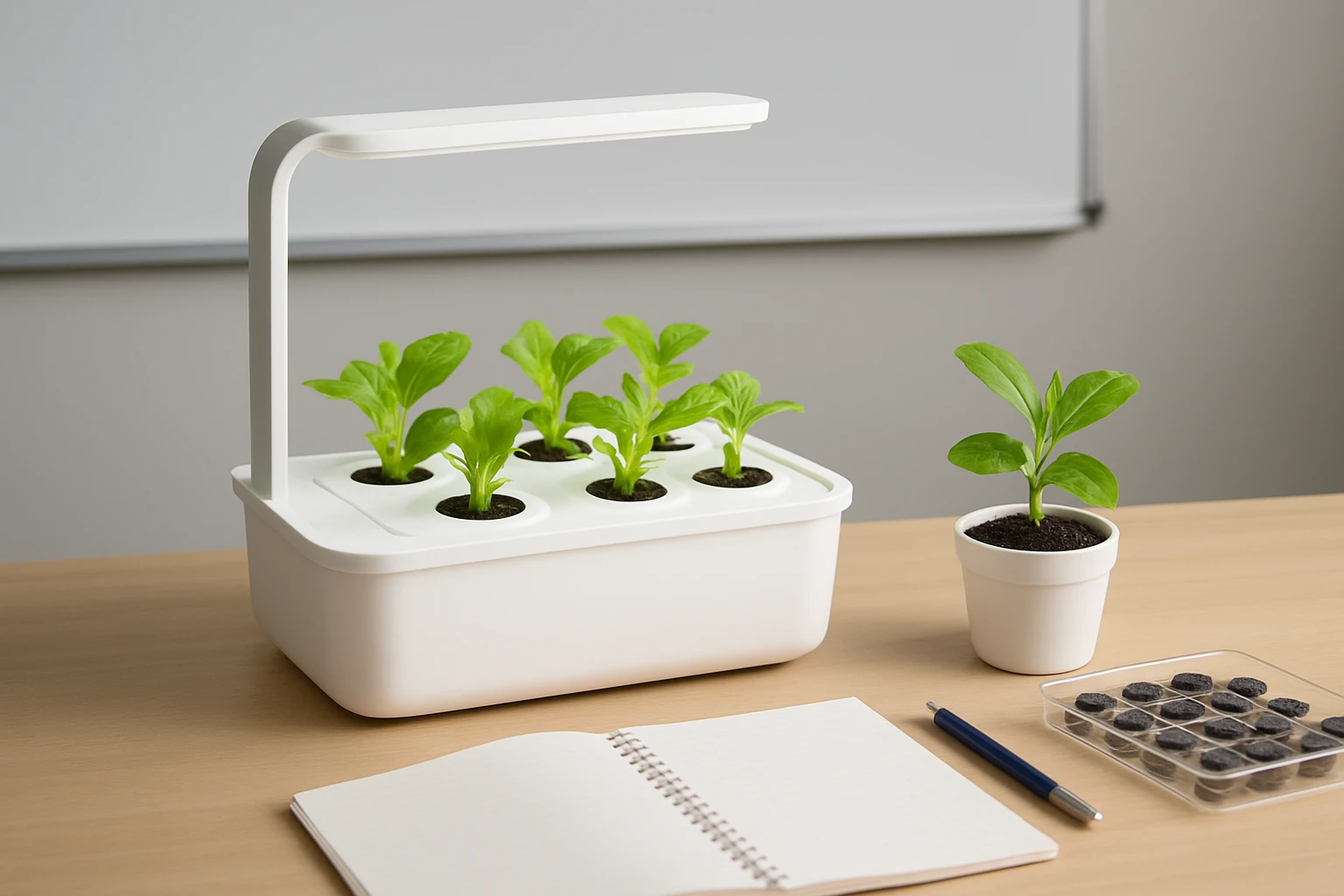
Hydroponic gardening provides a compelling platform for experiential STEM education. It allows students to observe plant biology, nutrient cycles, and engineering principles without the constraints of soil. When educators select a reliable kit, the classroom can transform into a living laboratory that reinforces curriculum standards.
In recent years, manufacturers have introduced systems that are specifically designed for educational environments. These kits emphasize safety, modularity, and clear instructional materials, thereby reducing the time teachers must spend on setup. The following list presents ten curated options that combine pedagogical value with practical performance.
-
Large‑Scale Deep Water Culture for High‑Yield Projects
The VEVOR Hydroponic System offers eight 5‑gallon buckets, making it ideal for projects that require multiple plant varieties. At a price of $145.90, the system includes an 8 W air pump, four air stones, and a water‑level device that provides continuous visual feedback for students.
- Eight polypropylene buckets with 5‑gallon capacity each
- Integrated air pump and stones for optimal oxygen delivery
- Sealing rings and inline check valves to prevent leaks and reverse flow
- Rating of 4.2 stars from 818 reviews, indicating reliable performance
Educators appreciate the system’s scalability because it can support leafy vegetables, herbs, and small fruiting plants simultaneously. Positive customer feedback highlights the durability of the buckets and the ease of assembly when instructions are followed carefully.
-
Compact Countertop Solution for Beginner Learners
The DRYADES Indoor Herb Garden is a ten‑pod kit that integrates a 24 W full‑spectrum LED and a quiet water pump. Priced at $39.99, it fits on a standard desk and allows students to grow herbs and small vegetables year‑round.
- Four‑layer LED provides 5× faster growth compared with soil
- 4.5 L water reservoir supports mature plant development
- Adjustable planting board accommodates seedling to mature stages
- Rating of 4.3 stars from 34 reviews, with users praising simplicity
This system demonstrates the principles of light spectra, water circulation, and nutrient delivery in a format that is approachable for younger students. One reviewer noted that the kit "exceeded expectations" and required minimal maintenance, which aligns with classroom time constraints.
-
High‑Capacity Multi‑Site System for Large Classroom Experiments
The GENORTH Hydroponics Kit provides 72 planting sites using food‑grade PVC‑U pipes. At $125.99, the kit includes an anti‑dry‑burn pump, adjustable timer, and modular metal brackets that simplify installation.
- A‑type design improves light distribution and prevents upper‑layer obstruction
- Gravity‑fed flow eliminates waterlogging while ensuring uniform nutrient distribution
- Timer‑controlled pump reduces energy consumption and extends pump lifespan
- Rating of 3.9 stars from 67 reviews, with many users highlighting ease of cleaning
This configuration is well suited for comparative studies, such as testing different nutrient solutions or plant varieties across multiple stations. Users have reported that the system can be assembled within 45 minutes and that the dark‑blue pipes effectively block unwanted light, reducing algae growth.
-
Tiered Indoor Garden for Vertical Growth Demonstrations
The AOONEG Indoor Herb Garden features 28 planting pods arranged on two vertical layers, each illuminated by 30 W LED strips. Priced at $169.99, the system includes a 16 L water tank that can sustain plants for approximately 20 days without refilling.
- Adjustable PVC height allows plants to reach up to 23.6 inches
- Three timer settings (9, 12, 15 hours) enable precise photoperiod control
- Automatic pump operation with low‑water shutoff protects against dry‑run damage
- Rating of 4.2 stars from 135 reviews, with users emphasizing robust construction
Vertical growth demonstrations are particularly engaging for students because they illustrate how space efficiency can be achieved in urban agriculture. Reviews mention that the system remains stable over several months and that the LED lighting mimics natural sunlight effectively.
-
Aquaponic Hybrid for Integrated Ecosystem Learning
The Back to the Roots Aquaponic Garden combines fish care with plant cultivation in a 3‑gallon self‑watering unit. At $85.00, the kit supplies seeds, water conditioner, and a fish coupon, providing a complete closed‑loop system for classroom use.
- Fish waste supplies natural nutrients for microgreens, illustrating symbiotic relationships
- Self‑cleaning water cycle reduces maintenance demands for teachers
- STEM curriculum guide encourages interdisciplinary lesson planning
- Rating of 4.3 stars from 2,065 reviews, with high praise for educational impact
This hybrid approach enables students to study biology, chemistry, and environmental science within a single experiment. One reviewer highlighted that the system “provides a steady supply of lettuce and herbs while teaching kids about ecosystems.”
-
Budget‑Friendly Starter Kit for Introductory Lessons
For schools seeking a low‑cost entry point, the DRYADES Indoor Herb Garden can be paired with the VEVOR Hydroponic System to create a tiered learning pathway. The DRYADES kit supplies the essential LED and pump technology at $39.99, while the VEVOR system adds capacity for larger projects as students progress.
Combining these two products allows educators to demonstrate the evolution from simple countertop setups to more complex multi‑bucket arrangements. The gradual increase in scale reinforces concepts such as nutrient scaling, oxygen diffusion, and system maintenance.
-
Modular Design for Customizable Classroom Layouts
The GENORTH Hydroponics Kit excels in modularity, enabling teachers to reconfigure the 72‑site layout for diverse experimental designs. By adding or removing PVC sections, students can investigate the effects of spacing, light exposure, and water flow on plant health.
Because each planting tube can be detached, the system also simplifies cleaning between cycles, a feature that aligns with school health and safety policies. The included timer and anti‑dry‑burn pump provide automated operation, freeing instructional time for data analysis.
-
Vertical Farming Demonstrations with Adjustable Height
The AOONEG Indoor Herb Garden’s height‑adjustable PVC columns allow teachers to illustrate vertical farming techniques. Students can observe how light intensity diminishes with distance and how adjustable LED positioning can mitigate this effect.
With 28 pods, the system supports simultaneous growth of herbs, lettuce, and small fruiting plants, enabling comparative studies across species. The three‑setting timer offers a practical example of photoperiod manipulation for optimal growth.
-
Integrated Aquaponics for Cross‑Disciplinary Projects
The Back to the Roots Aquaponic Garden integrates animal husbandry with plant science, making it a powerful tool for cross‑disciplinary projects. Students can track water quality parameters, such as ammonia and nitrate levels, while observing fish behavior.
Because the system is self‑watering and self‑cleaning, it reduces the logistical burden on teachers while still delivering authentic data for analysis. The included STEM curriculum aligns with national education standards, facilitating curriculum mapping.
-
Comprehensive Comparison of Featured Kits
Kit Capacity Price Rating Key Strength VEVOR Hydroponic System 8 × 5 gal buckets $145.90 4.2/5 (818) Scalable multi‑crop capability DRYADES Indoor Herb Garden 10 pods $39.99 4.3/5 (34) Compact countertop design GENORTH Hydroponics Kit 72 sites $125.99 3.9/5 (67) Modular PVC architecture AOONEG Indoor Herb Garden 28 pods (2 layers) $169.99 4.2/5 (135) Adjustable vertical growth Back to the Roots Aquaponic Garden 3 gal tank $85.00 4.3/5 (2,065) Fish‑plant symbiosis The table highlights how each kit addresses distinct educational objectives, from basic plant biology to complex ecosystem modeling. Selecting the appropriate system depends on classroom size, curriculum goals, and budgetary constraints.
Conclusion
Hydroponic classroom kits provide tangible experiences that deepen student understanding of science, technology, engineering, and mathematics. The ten options presented combine affordability, durability, and pedagogical relevance, ensuring that educators can select a system that aligns with their instructional priorities.
When implementing a hydroponic program, teachers should consider factors such as scalability, ease of maintenance, and the ability to integrate cross‑disciplinary lessons. By leveraging the strengths of each featured kit, schools can cultivate a thriving learning environment that prepares students for future challenges in sustainable agriculture and environmental stewardship.
Frequently Asked Questions
What are the main benefits of using hydroponic kits in a classroom?
Hydroponic kits let students observe plant growth, nutrient cycles, and engineering concepts in real time without soil, enhancing hands‑on STEM learning.
Which features should teachers look for when choosing a classroom hydroponic system?
Prioritize safety, modular design, clear instructional guides, reliable water‑level monitoring, and a manageable size for the classroom space.
How does the VEVOR Hydroponic System support high‑yield projects?
It includes eight 5‑gallon buckets, an 8 W air pump, air stones, and a visual water‑level device, allowing multiple plant varieties to be grown simultaneously.
Are hydroponic classroom kits suitable for beginner students?
Yes, many kits are designed with simple assembly, pre‑measured nutrients, and step‑by‑step lessons that accommodate novice learners.
Can hydroponic kits be integrated with existing STEM curricula?
Most kits align with biology, chemistry, and engineering standards, providing experiments that complement topics like photosynthesis, nutrient management, and system design.