Year‑Round Planting Schedule for Hydroponic Herbs: The Complete Month‑by‑Month Guide to Continuous Harvests
Introduction
This guide explains how to design a reliable year‑round planting calendar for hydroponic herbs. Readers will learn the science of light cycles, nutrient management, and seasonal adjustments, as well as which indoor systems simplify the process. By following the month‑by‑month plan, gardeners can enjoy fresh basil, mint, cilantro, and other culinary favorites every day of the year.
The article balances theoretical knowledge with practical product recommendations, ensuring that both beginners and experienced growers can implement the schedule with confidence.
Background and Context
Hydroponics replaces soil with a nutrient‑rich water solution, allowing plants to access oxygen and minerals directly through their roots. This method accelerates growth, often by 20‑30 % compared with traditional soil planting, because roots encounter less resistance and receive a constant supply of nutrients.
Key variables include light spectrum, photoperiod, temperature, humidity, and dissolved oxygen. Modern kits integrate LED grow lights that mimic sunlight, pumps that aerate the solution, and sensors that alert growers to low water levels. Understanding these fundamentals is essential before constructing a planting schedule.
Because indoor environments are insulated from external weather, growers can manipulate conditions to match each herb’s optimal growth phase. The schedule presented below aligns light cycles, nutrient concentrations, and system maintenance with the biological needs of popular herbs.
Monthly Planting Schedule
The following table outlines which herbs to start, transplant, or harvest each month. Adjustments are based on a typical indoor temperature of 68‑75 °F (20‑24 °C) and a 16‑hour light / 8‑hour dark photoperiod for vegetative growth, shifting to 12 / 12 for flowering when applicable.
| Month | Herbs to Start (Seeds) | Herbs to Transplant | Harvest Focus |
|---|---|---|---|
| January | Basil, Parsley, Chives | – | Mint (established) |
| February | Cilantro, Dill | Basil seedlings | Parsley |
| March | Thyme, Oregano | Cilantro seedlings | Basil |
| April | Arugula (micro‑greens) | Thyme seedlings | Dill |
| May | Additional Basil | Oregano seedlings | Chives |
| June | Mint (new varieties) | Arugula micro‑greens | Thyme |
| July | Second round of Cilantro | Mint cuttings | Oregano |
| August | Parsley | Cilantro seedlings | Mint |
| September | Dill | Parsley seedlings | Arugula |
| October | Chives | Dill seedlings | Parsley |
| November | Basil (cold‑tolerant varieties) | Chives seedlings | Dill |
| December | Micro‑greens mix | Basil seedlings | Chives |
Each row represents a 4‑week cycle: seed germination (1‑2 weeks), vegetative growth (2‑3 weeks), and harvest (continuous after the third week). By staggering sowing dates, growers maintain a perpetual supply.
Product Recommendations for Each Phase
Choosing the right hydroponic system simplifies the schedule. The following products excel in specific stages of the monthly plan.
Seed Germination and Early Growth
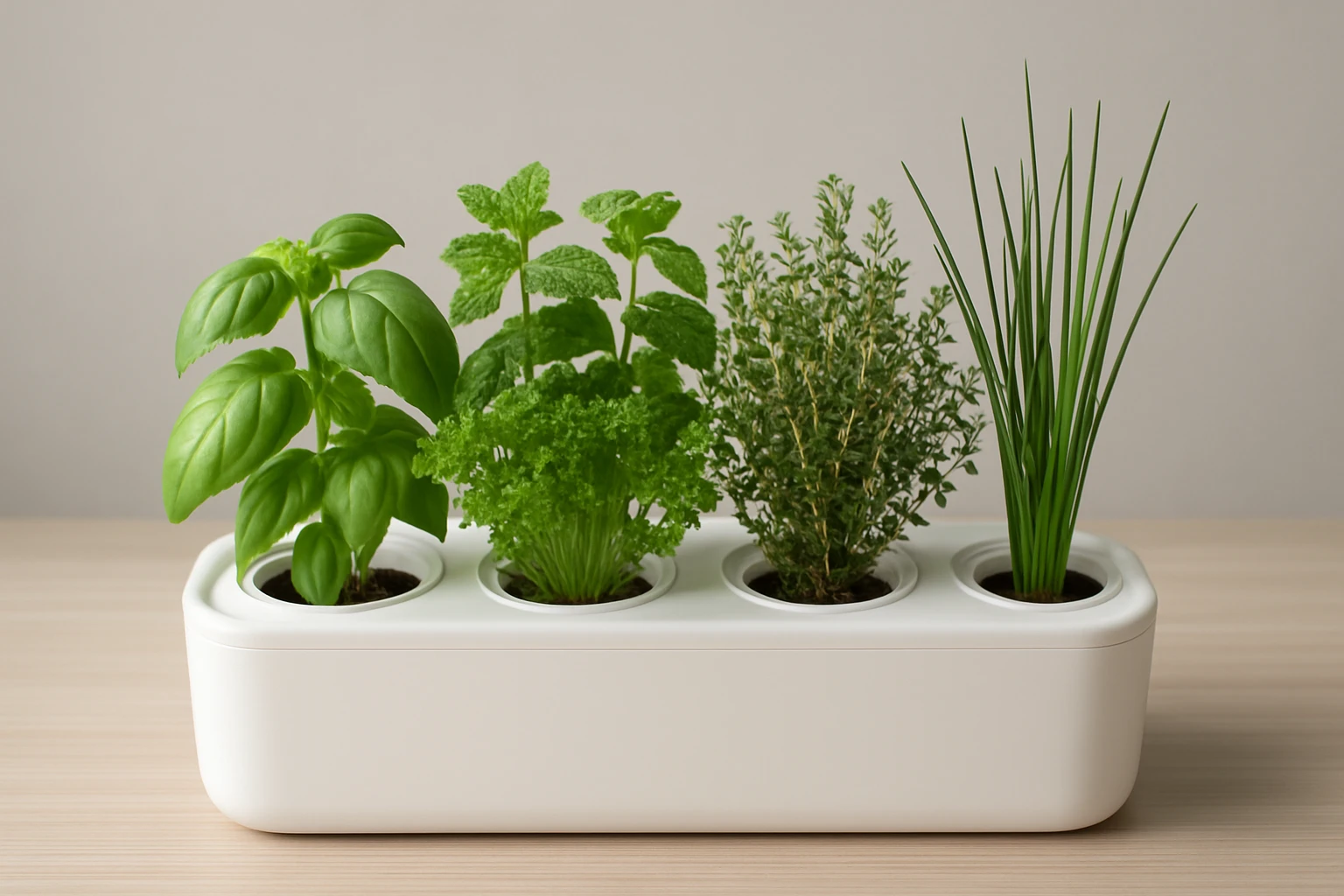
The iDOO Hydroponics Kit provides a 4.5 L water tank, low‑noise pump, and adjustable 22‑W LED light. Its two growing modes—Vegetables Mode (blue, red, far‑red, white) and Flower/Fruit Mode (red, far‑red, white)—ensure seedlings receive the optimal spectrum for photosynthesis. Users report a 4.5‑star rating from 6,847 reviews, and the system claims a 20 % faster growth rate than soil planting.
Key features that support germination:
- Automatic light timer that mimics sunrise and sunset.
- Adjustable height up to 11.02 inches, accommodating seedlings as they grow.
- Visual water‑level window for easy monitoring.
At $99.99, the kit offers excellent value for beginners who need an all‑in‑one solution.
Mid‑Season Expansion and Larger Canopies
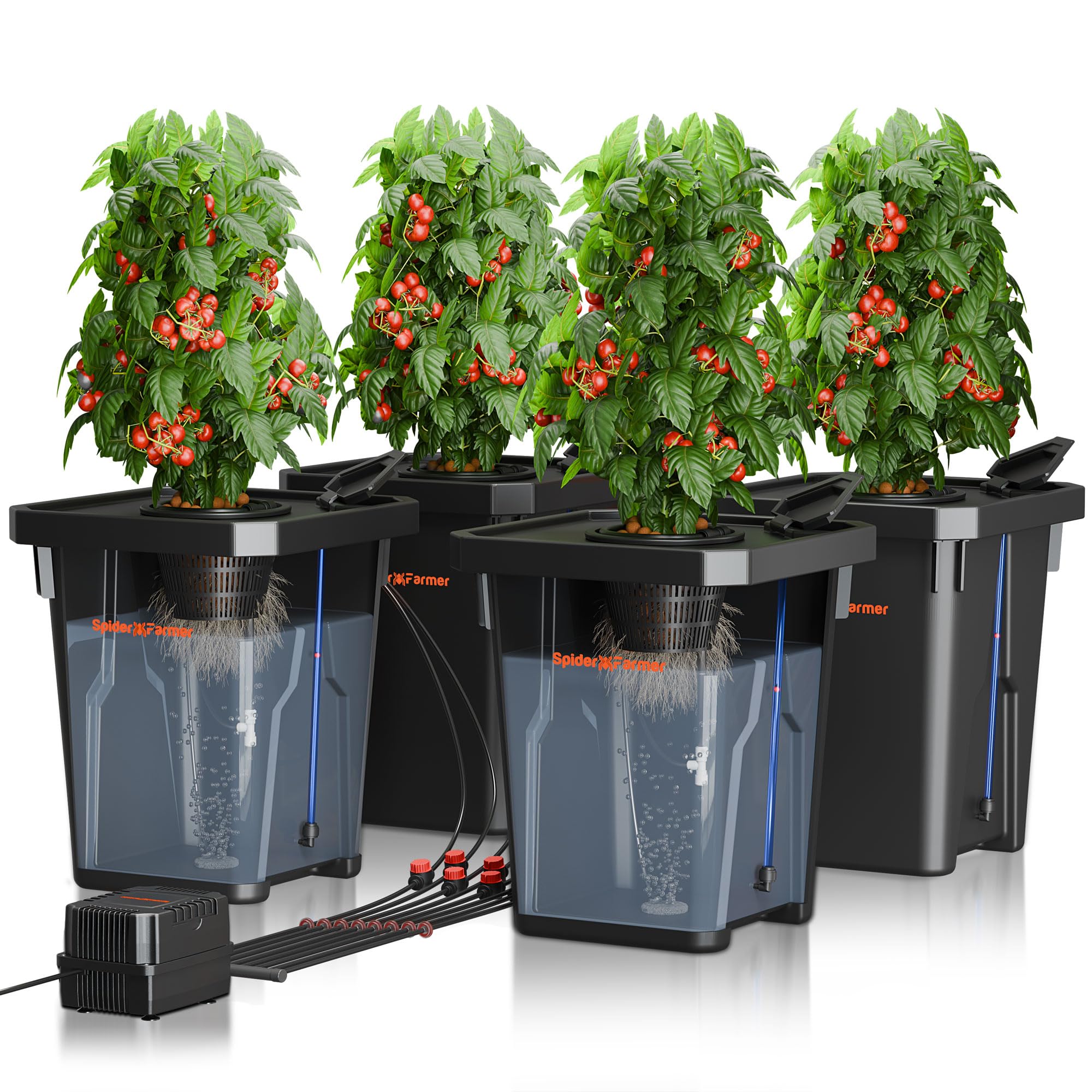
When the garden expands beyond twelve pods, the Spider Farmer 7‑Gallon System becomes advantageous. Its deep‑water culture (DWC) buckets hold 7 gallons each, providing ample root volume for robust herbs such as basil and oregano. The system includes a powerful 11‑W air pump delivering 28 L/min airflow, which maintains dissolved oxygen levels crucial for rapid growth.
Important specifications:
- Triangular cover design for easy water level checks.
- Adjustable top drip irrigation ring for precise nutrient delivery.
- Four net cups (6 inches) that support larger root masses.
With a price of $169.99 and a 4.4‑star rating from 162 reviewers, this system suits intermediate growers who require scalability.
Smart Control and Data‑Driven Management
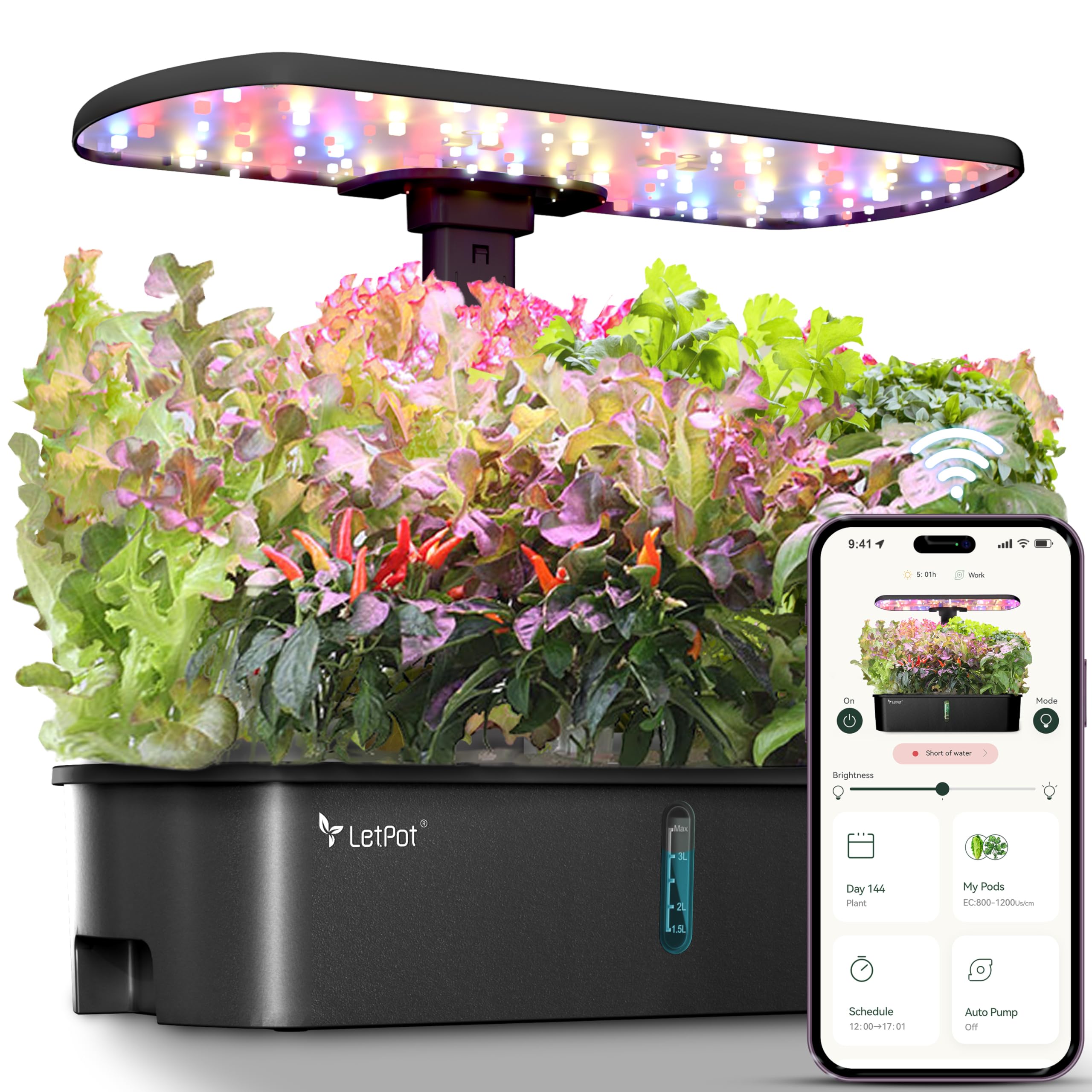
For growers who value automation, the LETPOT Smart Indoor Garden integrates Wi‑Fi connectivity and a dedicated mobile app. The 24‑W full‑spectrum LED panel can be programmed for 24‑hour cycles, and the app sends water‑level alerts, preventing dry‑run failures. Reviewers give it a 4.6‑star rating from 894 users, praising its 300 % faster growth claim.
- Adjustable LED rod up to 14 inches for tall herbs.
- 4‑liter water tank supports 14‑21 days of growth without refilling.
- BPA‑free resin construction for food‑safe durability.
At $72.56, the LETPOT system offers a budget‑friendly entry into smart hydroponics, especially for tech‑savvy hobbyists.
Comparison and Selection Guide
Choosing the appropriate system depends on garden size, desired automation, and budget. The table below compares the three featured products across essential criteria.
| Feature | iDOO Hydroponics Kit | Spider Farmer 7‑Gallon System | LETPOT Smart Indoor Garden |
|---|---|---|---|
| Capacity (plants) | 12 pods | Up to 12 plants (4 buckets × 3 plants each) | 10 pods |
| LED Power | 22 W | None (uses ambient or external LEDs) | 24 W full spectrum |
| Automation | Auto‑timer, fan, pump | Manual drip & air pump control | App‑controlled lighting & alerts |
| Water Tank Size | 4.5 L | 7 gal per bucket (total 28 gal) | 4 L |
| Price | $99.99 | $169.99 | $72.56 |
| Average Rating | 4.5/5 (6,847 reviews) | 4.4/5 (162 reviews) | 4.6/5 (894 reviews) |
For small kitchens, the iDOO kit offers a balanced blend of lighting and aeration. Large‑scale growers will benefit from the Spider Farmer’s DWC capacity, while the LETPOT excels for users who desire remote monitoring and rapid growth cycles.
Best Practices & Tips for Continuous Harvest
- Maintain a consistent photoperiod. Use a timer or app to avoid stress that can reduce leaf quality.
- Monitor pH daily; most herbs thrive between 5.8 and 6.5. Adjust with pH‑up or pH‑down solutions.
- Refresh nutrient solution every two weeks to prevent salt buildup, especially in larger systems like the Spider Farmer.
- Prune regularly. Removing the top third of foliage encourages bushier growth and prevents legginess.
- Rotate crops every 4‑6 weeks to reduce pest pressure and maintain soil‑free hygiene.
- Utilize the built‑in fans (iDOO) or external circulation to keep humidity around 50‑60 % and strengthen stems.
- Take advantage of smart alerts (LETPOT) to avoid water depletion, which is a common cause of plant shock.
Frequently Asked Questions
1. Can I grow the same herb year‑round in a single system?
Yes. By staggering sowing dates and using a system with adjustable lighting, such as the iDOO or LETPOT, you can maintain overlapping growth cycles for continuous harvest.
2. How often should I change the water in a 4.5 L tank?
Replace the water every 7‑10 days, or sooner if the solution becomes cloudy. This prevents pathogen buildup and maintains oxygen levels.
3. Do I need a separate air pump for the iDOO kit?
No. The iDOO system includes an integrated low‑noise pump that aerates the nutrient solution while the fan circulates air.
4. Is the Spider Farmer system compatible with LED grow lights?
Absolutely. The DWC buckets are designed to sit beneath any full‑spectrum LED panel, allowing you to customize light intensity and spectrum.
5. What is the advantage of the app‑controlled lighting in the LETPOT?
The app lets you program light intensity for each growth stage, reducing energy use and mimicking natural sunrise/sunset patterns for healthier plants.
6. Can I grow fruiting herbs like basil in a 10‑pod system?
Yes, provided you manage nutrient strength (higher potassium) and give the plants adequate vertical space using the adjustable LED rod.
7. How do I prevent algae growth in the water tank?
Cover the tank with an opaque lid, limit light exposure, and change the solution regularly. The iDOO’s built‑in fan also helps by reducing humidity around the tank.
Conclusion
By understanding the interplay of light, nutrients, and airflow, and by following the month‑by‑month planting schedule, growers can achieve uninterrupted herb harvests. The recommended systems—iDOO Hydroponics Kit, Spider Farmer 7‑Gallon System, and LETPOT Smart Indoor Garden—address different scales and automation preferences, ensuring that every gardener finds a suitable solution.
Implement the best practices outlined above, monitor plant health, and adjust the schedule as needed. Continuous learning and minor tweaks will transform a simple indoor garden into a reliable source of fresh flavor for any kitchen.
Products Featured in This Guide
iDOO Hydroponics Kit
Price: $99.99 | Rating: 4.5/5 (6,847 reviews)
Featured for its all‑in‑one design, adjustable 22‑W LED, and 20 % faster growth claim, making it ideal for beginners and small‑scale growers.
Spider Farmer 7‑Gallon System
Price: $169.99 | Rating: 4.4/5 (162 reviews)
Featured for its large 7‑gallon DWC buckets, powerful air pump, and modular drip irrigation, suited for intermediate growers seeking scalability.
LETPOT Smart Indoor Garden
Price: $72.56 | Rating: 4.6/5 (894 reviews)
Featured for its Wi‑Fi app control, 24‑W full‑spectrum LED, and rapid growth claim, offering tech‑savvy gardeners precise environmental management.