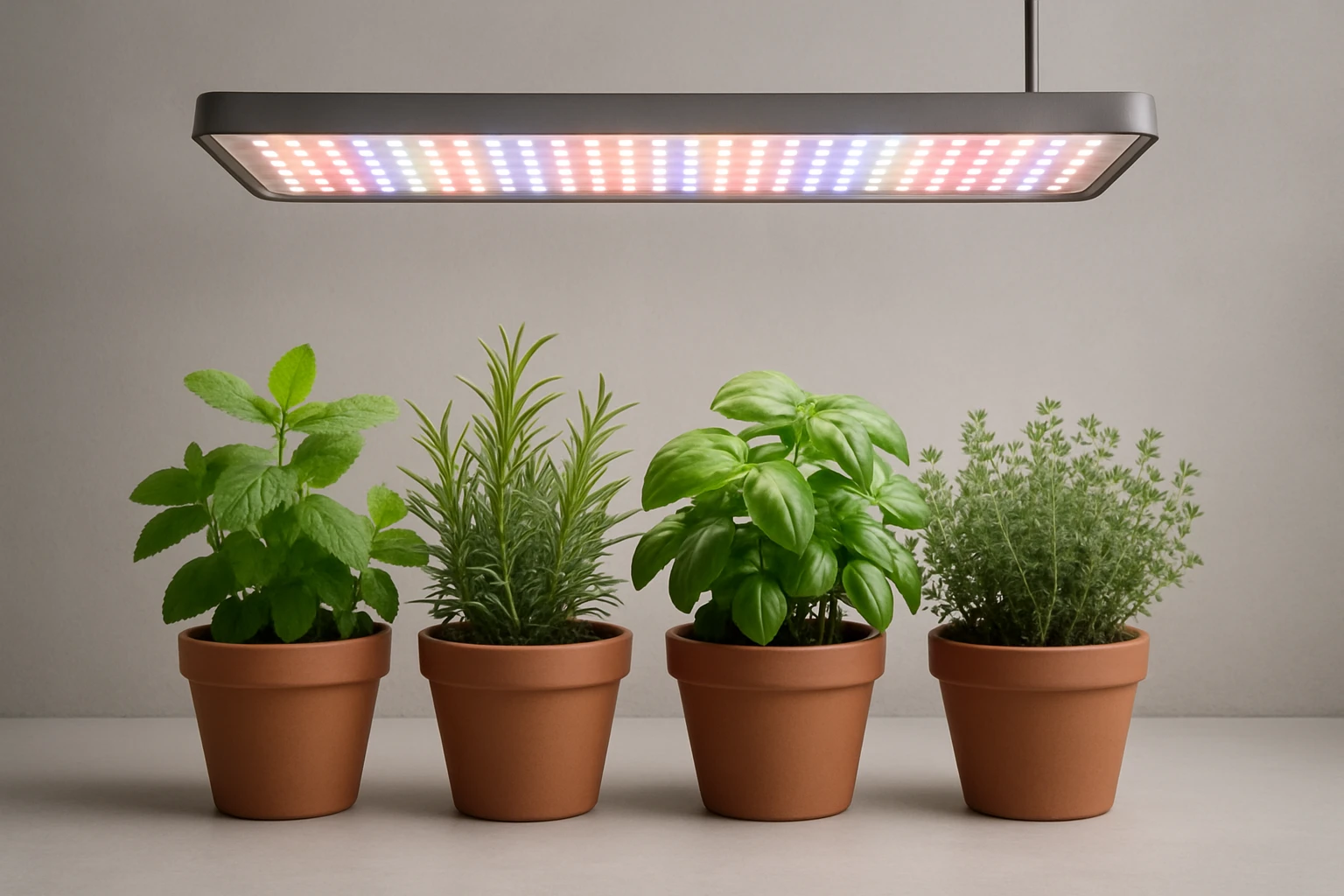

How to Optimize Grow Light Spectrum to Preserve and Maximize Herb Aroma
Introduction
Indoor herb growers often struggle to retain the fragrant oils that define culinary quality. This guide explains how light spectrum, duration, and positioning influence essential oil production. Readers will learn scientific principles, practical adjustments, and tools that enhance aroma without sacrificing growth speed. By following the steps, one can produce herbs whose scent rivals those cultivated outdoors.
What You’ll Need
- Adjustable full‑spectrum floor grow light (e.g., Aumtrly Floor Grow Light)
- Measuring tape or ruler
- Light‑meter (optional but helpful)
- Timer or built‑in timer function
- Adjustable plant stands or shelves
- Notebook for tracking observations
Step 1: Assess Herb Light Requirements
Different herbs possess distinct pigment compositions that react uniquely to red, blue, and white wavelengths. One should begin by identifying the target herb—basil, rosemary, or mint each have optimal spectral ranges for essential‑oil synthesis. Research indicates that a higher proportion of red light (660 nm) promotes vegetative growth, while a balanced blue‑white mix (3200 K and 6000 K) supports leaf density and oil concentration. Document the baseline growth characteristics before any light modification.
Step 2: Choose an Appropriate Spectrum
The Aumtrly Floor Grow Light delivers a full spectrum that includes red (660 nm), warm white (3200 K), and cool white (6000 K) LEDs. This combination mimics natural sunlight, encouraging photosynthesis and secondary metabolite formation. For aroma‑focused cultivation, set the lamp to its “Full Spectrum” mode and select the middle dimming level to avoid excessive intensity that can degrade volatile compounds. The three lighting modes allow experimentation: “Vegetative” for early growth, “Flowering” for oil accumulation, and “Custom” for fine‑tuning.
Step 3: Set Up and Position the Grow Light
Proper placement ensures uniform illumination and prevents shade‑induced stress, which can diminish aromatic oils. Extend the Aumtrly stand to a height of 30‑40 inches for medium‑sized herb trays; the adjustable range of 17‑61 inches accommodates taller plants such as lemon balm. Use the 7.8‑inch flexible gooseneck to angle the fixture so that light reaches the upper canopy without scorching lower leaves. Secure the stand on a stable surface to avoid wobble, and keep a distance of 12‑18 inches from the foliage, adjusting based on observed leaf coloration.
Step 4: Adjust Timing and Dimming
Herbs require a photoperiod that balances growth with oil synthesis. The built‑in timer on the Aumtrly lamp offers 6, 12, and 16‑hour cycles; a 16‑hour schedule provides continuous energy while allowing a brief dark period that triggers stress‑induced aroma production. Begin with a 14‑hour light cycle and observe leaf turgor; increase to 16 hours if growth remains vigorous. Utilize the five‑level dimming function to reduce intensity during the last two hours, mimicking dusk and encouraging the plant to store essential oils for protection.
Step 5: Monitor Aroma Development
Regular sensory evaluation is essential for confirming that spectral adjustments are effective. After two weeks of consistent lighting, gently crush a leaf and note the intensity of its scent; a stronger aroma indicates successful oil accumulation. Record the light settings, distance, and temperature in a notebook to correlate environmental variables with aroma changes. If the scent diminishes, consider lowering the blue‑white ratio slightly, as excessive blue light can inhibit terpene synthesis.
Step 6: Harvest and Preserve Aroma
Harvest herbs in the early morning when essential‑oil concentrations peak. Cut stems just above the leaf node, and immediately place them in a cool, dark area to prevent volatilization. For long‑term storage, dry the herbs in a low‑temperature oven (35‑40 °C) or use a dehydrator, preserving the aromatic profile cultivated under the optimized light spectrum. Proper post‑harvest handling locks in the fragrance that the grow light helped develop.
Tips & Pro Tips
- Rotate plant trays weekly to ensure even light distribution across all sides.
- Use a reflective backdrop (white Mylar or matte paint) to bounce stray photons back onto the foliage.
- Maintain ambient temperature between 68‑75 °F; extreme heat can degrade volatile compounds.
- Combine light adjustments with a balanced nutrient regimen rich in potassium, which supports oil synthesis.
- For advanced growers, employ a spectrometer to measure exact wavelength output and fine‑tune the lamp’s custom mode.
Troubleshooting
Problem: Leaves appear yellowed or bleached.
Solution: Reduce the light intensity by one dimming level and increase the distance by 2‑3 inches. Excessive red light can cause chlorophyll breakdown, leading to discoloration.
Problem: Aroma is weak despite healthy growth.
Solution: Introduce a short 2‑hour dark period each day to stimulate stress‑related terpene production. Adjust the timer to 14 hours on, 2 hours off, and 8 hours dark.
Conclusion
Optimizing grow light spectrum is a powerful method for preserving and maximizing herb aroma in indoor environments. By selecting a full‑spectrum floor grow light, positioning it correctly, and fine‑tuning timing and dimming, one can encourage robust essential‑oil development. The steps outlined above provide a repeatable framework that blends scientific insight with practical tools. Implement these practices to enjoy fresh‑scented herbs year‑round, whether for culinary, medicinal, or ornamental purposes.
Products Mentioned in This Guide
Frequently Asked Questions
What light spectrum range best preserves the aromatic oils in herbs like basil and rosemary?
A balanced full-spectrum with a slight emphasis on blue (400‑500 nm) and a moderate red (600‑660 nm) boost promotes essential‑oil production while maintaining growth.
How long should I run my grow lights each day to maximize herb aroma without causing stress?
Aim for 12‑14 hours of light per day, using a timer to provide a consistent photoperiod and a short dark period for oil synthesis.
Does the distance between the grow light and herb leaves affect scent quality?
Yes, keep the light 12‑24 inches above the canopy; too close can bleach oils, while too far reduces intensity and aroma development.
Can a light‑meter help fine‑tune the spectrum for better herb fragrance?
A light‑meter lets you verify PAR levels (150‑300 µmol m⁻² s⁻¹ for most herbs) and adjust intensity to keep the spectrum within the optimal range.
Are there specific adjustments for mint versus rosemary when using an adjustable full‑spectrum light?
Mint benefits from slightly higher blue light to boost leaf growth, whereas rosemary thrives with a modest red boost to enhance resin and oil production.