Introduction
The sound environment of a hydroponic grow room can influence both plant health and grower comfort. This guide explains how decibel (dB) levels are measured, interpreted, and reduced in indoor cultivation spaces. Readers will learn the science behind noise, practical measurement techniques, and product recommendations that enhance quiet operation. By the end, growers will be equipped to create a more peaceful and productive grow environment.
Background/Context
Decibel is a logarithmic unit that quantifies sound pressure relative to a reference level. In a grow room, sources such as ventilation fans, water pumps, and lighting systems contribute to the overall noise floor. Excessive noise can mask subtle equipment alerts and create an uncomfortable workspace, especially during long growing cycles. Understanding the baseline acoustic profile enables growers to implement targeted mitigation strategies without compromising airflow or lighting efficiency.
Understanding Decibel Levels in Grow Rooms
Typical residential environments range from 30 dB (quiet library) to 70 dB (busy street). A well‑designed hydroponic setup should aim for 35‑45 dB, which is comparable to a soft conversation. Levels above 55 dB may become distracting and can indicate over‑working equipment. It is important to differentiate between continuous background hum and intermittent peaks caused by pump cycles or fan speed changes. Continuous monitoring helps identify problematic components before they affect plant growth.
Measuring Noise Accurately
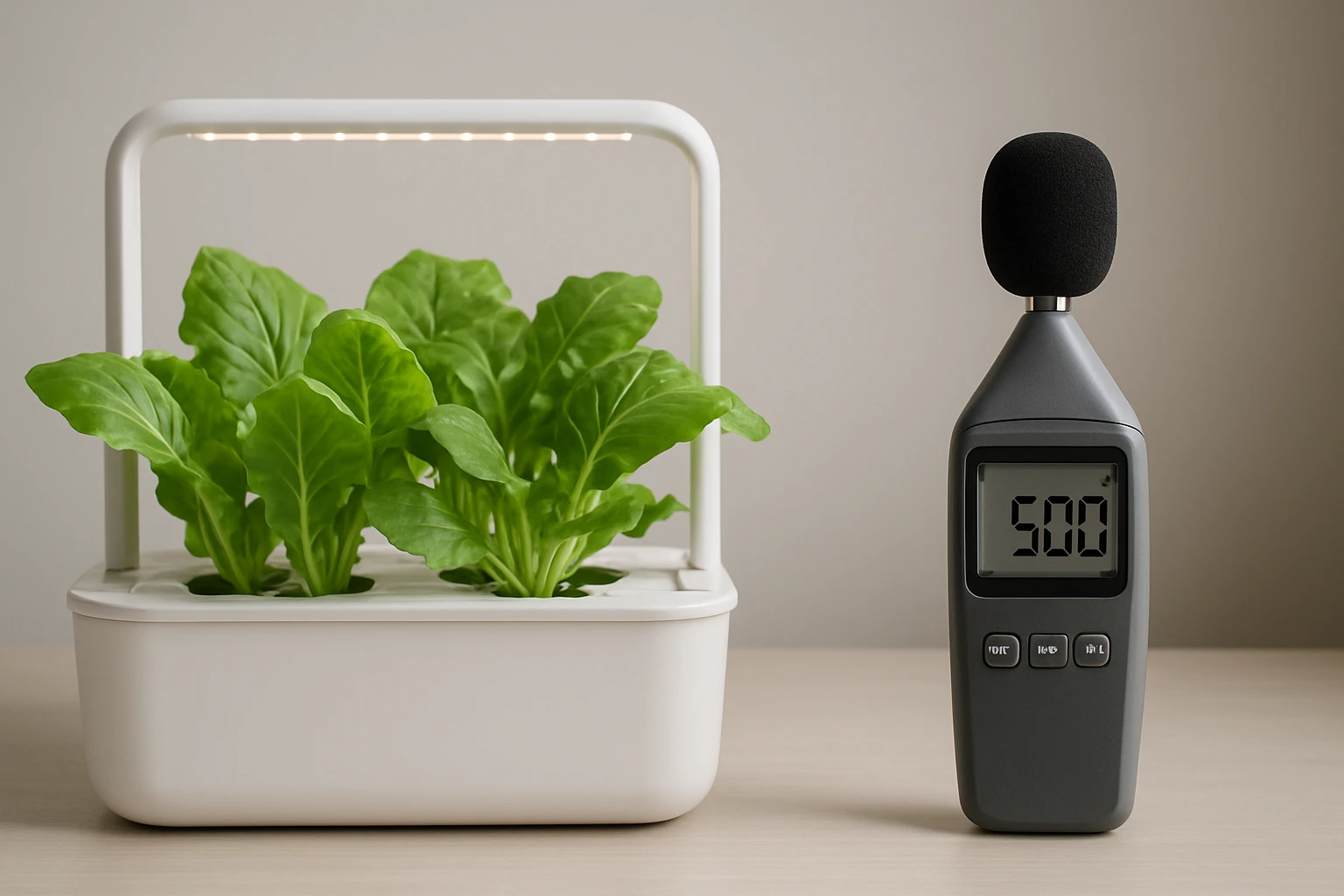
Accurate measurement requires a calibrated sound level meter (SLM) or a reliable smartphone app with a calibrated microphone. Position the meter at ear level, one meter away from the primary noise source, and record the A‑weighted (dBA) reading, which reflects human hearing sensitivity. Take measurements at different times of day to capture variations caused by lighting schedules and water circulation. Document the results in a simple table to track trends over weeks or months.
Product Recommendations for Noise Management
When selecting equipment, prioritize models that combine airflow performance with low acoustic output. The DREO Quiet Oscillating Fan exemplifies this balance. It delivers up to 1000 CFM of airflow at only 20 dB, thanks to a DC motor and bionic blade design. With eight speed settings, an auto‑mode that adjusts speed every 2 °F temperature rise, and an 8‑hour timer, it offers precise climate control without adding noticeable noise.
For growers who need a compact, silent water circulation solution, the URUQ Indoor Hydroponics Kit includes a sub‑20 dB pump that circulates nutrient solution every 30 minutes. The kit’s 24‑watt LED grow light operates at a whisper‑quiet level and features a height‑adjustable pole for optimal plant coverage. Its detachable design simplifies cleaning, and the built‑in water‑shortage indicator prevents dry‑run damage.
Comparison/Selection Guide
| Feature | DREO Quiet Oscillating Fan | URUQ Indoor Hydroponics Kit |
|---|---|---|
| Primary Noise Source | Air circulation fan (20 dB) | Water pump (≤20 dB) |
| Airflow / Pump Capacity | 1000 CFM, 90 ft reach | 3 L reservoir, continuous circulation |
| Adjustability | 8‑speed, auto mode, 90° oscillation, 105° tilt, height 38‑42″ | LED pole height up to 21″, 180° rotation |
| Power Consumption | DC motor, energy‑efficient | 24 W LED, low‑power pump |
| Price | $79.99 | $51.99 |
| Customer Rating | 4.7/5 (4,018 reviews) | 4.6/5 (497 reviews) |
Growers who prioritize climate control should consider the DREO fan, while those focusing on nutrient delivery and lighting may find the URUQ kit more valuable. Both products maintain a quiet profile, making them ideal for shared living spaces or research labs.
Best Practices & Tips
- Place noisy equipment on vibration‑isolating pads to reduce structure‑borne sound.
- Use acoustic foam or sound‑absorbing panels on walls and ceilings to dampen reflections.
- Schedule high‑speed fan or pump cycles during daylight hours when ambient noise is higher.
- Regularly clean blades, grills, and pump impellers; buildup can increase motor load and noise.
- Combine low‑noise devices like the DREO fan and URUQ pump with a smart controller that adjusts speed based on temperature and humidity thresholds.
FAQ
- What dB level is considered silent for a grow room? A reading below 30 dB is typically perceived as silent, but 35‑45 dB provides a comfortable background hum without distraction.
- Can I use a regular household fan for ventilation? Household fans often exceed 50 dB and lack the airflow efficiency of purpose‑built models like the DREO Quiet Oscillating Fan.
- How often should I calibrate my sound level meter? Calibrate at least once every six months or after any impact that could affect the microphone.
- Does the URUQ kit’s pump affect plant root health? The sub‑20 dB pump provides gentle circulation, promoting oxygenation without causing root shear.
- Is it safe to run the fan and pump continuously? Yes, both devices are designed for 24‑hour operation; however, using timers can further reduce wear and energy use.
Conclusion
Managing noise in hydroponic grow rooms requires a blend of accurate measurement, informed equipment selection, and strategic sound‑dampening techniques. By applying the decibel chart concepts outlined above, growers can maintain optimal environmental conditions while preserving a quiet workspace. The featured DREO Quiet Oscillating Fan and URUQ Indoor Hydroponics Kit demonstrate that high performance and low noise are not mutually exclusive.
Products Featured in This Guide
DREO Quiet Oscillating Fan
Price: $79.99 | Rating: 4.7/5 (4,018 reviews)
Featured for its ultra‑quiet 20 dB operation, powerful 1000 CFM airflow, and versatile height and oscillation adjustments, making it ideal for low‑noise climate control.
URUQ Indoor Hydroponics Kit
Price: $51.99 | Rating: 4.6/5 (497 reviews)
Featured for its sub‑20 dB water pump, adjustable 24 W LED grow light, and easy‑setup design that supports quiet, efficient indoor cultivation.
Frequently Asked Questions
What decibel range is ideal for a hydroponic grow room?
Aim for 35‑45 dB, which is comparable to a quiet office and keeps both plants and growers comfortable.
How can I accurately measure noise levels in my grow room?
Use a calibrated sound level meter or a smartphone app with a dB meter feature, taking readings at ear height and multiple points around the room.
Which equipment typically contributes the most noise in a hydroponic setup?
Ventilation fans, water pumps, and high‑intensity lighting are the primary sources of sound in a grow environment.
What are effective ways to reduce fan noise without sacrificing airflow?
Install insulated fan housings, vibration‑dampening mounts, and use variable‑speed fans to match airflow needs while lowering RPM.
Can a noise‑reduction chart help improve plant health?
Yes, by identifying loud equipment that may mask alerts, growers can mitigate stressors and maintain optimal growing conditions.