Introduction
Home hydroponic growers frequently handle concentrated nutrient solutions that can cause serious chemical exposure if spilled. This guide explains how to assess a spill, protect oneself, contain the liquid, perform a thorough cleanup, and implement preventive measures. Readers will gain confidence in managing accidents while maintaining plant health and personal safety. By following these procedures, one can minimize damage to equipment, reduce health risks, and preserve the integrity of the growing environment.
What You’ll Need
- Protective gloves (e.g., BEASTEK 8mil Black Nitrile Gloves)
- Absorbent pads or spill kits
- pH‑neutral cleaning solution
- Soft scrub brush
- Disposable towels
- Plastic trash bags
- Safety goggles and apron
Step 1: Assess the Spill
Begin by evaluating the volume, concentration, and location of the nutrient solution. Determine whether the spill has reached electrical components, plant roots, or the growing medium. Note the type of nutrients involved, as some formulations contain high levels of nitrogen, phosphorus, or potassium that can be corrosive. This assessment informs the level of personal protection required and the containment strategy you will employ.
Step 2: Protect Yourself
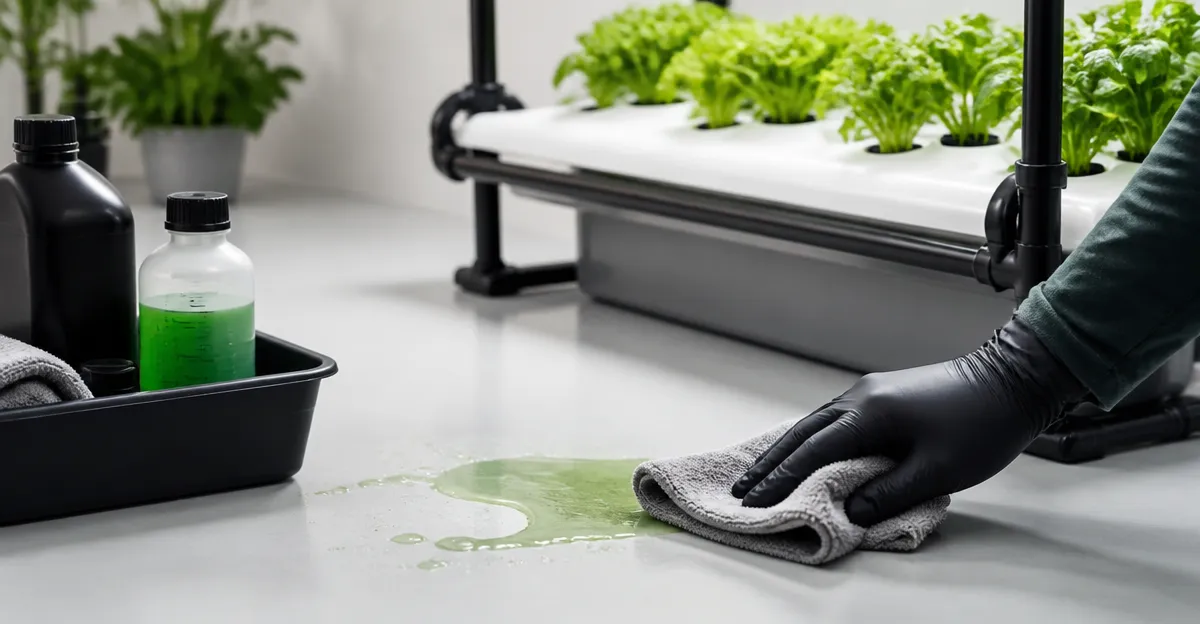
Before touching any liquid, equip yourself with appropriate personal protective equipment (PPE). The BEASTEK 8mil Black Nitrile Gloves provide a reliable barrier against chemical exposure because they are powder‑free, latex‑free, and resistant to most hydroponic nutrients. Their 8‑mil thickness offers durability for heavy‑duty tasks, while the textured surface ensures a secure grip on wet tools. At a price of $7.18 and a rating of 4.6 out of 5 from 1,002 reviewers, they represent a cost‑effective solution for both novice and experienced growers.
In addition to gloves, wear safety goggles to protect the eyes from splashes and an apron to shield clothing. Ensure that the work area is well‑ventilated to reduce inhalation of any aerosolized particles.
Step 3: Contain the Spill
Quick containment prevents the nutrient solution from spreading to electrical wiring, other plants, or flooring. Place absorbent pads around the perimeter of the spill, creating a barrier that directs the liquid toward a central collection point. If the spill is large, use a commercial spill kit that includes booms and absorbent socks. Gently pour a neutralizing solution—such as a diluted vinegar‑water mix—over the spill to reduce pH extremes, then cover with additional pads to soak up the diluted fluid.
When dealing with hydroponic reservoirs, isolate the affected tank by disconnecting power and water lines. This step avoids accidental activation of pumps that could disperse the contaminant further.
Step 4: Clean Up the Residue
After containment, remove the saturated absorbent materials and place them in a sealed plastic trash bag. Dispose of the bag according to local hazardous waste guidelines, as nutrient residues can be harmful to the environment if poured down drains.
Next, scrub the affected surfaces with a pH‑neutral cleaning solution and a soft brush. Rinse thoroughly with clean water to eliminate any lingering mineral deposits. For porous surfaces such as rockwool or coconut coir, replace the material entirely to avoid residual nutrient buildup that could affect future plant growth.
Finally, dry the area with disposable towels and allow it to air‑dry before re‑installing equipment. Verify that all connections are secure and that no moisture remains on electrical components.
Step 5: Prevent Future Spills
Implementing preventive measures reduces the likelihood of repeat incidents. Store nutrient bottles on sturdy, level shelves away from high‑traffic zones. Use funnel‑attached containers with spill‑proof caps when transferring solutions. Label each solution clearly with concentration and expiration date to avoid confusion.
Consider installing drip trays beneath reservoirs and nutrient lines. These trays capture accidental drips and provide an easy cleanup point. Regularly inspect hoses and connectors for wear, and replace them before they fail.
Educate all household members who may assist with the hydroponic system about proper handling techniques. A brief safety briefing can significantly lower the risk of accidental exposure.
Tips & Pro Tips
- Keep a dedicated spill kit within arm’s reach of every reservoir to enable rapid response.
- Test the pH of the cleaning solution before use; a neutral pH (around 7) prevents additional stress on plant roots.
- When using gloves, change them immediately if they become saturated to maintain barrier integrity.
- Document each spill incident, noting cause and corrective actions, to identify patterns and improve safety protocols.
- For large-scale setups, consider installing automated shut‑off valves that trigger when a leak is detected.
Troubleshooting
Problem: Residual nutrient stains remain on glass or plastic components after cleaning.
Solution: Apply a mixture of equal parts isopropyl alcohol and water, let it sit for five minutes, then rinse thoroughly. This combination breaks down mineral deposits without damaging the material.
Problem: Skin irritation after handling nutrients despite wearing gloves.
Solution: Verify that gloves are intact and free of micro‑tears. Replace gloves immediately if any damage is detected, and wash the exposed skin with mild soap and water.
Conclusion
Managing nutrient spills in home hydroponics requires a systematic approach that prioritizes safety, containment, thorough cleanup, and preventive planning. By following the steps outlined above, one can protect personal health, preserve equipment, and maintain optimal growing conditions. Consistent use of reliable protective gear—such as the BEASTEK 8mil Black Nitrile Gloves—enhances confidence and efficiency during emergency response.
Implementing these practices will not only reduce downtime after an accident but also foster a safer, more productive hydroponic environment for the long term.
Products Mentioned in This Guide
Frequently Asked Questions
What protective gear should I wear when cleaning a hydroponic nutrient spill?
Wear nitrile gloves, safety goggles, an apron, and if possible a mask to avoid inhaling aerosols.
How can I quickly contain a nutrient spill in a home hydroponic system?
Use absorbent pads or a spill kit to soak up the liquid and create a barrier around the affected area.
What is the safest way to clean up a nutrient spill without harming equipment?
Apply a pH‑neutral cleaning solution, scrub gently with a soft brush, then wipe with disposable towels and dispose of waste in plastic bags.
How do I know if a nutrient spill has reached electrical components?
Inspect nearby wires and power supplies for visible liquid; if any moisture is present, turn off power before proceeding.
What preventive steps can reduce the risk of future nutrient spills?
Store concentrated nutrients in sealed containers, use drip trays, and keep spill kits readily accessible.