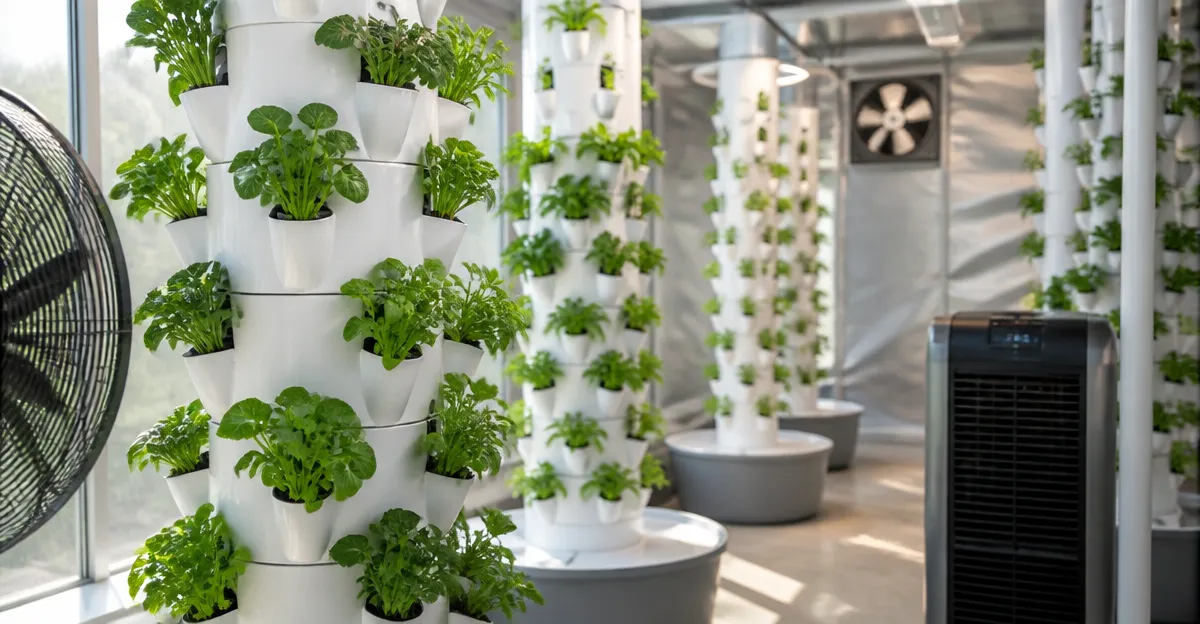
How to Manage Heat in Vertical Hydroponic Towers: Essential Cooling & Ventilation Tips
Introduction
One will learn how to identify, control, and mitigate excessive temperature in vertical hydroponic towers. Maintaining optimal thermal conditions is essential for maximizing growth rates, preventing nutrient stress, and extending the productive lifespan of the system. This guide explains the scientific principles behind heat buildup, presents practical cooling strategies, and recommends tools that simplify implementation. By following the steps, growers can achieve consistent yields even in hot climates or indoor environments with limited airflow.
What You’ll Need
- Portable fans or axial circulation fans
- Evaporative cooling pads or misting modules
- Reflective insulation or Mylar sheets
- Temperature and humidity sensors with digital readout
- Flexible tubing and drip emitters for misting
- VIVOSUN 2-Bucket DWC Hydroponic System – provides reliable aeration and water circulation for the root zone
Step 1: Assess the Thermal Profile of Your Tower
One should begin by measuring ambient temperature, root‑zone temperature, and leaf surface temperature at different times of day. Use a calibrated digital thermometer or a wireless sensor that records data for later analysis. Record the highest temperature observed during peak sunlight and the lowest temperature during night hours. This baseline information reveals whether heat stress is occurring and helps to prioritize cooling interventions.
When the root zone exceeds 28 °C (82 °F), most leafy greens experience reduced nutrient uptake and slower growth. In contrast, many fruiting varieties tolerate temperatures up to 30 °C (86 °F) but still benefit from cooler roots. By documenting the temperature gradient, one can determine if the problem originates from external heat, insufficient airflow, or heat generated by the pump and lighting.
It is advisable to repeat the measurement for at least three consecutive days to capture fluctuations caused by weather changes or lighting schedules. Plotting the data on a simple spreadsheet provides a visual reference for evaluating the effectiveness of subsequent cooling measures.
Step 2: Enhance Air Circulation Around the Tower
Proper air movement removes hot air pockets and distributes cooler ambient air across the foliage. Install one or two portable axial fans at the base of the tower, directing airflow upward along the vertical plane. Position the fans on opposite sides to create a gentle cross‑draft that does not disturb the plant leaves excessively.
Fans rated between 30 and 50 CFM (cubic feet per minute) are sufficient for most home‑scale towers. The airflow should be strong enough to feel a light breeze but not so vigorous that it desiccates the leaves. Adjust fan speed using a built‑in controller or a separate variable‑speed regulator.
In addition to external fans, the VIVOSUN 2-Bucket DWC Hydroponic System contributes to root‑zone aeration by delivering a steady stream of micro‑bubbles through its powerful air pump. The air pump provides an output of 4 × 4 L/min, which promotes oxygen dissolution in the nutrient solution and reduces heat accumulation within the water. By maintaining dissolved oxygen levels above 6 mg/L, the system helps to keep root temperatures lower than the surrounding air.
Step 3: Install an Evaporative Cooling or Misting Module
Evaporative cooling reduces temperature by converting water into vapor, which absorbs heat from the surrounding air. A misting system consisting of fine‑spray emitters placed near the middle and top sections of the tower can lower leaf temperature by up to 5 °C (9 °F) during hot periods.
Connect flexible tubing to a low‑pressure pump, and attach drip emitters that produce droplets smaller than 0.5 mm. Set the misting schedule to operate for 30 seconds every 10 minutes during the hottest part of the day. This intermittent pattern prevents waterlogging while delivering sufficient cooling effect.
When integrating misting with the VIVOSUN 2-Bucket DWC Hydroponic System, ensure that excess mist does not enter the nutrient reservoir. Use a splash guard or position the emitters slightly outward of the tower’s outer frame. The system’s built‑in water level tubes and floating balls help monitor reservoir levels, allowing one to adjust misting frequency without risking overflow.
Step 4: Apply Reflective Insulation to Reduce Radiant Heat Gain
Vertical towers absorb solar radiation directly, especially when placed near windows or under grow lights. Covering the exterior of the tower with reflective Mylar or aluminum foil reduces heat absorption by reflecting up to 95 % of incident light. Cut the material to match the tower’s height and secure it with zip ties or heat‑resistant tape.Reflective insulation also helps to maintain a more uniform temperature across the tower’s surface, preventing hot spots that can stress individual plants. For indoor setups, consider using reflective panels on the walls surrounding the tower to bounce excess light away from the structure.
Combine reflective insulation with the air circulation and misting steps for a synergistic effect. While the insulation reduces heat input, the fans and misting remove the heat that does accumulate, creating a balanced thermal environment.
Step 5: Monitor and Adjust Temperature Continuously
Continuous monitoring enables one to respond promptly to unexpected temperature spikes. Install a wireless temperature and humidity sensor at leaf level and another probe within the nutrient reservoir. Choose a sensor that transmits data to a smartphone app, allowing real‑time alerts when temperature exceeds a preset threshold (e.g., 28 °C for leafy greens).
When an alert is triggered, increase fan speed, extend misting duration, or open a nearby window to introduce fresh air. Conversely, if temperatures fall below optimal ranges during night hours, reduce fan speed and misting frequency to conserve energy and prevent over‑cooling.
Document all adjustments in a logbook alongside the temperature readings. Over time, the log will reveal patterns that help refine the cooling strategy for the specific growing environment.
Tips & Pro Tips
- Place the tower on a raised platform to improve air circulation beneath the base.
- Use a hygrometer to monitor relative humidity; excessive humidity can negate the benefits of evaporative cooling.
- Rotate plants periodically to ensure uniform light exposure and prevent localized heat buildup.
- When using LED grow lights, select models with a lower heat output and incorporate a heat sink.
- Regularly clean air stones and pump filters in the VIVOSUN 2-Bucket DWC Hydroponic System to maintain optimal airflow and prevent clogging.
Troubleshooting
Problem: Root temperature remains high despite fan operation.
Solution: Verify that the air pump in the VIVOSUN system is functioning at full capacity; replace the air stone if bubbles appear weak. Increase misting frequency or add a secondary evaporative pad.
Problem: Leaves show signs of wilting in the early morning.
Solution: Reduce fan speed at night to avoid excessive transpiration loss. Ensure that the reservoir is not over‑aerated, which can lower water temperature too rapidly.
Problem: Condensation forms on the reflective insulation.
Solution: Adjust misting intervals to prevent excess moisture. Use a breathable backing material behind the reflective sheet to allow moisture to escape.
Conclusion
One has now learned how to evaluate heat stress, improve airflow, implement evaporative cooling, apply reflective barriers, and monitor temperature continuously in vertical hydroponic towers. By integrating these techniques with reliable equipment such as the VIVOSUN 2-Bucket DWC Hydroponic System, growers can sustain optimal root and foliage temperatures, thereby enhancing growth rates and yield quality. Consistent application of the outlined steps will result in a resilient hydroponic setup capable of thriving under challenging thermal conditions.
Products Mentioned in This Guide
Frequently Asked Questions
Why does heat build up in vertical hydroponic towers?
Heat accumulates because dense plant spacing, enclosed structures, and water reservoirs trap solar and ambient heat, raising root-zone temperatures.
What is the most effective way to lower temperature in a tower system?
Using evaporative cooling pads or misting modules directly on the tower’s exterior quickly reduces ambient heat through water evaporation.
How do fans improve ventilation for vertical towers?
Portable axial fans create airflow that disperses hot air, promotes transpiration, and helps maintain uniform temperature throughout the tower.
Can reflective insulation protect roots from overheating?
Yes, covering the tower with Mylar or reflective insulation reflects solar radiation, keeping the water and root zone cooler.
What sensors should I use to monitor heat stress?
Install digital temperature and humidity sensors with alerts so you can adjust fans or misting before plants experience thermal stress.