Ultimate Guide to Ergonomic Hydroponic System Design for Disabled Gardeners
Introduction
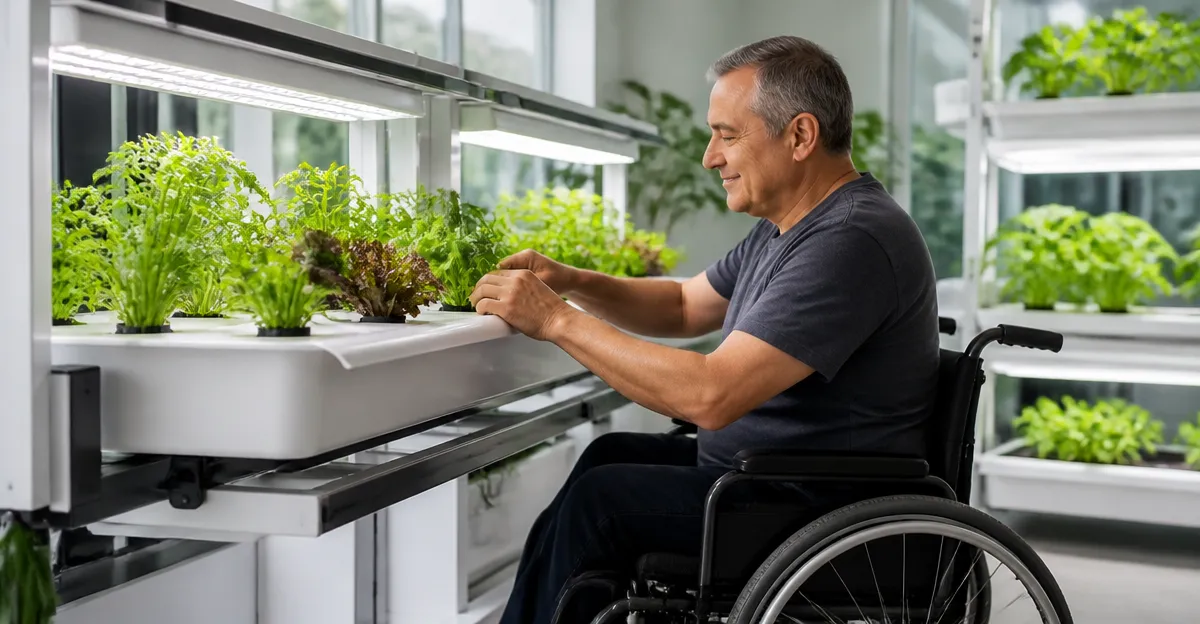
This guide explores how to design hydroponic systems that accommodate a range of physical abilities. Readers will learn essential ergonomic principles, discover how to adapt lighting, water circulation, and plant access, and receive curated product recommendations that enhance usability without sacrificing performance. The information presented balances scientific background with actionable design steps, ensuring that both novice and experienced gardeners can create inclusive indoor farms.
By the end of this article, one will understand how to evaluate system size, height, control interfaces, and maintenance requirements. The guide also provides a side‑by‑side comparison of three market‑leading hydroponic kits, helping disabled gardeners select the solution that best matches their space and mobility constraints.
Background and Context
Hydroponics replaces soil with nutrient‑rich water, allowing plants to grow faster and with higher yields. For disabled gardeners, the technology eliminates the need for heavy soil bags, repetitive bending, and uneven terrain. However, the convenience of hydroponics can be undermined if the system itself is not ergonomically designed.
Key concepts include reach distance, visual accessibility, tactile feedback, and noise level. Reach distance refers to the maximum horizontal span a user can comfortably access without overextending. Visual accessibility involves clear displays and adequate lighting for users with limited vision. Tactile feedback ensures that controls can be operated by users with reduced dexterity, while low noise levels prevent auditory overload for users with sensitivity.
Understanding these concepts provides a foundation for evaluating any hydroponic product. The following sections translate theory into practical design choices that can be implemented in a home kitchen, office, or community center.
Ergonomic Principles for Hydroponic Design
When designing an ergonomic hydroponic system, consider the following principles:
- Adjustable Height: Systems should allow the grow light and planting tray to be raised or lowered to accommodate seated or standing users.
- Modular Components: Modular tanks and pump assemblies enable easy removal for cleaning without requiring heavy lifting. li>Intuitive Controls: Digital displays with large icons, audible alerts, and simple on/off switches reduce cognitive load.
- Quiet Operation: Pumps that generate less than 30 decibels minimize distraction for users with auditory sensitivities.
- Compact Footprint: A footprint that fits on a countertop or wheelchair‑accessible table preserves floor space and improves maneuverability.
Applying these principles results in a system that can be operated safely by individuals with limited reach, reduced grip strength, or visual impairments.
Product Recommendations
The following products exemplify ergonomic design while delivering robust hydroponic performance. Each product is linked on its first appearance for easy reference.
Ahopegarden 66-Pod Hydroponic Indoor Garden offers a large‑capacity, triple‑layer system with dual LED grow light modes. The 30‑liter water reservoir is divided into three 10‑liter tanks, allowing users to monitor water levels without bending. The silent pump circulates nutrients while a collapsible frame reduces the overall height to 26 inches, making it accessible for seated users. A smart panel displays water and nutrient status, providing audible alerts for low water conditions.
For gardeners seeking a compact, height‑adjustable solution, URUQ 8-Pod Adjustable Hydroponic Garden features a 24‑watt LED panel that pivots up to 180 degrees and a height‑adjustable pole that reaches 21 inches. The water pump operates below 20 decibels, ensuring a quiet environment. A built‑in water‑shortage indicator reduces the risk of forgotten watering cycles, which is especially valuable for users with memory challenges.
AeroGarden Harvest Elite 6-Pod System combines a sleek stainless‑steel cabinet with a full‑spectrum 20‑watt LED grow light. The digital display offers touch‑sensitive controls and a vacation mode that maintains optimal conditions while the gardener is away. The system’s compact footprint (approximately 12 inches wide) fits comfortably on a wheelchair‑accessible table, and the pre‑seeded pods simplify planting for users with limited dexterity.
Comparison and Selection Guide
| Feature | Ahopegarden 66‑Pod | URUQ 8‑Pod | AeroGarden Harvest Elite |
|---|---|---|---|
| Capacity (Pods) | 66 | 8 | 6 |
| Water Reservoir | 30 L (3 × 10 L tanks) | 3 L with viewing window | 2 L integrated bowl |
| LED Power | 53 W dual‑mode | 24 W adjustable | 20 W full‑spectrum |
| Adjustable Height | 14.68 in adjustable light post | 21 in pole, 180° tilt | Up to 12 in grow height |
| Noise Level | Silent pump (≤30 dB) | ≤20 dB pump | Quiet pump (≈25 dB) |
| Price | $309.99 | $39.99 | $129.95 |
| Rating | 4.5 / 5 (86 reviews) | 4.5 / 5 (603 reviews) | 4.4 / 5 (6,556 reviews) |
| Key Ergonomic Feature | Triple‑layer tank with smart panel | Height‑adjustable LED pole | Touch‑sensitive digital display |
Choosing the right system depends on space, desired yield, and specific accessibility needs. Users who require high capacity and multiple crop zones may prefer the Ahopegarden model, while those with limited countertop space might find the URUQ or AeroGarden options more suitable.
Best Practices & Tips
- Position the system at waist height: Place the hydroponic unit on a table that aligns with the user’s waist when seated. This reduces the need to bend or reach overhead.
- Use visual contrast: Choose models with clear, high‑contrast displays and LED indicators that are easily distinguished by users with low vision.
- Implement routine checks: Set calendar reminders for water refills and nutrient additions. Systems with audible alerts, such as the Ahopegarden, simplify compliance.
- Maintain a quiet environment: Select pumps rated below 30 dB to avoid auditory overload. Both the URUQ and Ahopegarden meet this criterion.
- Leverage modular components: When cleaning, detach individual tanks or trays to prevent heavy lifting. The URUQ’s detachable LED pole exemplifies this approach.
- Utilize assistive devices: Pair the hydroponic system with a reach‑assist tool or a rolling cart to move the unit if needed.
- Monitor nutrient levels digitally: Systems with integrated sensors reduce manual testing, which can be challenging for users with limited fine motor skills.
Frequently Asked Questions
Can hydroponic systems be used by wheelchair users?
Yes, provided the unit fits within the wheelchair’s turning radius and the control panel is reachable from a seated position. The AeroGarden Harvest Elite, with its compact footprint and tabletop design, is particularly well‑suited.
What lighting schedule is optimal for users with visual impairments?
A dual‑mode schedule, such as the 16‑hour and 22‑hour settings offered by the Ahopegarden, allows users to select a shorter cycle that reduces glare while still supporting robust growth.
How often do I need to replace the water pump?
Most pumps last 2‑3 years with regular cleaning. Selecting a model with a removable pump, like the URUQ, simplifies replacement without professional assistance.
Is it safe to leave the system unattended for long periods?
Systems with vacation mode, such as the AeroGarden Harvest Elite, automatically adjust lighting and nutrient delivery, ensuring plant health during extended absences.
Do I need special nutrients for disabled gardeners?
No special nutrients are required; however, pre‑measured liquid plant foods reduce the need for precise measuring, which benefits users with limited dexterity.
Conclusion
Designing an ergonomic hydroponic system empowers disabled gardeners to enjoy fresh, nutritious produce without compromising safety or comfort. By applying ergonomic principles, selecting appropriate lighting and pump configurations, and leveraging the recommended products, one can create a sustainable indoor garden that adapts to a wide range of physical abilities. Continuous monitoring, routine maintenance, and the use of assistive accessories further enhance usability, ensuring that the joy of gardening remains accessible to everyone.
Products Featured in This Guide
Ahopegarden 66-Pod Hydroponic Indoor Garden
Price: $309.99
Rating: 4.5/5 (86 reviews)
Featured for its large 66‑pod capacity, triple‑layer water tanks, and dual‑mode LED lighting that increase yield by up to 50 % while offering adjustable height for seated operation.
URUQ 8-Pod Adjustable Hydroponic Garden
Price: $39.99
Rating: 4.5/5 (603 reviews)
Featured for its compact design, height‑adjustable LED pole, ultra‑quiet pump, and visual water‑shortage indicator, making it ideal for limited‑space and low‑noise environments.
AeroGarden Harvest Elite 6-Pod System
Price: $129.95
Rating: 4.4/5 (6,556 reviews)
Featured for its sleek stainless‑steel cabinet, full‑spectrum 20 W LED light, touch‑sensitive digital display, and vacation mode, providing a user‑friendly experience for gardeners with limited dexterity.