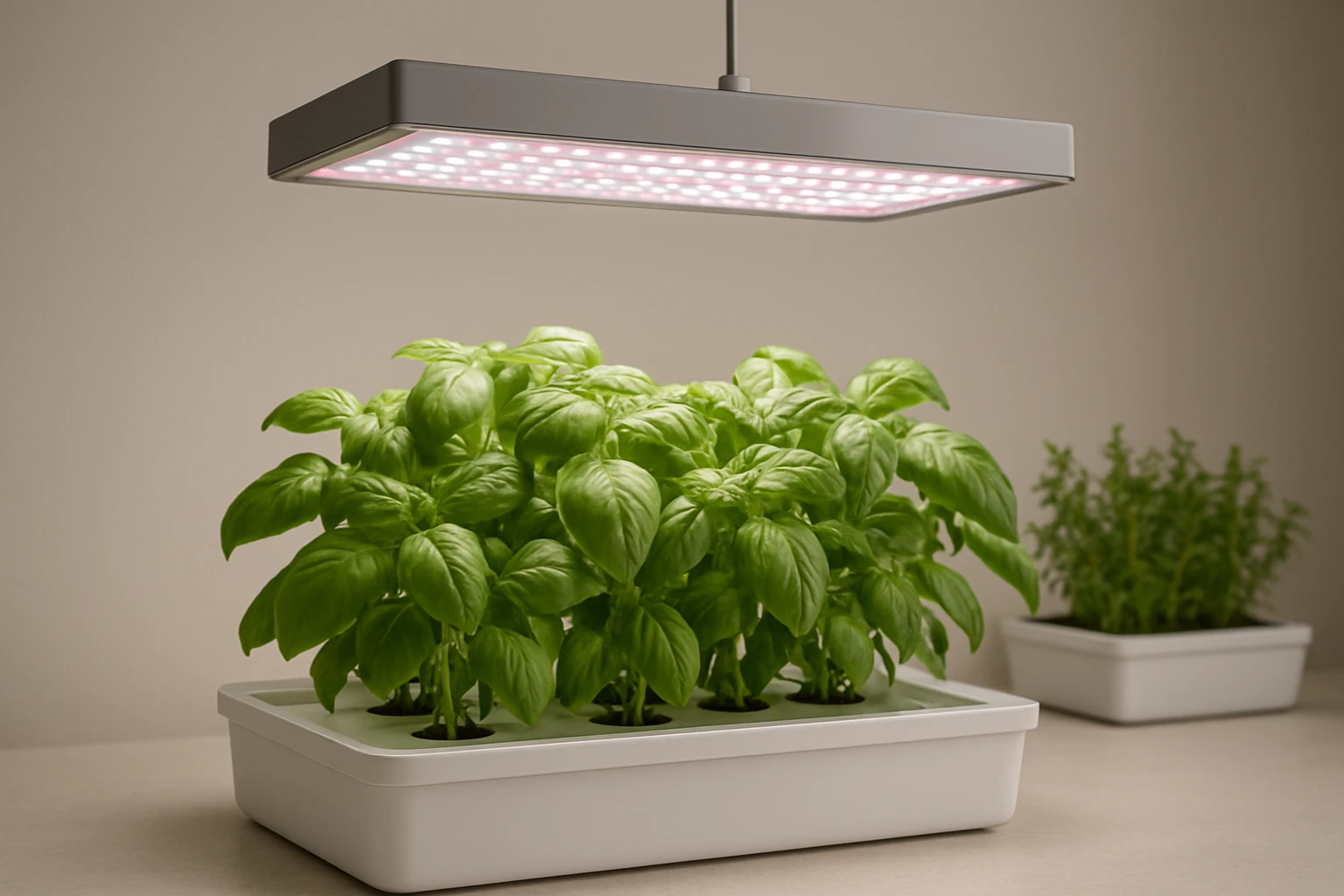
Introduction
Hydroponic herb growers seek consistent flavor, aroma, and potency across harvests. Understanding how light spectrum influences photosynthetic pathways enables precise control over secondary metabolite production. This guide explains how to select, install, and fine‑tune artificial lighting to maximize flavor while maintaining energy efficiency. Readers will acquire actionable steps that can be implemented with modest equipment and without sacrificing plant health.
What You'll Need
- One bseah Full Spectrum Grow Light – $14.99, 4.5/5 rating (8,663 reviews)
- One Aokrean Adjustable Grow Light – $23.99, 4.5/5 rating (4,490 reviews)
- Hydroponic system with nutrient reservoir, pump, and grow tray
- pH and EC meter for solution monitoring
- Reflective material or grow tent to reduce light loss
- Timer or smart plug for automated cycles
Step 1: Assess Light Requirements for Target Herbs
Begin by identifying the specific herb species and growth stage, because basil, mint, and cilantro each exhibit distinct spectral preferences. Research indicates that vegetative growth thrives under a balanced blue‑red mix, while flowering or leaf‑oil development benefits from additional far‑red and amber wavelengths. Record the desired daily light integral (DLI) in mol·m⁻²·day⁻¹; most culinary herbs perform optimally between 12 and 18 mol·m⁻²·day⁻¹. Establish a baseline using a handheld quantum sensor, then compare measured values to the target DLI.
Step 2: Choose an Appropriate Spectrum Combination
Select lighting that delivers full‑spectrum output, replicating natural sunlight while allowing adjustable ratios of blue, red, and white light. The bseah Full Spectrum Grow Light provides a yellow‑white LED blend that supports photosynthesis, germination, and fruiting, making it suitable for early vegetative phases. For later stages where flavor compounds intensify, the Aokrean Adjustable Grow Light offers three distinct spectrums—white, warm white/red, and mixed—enabling growers to emphasize wavelengths that stimulate terpenoid synthesis.
Step 3: Install Grow Lights for Uniform Coverage
Mount the bseah lamp on a sturdy metal gooseneck, positioning it 12–18 inches above the canopy to avoid photoinhibition while ensuring even illumination. Its strong, non‑slip base prevents drift, and the USB power connection simplifies integration with existing hydroponic power strips. The Aokrean unit features a height‑adjustable pole ranging from 9.8 to 37.4 inches; raise it gradually as the herb canopy expands to maintain consistent light intensity across the leaf surface. Secure the Aokrean base on a flat desk or insert the pole directly into the growth medium, taking advantage of its dual installation options for space‑constrained setups.
Both lights include built‑in timers; program the bseah lamp for 3‑hour cycles during seedling emergence, then transition to 12‑hour cycles for mature growth. The Aokrean timer offers 6, 12, and 16‑hour settings, allowing extended photoperiods during winter months when natural daylight is limited. By synchronizing timers, the grower can create staggered lighting zones, preventing competition for photons and promoting uniform flavor development.
Step 4: Adjust Dimming and Spectral Modes
Utilize the bseah light's ten dimmable levels to fine‑tune intensity based on measured PPFD values; a common target for herbs is 200–300 µmol·m⁻²·s⁻¹ during vegetative growth. Increase dimming gradually as the plant matures to avoid stress‑induced bitterness. The Aokrean lamp's five brightness levels complement this approach, offering a quick method to boost light during peak flavor synthesis phases.
Select the mixed spectrum on the Aokrean unit when the goal is to enhance essential oil concentration, as the combination of red and warm white light stimulates the phenylpropanoid pathway. For seedlings, switch to pure white mode to encourage robust leaf expansion without excessive elongation. Document each spectral adjustment in a grow log, correlating changes with sensory evaluations of harvested herbs.
Step 5: Monitor Plant Response and Refine Settings
Observe leaf coloration, growth rate, and aroma intensity weekly; healthy herb foliage displays vibrant green tones without chlorosis. Conduct periodic flavor tests by harvesting a single leaf and comparing its taste to baseline samples. If bitterness increases, reduce red intensity or shorten the photoperiod by 1–2 hours. Conversely, if leaf size stagnates, raise blue light proportion using the bseah dimming function.
Maintain nutrient solution temperature between 18‑22 °C and pH 5.8‑6.2, because light stress can amplify nutrient deficiencies. Adjust EC values to 1.2‑1.5 mS cm⁻¹ for most culinary herbs, ensuring that increased photosynthetic activity does not deplete essential minerals.
Tips & Pro Tips
- Rotate trays every 24 hours to expose all sides of the plant to uniform light, preventing directional growth.
- Combine reflective Mylar panels with the grow lights to increase photon utilization efficiency by up to 20 %.
- Utilize a smart plug with sunrise‑sunset simulation to gradually increase light intensity, mimicking natural dawn and reducing shock.
- Schedule a short 30‑minute UV‑B supplement once per week to further boost flavonoid production, but monitor for leaf scorch.
Troubleshooting
Problem: Leaves develop a pale, washed‑out appearance.
Solution: Increase blue light intensity using the bseah dimmable levels and verify that the timer is not set to an excessively long photoperiod, which can cause light fatigue.
Problem: Herbs exhibit a bitter or harsh flavor despite adequate growth.
Solution: Reduce red spectrum exposure on the Aokrean lamp and shorten the daily light period by 1‑2 hours; excessive red light can accelerate carbohydrate accumulation, leading to undesirable taste profiles.
Conclusion
Optimizing light spectrum for hydroponic herbs requires a systematic approach that blends scientific understanding with practical equipment choices. By assessing plant needs, selecting full‑spectrum LEDs, installing lights at proper height, and fine‑tuning timers and dimming levels, growers can consistently enhance flavor and aroma. The recommended bseah and Aokrean lights provide affordable, versatile solutions that integrate seamlessly into most hydroponic setups. Continued monitoring and incremental adjustments will ensure that each harvest meets the highest culinary standards.
Products Mentioned in This Guide
Frequently Asked Questions
What light spectrum range best enhances flavor in hydroponic herbs?
A balanced full spectrum with a higher proportion of blue (400‑500 nm) and red (620‑660 nm) light promotes both photosynthesis and secondary metabolite production for richer flavor.
Can I use a single grow light for multiple herb varieties?
Yes, if the light provides adjustable intensity and spectrum, you can fine‑tune settings for each herb’s specific needs.
How often should I adjust the light cycle to maintain consistent herb flavor?
Maintain a 16‑hour photoperiod during vegetative growth and reduce to 12‑14 hours during flowering, using a timer or smart plug for consistency.
Do reflective materials really improve flavor outcomes?
Reflective walls or grow tents increase light utilization efficiency, ensuring even exposure and supporting uniform metabolite development.
Is the bseah Full Spectrum Grow Light sufficient for flavor optimization?
For small to medium setups, the bseah light offers adequate spectrum and intensity, especially when paired with an adjustable fixture like the Aokrean for fine‑tuning.