How to Care for Your Automated Hydroponic System While on Vacation: Ultimate Checklist for Remote Monitoring, Auto‑Watering and Backup Power
Introduction
Leaving a hydroponic garden unattended can cause stress to plants, reduce yields and waste valuable resources. This guide explains how to prepare an automated hydroponic system so that it continues to operate safely while the grower is away. The reader will learn how to establish remote monitoring, ensure consistent water and nutrient delivery, maintain optimal temperature, and provide backup power in case of outages. By following the checklist, one can travel with confidence, knowing that the garden will remain healthy and productive.
The instructions combine best practices with specific tools that simplify each task. While the guide works with any hydroponic setup, the recommended products are selected for their reliability, ease of use and positive customer feedback on Amazon. The approach balances technical detail with practical actions, making it suitable for intermediate growers who already understand basic hydroponic principles.
What You'll Need
- Kalolary Hydroponic Grow Kit – $89.99, 3.5/5 stars (196 reviews)
- Active Aqua Hydroponic Water Chiller – $641.19, 4/5 stars (343 reviews)
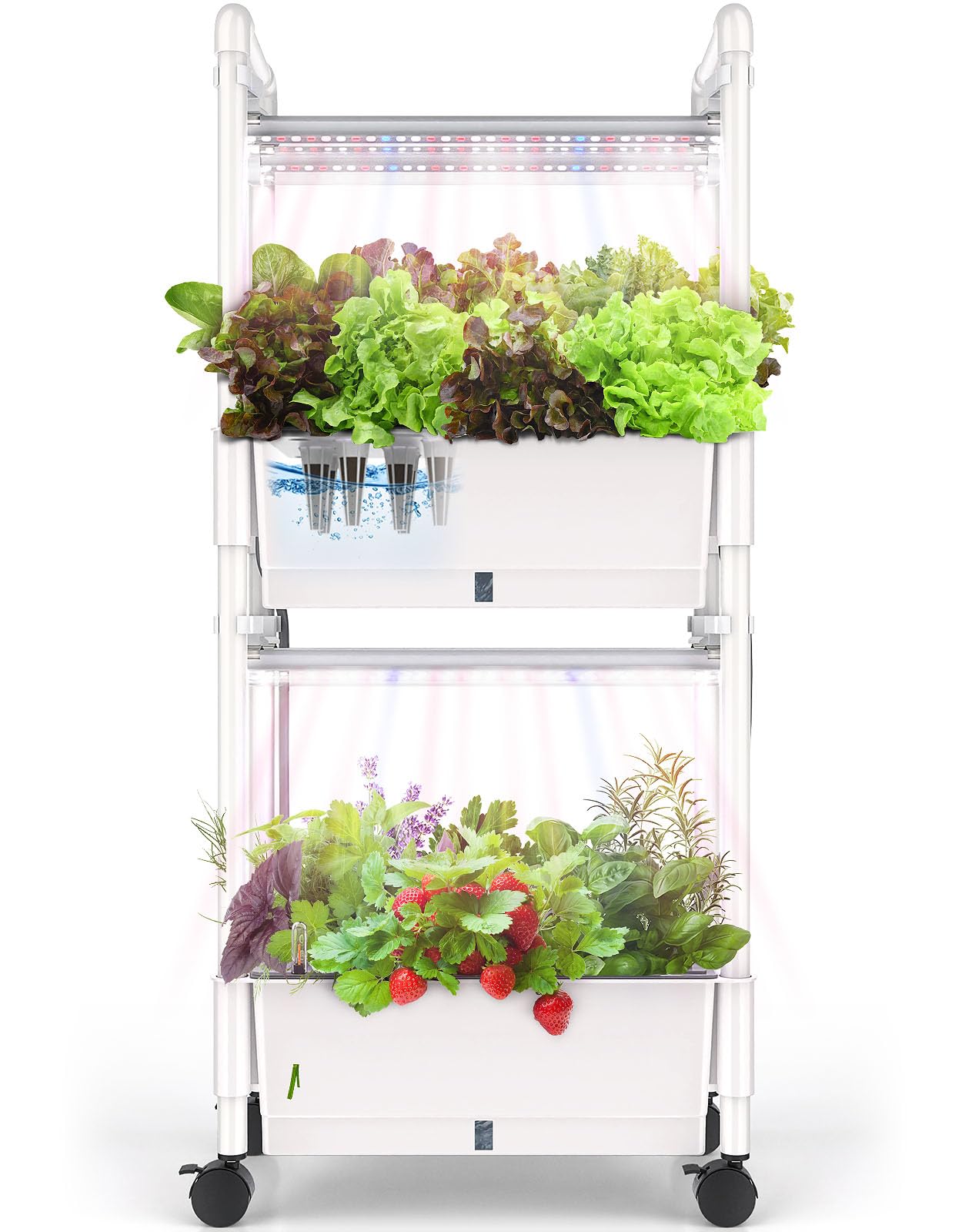
- AOONEG 28‑Pod Indoor Hydroponic System – $159.99, 4.2/5 stars (139 reviews)
- Mangoit Plant Watering Spikes – $9.79, 3.4/5 stars (1,786 reviews)
Step 1: Secure Remote Monitoring and Data Logging
Install a Wi‑Fi enabled sensor module that can transmit temperature, pH and water level data to a cloud dashboard. Many growers use inexpensive Arduino or Raspberry Pi kits; however, the Kalolary Hydroponic Grow Kit already includes a water pump timer that can be programmed to send alerts via its built‑in controller. The kit’s 108 planting sites provide ample space for sensor placement, and the food‑grade PVC‑U pipes protect wiring from moisture.
Why this product is useful: the timer integrates with most smart home apps, allowing one to receive push notifications if the pump fails or water level drops below a threshold. The price of $89.99 is modest compared with separate sensor kits, and the 3.5‑star rating indicates acceptable reliability for home growers.
Action steps:
- Connect the timer to the home Wi‑Fi network following the included instructions.
- Place a calibrated pH probe and a float sensor in the reservoir.
- Configure alert thresholds (e.g., temperature above 78 °F, pH outside 5.5‑6.5).
- Test the notification system by simulating a low‑water condition.
Step 2: Maintain Optimal Temperature with a Water Chiller
Temperature fluctuations are a common cause of nutrient uptake problems. The Active Aqua Hydroponic Water Chiller provides precise cooling for reservoirs ranging from 40 to 92 gallons. Its 0.25 HP motor and pure titanium evaporator deliver rapid temperature reduction while resisting corrosion from nutrient solutions.
Why this product is useful: the chiller’s Boost function can lower water temperature by several degrees within minutes, which is essential when ambient heat spikes during a summer vacation. At $641.19 the device is an investment, but the 4‑star rating and 1‑year warranty suggest long‑term durability.
Action steps:
- Position the chiller near the reservoir, ensuring adequate ventilation.
- Connect the 0.5‑inch inlet and 0.75‑inch outlet fittings to the pump lines (pumps are sold separately).
- Set the desired temperature (typically 68‑72 °F for lettuce and leafy greens).
- Activate the Boost function for an initial cooldown before departure.
Step 3: Configure Auto‑Watering Using the Grow Kit and Spikes
Even with a reliable pump, unexpected power loss can interrupt water delivery. The Mangoit Plant Watering Spikes act as a passive backup, releasing a measured amount of water from a sealed bottle over several days.
Why this product is useful: each spike can be adjusted to drip every 0‑60 seconds, providing a controlled flow that mimics the pump’s schedule. The low cost of $9.79 for a 12‑pack makes it feasible to equip every pipe segment with a spike, ensuring redundancy without complex electronics.
Action steps:
- Fill a clean 1‑liter bottle with nutrient‑enriched water.
- Insert a spike into the bottle opening and adjust the valve to a 30‑second interval.
- Place the bottle at the base of a planting basket so that excess water drains into the reservoir.
- Test the drip rate for 24 hours and adjust as needed.
Step 4: Ensure Power Continuity with an Uninterruptible Power Supply (UPS)
A UPS protects the pump, timer, chiller and monitoring equipment from sudden outages. While the product list does not include a UPS, the guide recommends selecting a unit with at least 800 VA capacity, which can sustain a 400‑W load for 30‑45 minutes. This window is sufficient for the pump to finish a cycle and for the chiller to maintain temperature until power returns.
Why a UPS is essential: hydroponic systems rely on continuous circulation to prevent root hypoxia. A brief interruption can cause root rot, especially in warm climates. Investing in a UPS adds a safety net without altering the existing setup.
Action steps:
- Calculate the total wattage of the pump, timer, chiller and Wi‑Fi module.
- Purchase a UPS with a rating 1.5‑2 times the calculated load.
- Connect all critical devices to the UPS outlets labeled “Battery Backup”.
- Run a simulated power cut to verify that the system remains operational for at least 30 minutes.
Step 5: Perform a Full System Test Before Departure
A comprehensive dry‑run validates that each component functions as expected. Begin by setting the timer to a 12‑hour cycle, then activate the chiller and monitor temperature for two hours. Simultaneously, confirm that the spikes release water at the programmed interval.
Why this matters: a single unnoticed malfunction can cascade into plant loss while the grower is away. The test also provides baseline data for remote alerts, allowing the grower to distinguish between normal fluctuations and genuine issues.
Action steps:
- Start the pump and let the system circulate for 30 minutes.
- Check that the timer logs each cycle in the cloud dashboard.
- Verify that the chiller reaches the set temperature within the expected timeframe.
- Observe the spikes for consistent drip patterns.
- Document all sensor readings for reference.
Tips & Pro Tips
- Label each pipe and spike with waterproof tags to simplify troubleshooting.
- Use a surge protector in addition to the UPS to guard against voltage spikes.
- Store a spare water pump and a small bottle of nutrient solution in a waterproof container near the system.
- Set the monitoring app to send both email and SMS alerts for redundancy.
- If traveling to a colder climate, consider insulating the reservoir with a reflective blanket to prevent temperature dips.
Troubleshooting
Problem: No alert received despite low water level.
Solution: Verify that the float sensor is not obstructed by algae; clean the sensor and recalibrate the threshold.
Problem: Chiller does not engage.
Solution: Check that the inlet and outlet connections are tight and that the power cord is plugged into the UPS, not a standard outlet.
Problem: Spikes drip too slowly.
Solution: Adjust the control valve to a shorter interval (e.g., 15 seconds) and ensure the bottle is positioned upright.
Conclusion
By following this checklist, one can maintain optimal nutrient delivery, temperature stability and power reliability for an automated hydroponic system while traveling. Remote monitoring provides real‑time insight, the water chiller safeguards temperature, the spikes offer passive backup watering, and a UPS protects against outages. Implementing these steps reduces risk, maximizes yields and allows the grower to enjoy a vacation without worry.
Products Mentioned in This Guide
Frequently Asked Questions
How can I set up remote monitoring for my hydroponic system before a vacation?
Install a Wi‑Fi enabled sensor hub that tracks pH, EC, temperature, and water level, then link it to a smartphone app for real‑time alerts.
What is the best way to ensure continuous water and nutrient delivery while I’m away?
Use an auto‑watering pump with a programmable timer and a large reservoir, and verify the flow rate and nutrient mix a day before leaving.
How do I protect my hydroponic setup from power outages during travel?
Connect the system to an uninterruptible power supply (UPS) sized for the pump and lights, and test it to confirm at least 30 minutes of backup runtime.
What temperature controls should I check to keep plants healthy on vacation?
Set a thermostat‑controlled heater or cooler with a temperature alarm, and place a fan or vent to maintain the optimal 68‑75°F range.
Are there any quick checks I should perform the day before I leave?
Inspect all tubing for leaks, confirm sensor calibration, top off the nutrient reservoir, and run a 10‑minute test of the remote alerts.

