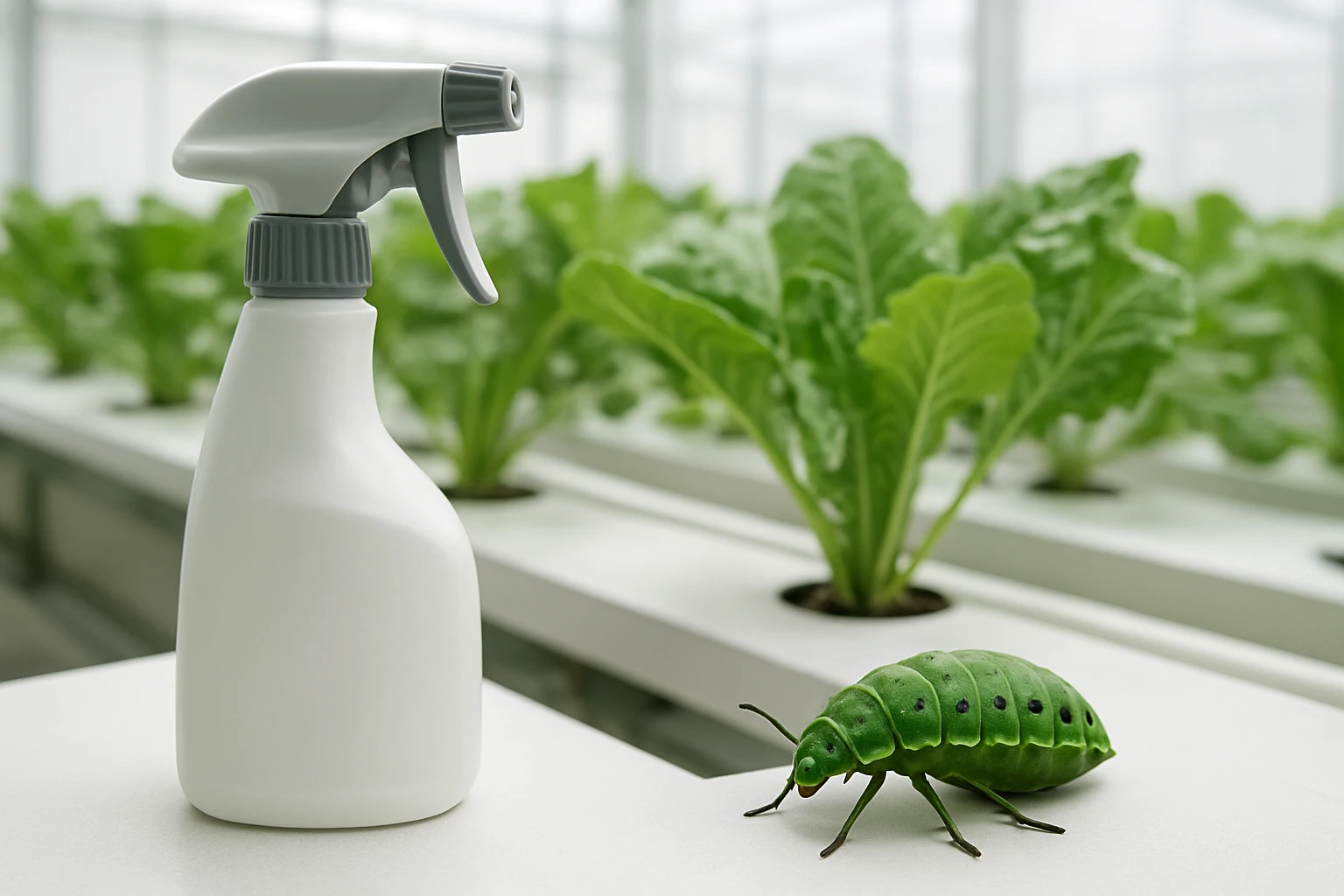
Biological Control for Indoor Hydroponics: The Complete Guide to Natural Pest Management
Introduction
This guide explains how growers can protect indoor hydroponic systems from common insects without resorting to synthetic chemicals. Readers will learn the biological principles behind natural pest control, how to select appropriate living agents, and how to integrate them into a routine maintenance plan. The article also recommends four proven Amazon products that complement an integrated pest‑management (IPM) strategy. By the end of the guide, growers will be equipped to reduce pest pressure, safeguard plant health, and maintain a sustainable growing environment.
Background and Context
Indoor hydroponics creates a micro‑environment that is highly favorable for rapid plant growth, yet it also encourages the proliferation of soil‑borne and flying pests. Fungus gnats, thrips, whiteflies, spider mites, and various larvae can damage roots, transmit disease, and stunt yields. Traditional chemical controls often disrupt beneficial microorganisms and may leave residues that affect food safety. Biological control utilizes living organisms—predators, parasites, or pathogens—to suppress pest populations while preserving ecological balance.
Key concepts include the life cycle of target pests, the mode of action of each biological agent, and the environmental conditions that maximize efficacy. For example, many beneficial nematodes require a moist medium and temperatures between 15 °C and 30 °C to remain active. Predatory mites thrive in moderate humidity and require a refuge of foliage to hunt. Understanding these parameters helps growers match the right agent to the right problem.
Integrated pest management (IPM) combines cultural, mechanical, biological, and, when necessary, chemical tactics. In a hydroponic context, cultural tactics such as proper sanitation, water management, and plant spacing reduce habitat suitability for pests. Mechanical tactics include sticky traps and physical barriers. Biological agents then provide ongoing suppression, reducing the need for emergency pesticide applications.
Core Biological Strategies
1. Beneficial Nematodes
Beneficial nematodes are microscopic, soil‑dwelling roundworms that seek out and infect the larvae of many pest insects. They enter the host through natural body openings, release symbiotic bacteria, and kill the host within 24‑48 hours. Two products are widely used in indoor systems.
The first is NemaKnights Slow‑Release Nematodes. This granular formulation contains 280 g of ready‑to‑use nematodes and treats up to 50 planters. Its slow‑release technology provides continuous protection for 10‑14 days after application, allowing growers to break the pest life cycle with a single treatment schedule. The product is rated 4.0 out of 5.0 based on 442 reviews and is priced at $25.17. Key features include shake‑to‑apply convenience, safety for pets and beneficial insects, and versatility across greenhouses, hydroponic channels, and indoor pots.
The second option is Scanmask 10M Beneficial Nematodes. Each container supplies seven million live nematodes that target more than 230 soil‑dwelling pests, including fungus gnat larvae, wireworms, and flea larvae. At $39.99, the product carries a rating of 4.1 out of 5.0 from 790 reviewers. Its broad‑spectrum activity makes it suitable for growers who face multiple pest species simultaneously.
2. Botanical Antifeedants
Botanical extracts such as azadirachtin, derived from the neem tree, act as antifeedants and insect growth regulators. They do not kill pests instantly but disrupt feeding and molting, leading to population collapse over several generations.
The recommended product is AzaMax from General Hydroponics. AzaMax contains Azadirachtin A & B and over 100 limonoids, providing a natural, food‑grade formulation that avoids harsh solvents. It is rated 4.6 out of 5.0 based on 113 reviews and costs $165.95 per quart. The label advises mixing one tablespoon per gallon of nutrient solution, allowing growers to treat entire recirculating systems with a single dose.
3. Predatory Mites
Predatory mites are tiny arachnids that prey on spider mites, broad mites, and other soft‑bodied pests. They are especially valuable in dense canopy environments where leaf‑dwelling pests hide.
The product Bug Sales Predatory Mites 2000 supplies a blend of species such as Phytoseiulus persimilis, Neoseiulus californicus, Amblyseius cucumeris, and Amblyseius swirskii. At $25.50, the product holds a rating of 3.8 out of 5.0 from 575 reviews. Each vial delivers approximately 2,000 adult mites, which can be released at a rate of 5‑10 mites per square foot. The mites are compatible with other biological agents and can be re‑applied every two weeks until the infestation subsides.
Comparison and Selection Guide
| Criterion | NemaKnights Slow‑Release Nematodes | Scanmask 10M Nematodes | AzaMax (Botanical) | Bug Sales Predatory Mites 2000 |
|---|---|---|---|---|
| Target Pests | Fungus gnats, thrips, whiteflies | 230+ soil pests including gnats, wireworms, termites | Spider mites, thrips, aphids, whiteflies (via antifeedant) | Spider mites, broad mites, russet mites |
| Application Method | Shake‑on granules directly onto medium | Water suspension applied to growing medium | Mix into nutrient solution (1 tbsp/gal) | Scatter on foliage and media, repeat bi‑weekly |
| Re‑application Interval | 10‑14 days | Every 7‑10 days for high pressure | Every 2‑3 weeks during peak season | Every 2 weeks until control achieved |
| Price (USD) | 25.17 | 39.99 | 165.95 | 25.50 |
| Rating | 4.0/5 (442) | 4.1/5 (790) | 4.6/5 (113) | 3.8/5 (575) |
| Safety | Non‑toxic to pets, humans, beneficial insects | Non‑toxic, compatible with other biocontrols | Food‑grade, low toxicity | Harmless to mammals, birds, and most beneficial insects |
Growers should select a nematode product when the primary issue is root‑dwelling larvae such as fungus gnats. For broad‑spectrum soil pest pressure, Scanmask offers the widest coverage. When foliage pests dominate, AzaMax provides a systemic antifeedant that can be mixed directly into the nutrient reservoir. Predatory mites are the optimal choice for visible leaf pests like spider mites, especially in high‑humidity environments where mites can reproduce rapidly.
Best Practices & Tips
- Maintain optimal temperature and moisture levels for each biological agent. Nematodes require a moist medium and temperatures above 15 °C; predatory mites prefer 20‑28 °C and relative humidity of 50‑70 %.
- Apply agents in the early morning or late afternoon to avoid direct UV exposure, which can reduce viability.
- Combine complementary agents only after confirming compatibility. For example, nematodes and predatory mites can coexist, but avoid applying broad‑spectrum insecticides that would kill both.
- Monitor pest populations with sticky traps and visual inspections. Record trap counts weekly to assess the need for re‑application.
- Use a calibrated sprayer or watering system to deliver nematodes evenly across the root zone. Over‑watering can wash agents away, while under‑watering can desiccate them.
- Rotate botanical antifeedants with biological agents to prevent pest resistance. AzaMax can be alternated with nematodes every 3‑4 weeks.
- Store all living agents according to manufacturer instructions. Nematodes should be kept refrigerated (2‑8 °C) until use, and predatory mites should be stored in a cool, dark environment to preserve viability.
Frequently Asked Questions
- How long does it take for nematodes to show results? Visible reduction in fungus gnat adults typically appears within 7‑10 days after the first application, provided the nematodes remain active in a moist medium.
- Can I use AzaMax in a recirculating deep‑water culture (DWC) system? Yes, AzaMax is formulated for hydroponic solutions. Mix the recommended dosage (one tablespoon per gallon) into the reservoir and ensure thorough circulation.
- Do predatory mites survive on hydroponic media without soil? Predatory mites can survive on inert media such as rockwool or coco coir as long as there is sufficient humidity and a supply of prey insects.
- Is it safe to apply nematodes when I have pets? Beneficial nematodes are non‑pathogenic to mammals, birds, and reptiles. They pose no risk to household pets when applied according to label directions.
- What should I do if a product arrives dead? Contact the seller immediately and request a replacement. Most reputable vendors, including the brands listed, offer a guarantee of live organisms upon arrival.
- How often should I rotate biological agents? Rotate every 3‑4 weeks or when pest pressure declines significantly. This practice helps prevent pest adaptation and maintains a diverse predator community.
- Can I combine nematodes with chemical pesticides? Chemical pesticides, especially broad‑spectrum insecticides, can kill beneficial nematodes. If chemical control is unavoidable, apply it at least 48 hours before introducing living agents.
Conclusion
Biological control offers indoor hydroponic growers a reliable, environmentally responsible means to manage pests. By understanding pest life cycles, selecting the appropriate living agent, and following best‑practice application methods, growers can achieve long‑term suppression without compromising plant health or food safety. The products highlighted in this guide—NemaKnights Slow‑Release Nematodes, Scanmask 10M Beneficial Nematodes, AzaMax, and Bug Sales Predatory Mites 2000—provide reliable tools that fit within an integrated pest‑management framework.
Products Featured in This Guide
NemaKnights Slow‑Release Nematodes
Price: $25.17 | Rating: 4.0/5 (442 reviews)
Featured because it provides a convenient, slow‑release granular format that protects up to 50 planters from fungus gnats, thrips, and whiteflies.
AzaMax
Price: $165.95 | Rating: 4.6/5 (113 reviews)
Featured for its broad‑spectrum, food‑grade botanical formula that acts as an antifeedant and growth regulator for foliage pests.
Scanmask 10M Beneficial Nematodes
Price: $39.99 | Rating: 4.1/5 (790 reviews)
Featured because it offers seven million live nematodes that target over 230 soil‑dwelling pests, providing extensive coverage for diverse infestations.
Bug Sales Predatory Mites 2000
Price: $25.50 | Rating: 3.8/5 (575 reviews)
Featured for its blend of predatory mite species that effectively suppress spider mites and other foliar pests in indoor hydroponic environments.