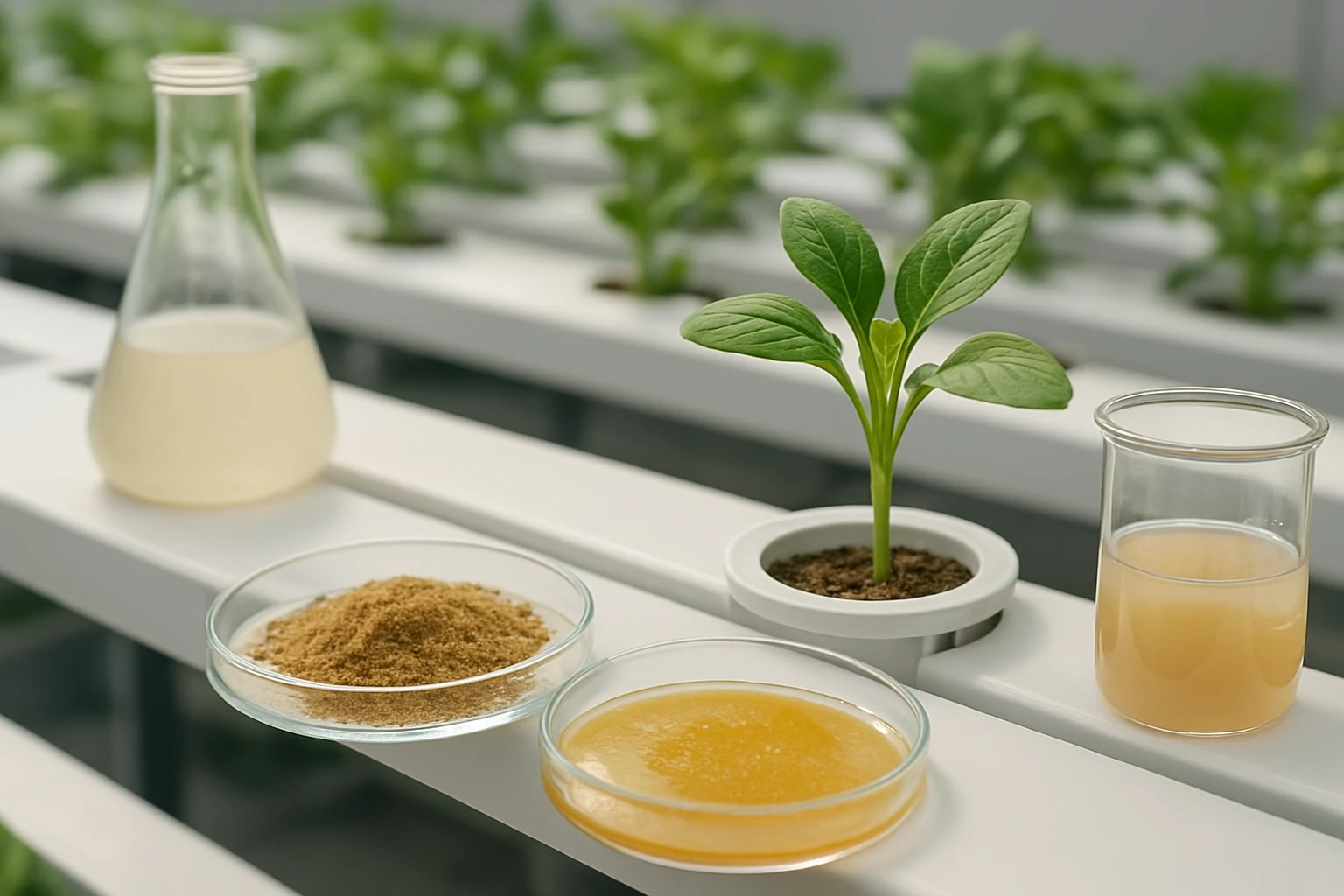

Beneficial Microbes in Hydroponics: The Ultimate Compatibility Guide
Introduction
Hydroponic cultivation relies on precise nutrient delivery, yet the invisible world of beneficial microbes can dramatically improve plant health and productivity. This guide explains the role of microbes, how they interact with nutrient solutions, and which products integrate seamlessly into a hydroponic system. Readers will learn foundational concepts, practical compatibility strategies, and evidence‑based product recommendations. By the end, one will be equipped to select and apply microbial solutions that boost yields while maintaining system stability.
The discussion balances scientific depth with actionable steps, making it suitable for experienced growers who seek to refine their operations. Throughout the text, real‑world examples illustrate how microbial inoculants complement conventional fertilization. The guide also addresses common misconceptions that can hinder successful implementation. Ultimately, the aim is to empower growers to harness the power of microbes without compromising system performance.
Background and Context
Beneficial microbes encompass bacteria, fungi, and archaea that colonize the rhizosphere, even in soilless environments. In traditional soil, these organisms facilitate nutrient mineralization, produce growth hormones, and suppress pathogens; similar mechanisms can be replicated in hydroponic nutrient films or nutrient film technique (NFT) channels. The key microbial groups for hydroponics are nitrogen‑fixing bacteria, phosphate‑solubilizing bacteria, and mycorrhizal fungi that extend root surface area.
Because hydroponic solutions are sterile by design, growers often introduce microbes deliberately to re‑establish a beneficial microbiome. Successful integration requires attention to pH stability, oxygen levels, and the absence of harsh chemical biocides. Understanding the life cycle of each microbe helps determine dosing frequency and compatibility with existing nutrient regimens. This background prepares the reader for the detailed sections that follow.
Key Concepts and Strategies
One fundamental concept is the distinction between free‑living rhizobacteria (PGPR) and symbiotic fungi such as arbuscular mycorrhizae. PGPR improve nutrient uptake by secreting organic acids that solubilize phosphorus, while mycorrhizal fungi form a physical network that transports water and minerals directly to plant roots. In hydroponics, the latter can be delivered as granules or liquid inoculants that colonize root surfaces during the early growth phase.
Another strategic consideration is timing. Introducing microbes during the seedling stage allows colonization before the plant’s own exudates shape the microbial community. Conversely, adding inoculants during the flowering stage can enhance stress resilience and improve final yield quality. Growers should also monitor electrical conductivity (EC) and dissolved oxygen, as extreme values can inhibit microbial activity.
Product integration is most effective when the inoculant’s pH range aligns with the nutrient solution. For example, Advanced Nutrients’ pH‑Perfect technology maintains a stable pH that supports both plant uptake and microbial metabolism. Similarly, DYNOMYCO Mycorrhizal Fungi Granules are formulated to survive a broad pH spectrum, making them versatile for various hydroponic setups.
Below are two recommended products that embody these principles.
Recommended Product: Advanced Nutrients Sensi Grow
- pH‑Perfect technology ensures optimal pH stability for microbial activity.
- Two‑part A+B formulation provides balanced macro‑ and micronutrients.
- Each pack contains 1 L of Part A and 1 L of Part B.
- Rating: 4.7/5.0 based on 1,108 reviews.
- Price: $39.73.
Recommended Product: DYNOMYCO Mycorrhizal Fungi Granules
- Contains 900 propagules per gram for rapid root colonization.
- Improves nutrient uptake, stress tolerance, and overall yield.
- OMRI‑Listed and ECOcert approved for organic‑friendly systems.
- Rating: 4.6/5.0 based on 6,365 reviews.
- Price: $13.57 for a 100 g pouch.
Comparison and Selection Guide
When choosing a microbial product for hydroponics, consider the following criteria: spectrum of activity, formulation type, compatibility with existing nutrients, and regulatory status. The table below contrasts the two featured products across these dimensions.
| Feature | Advanced Nutrients Sensi Grow | DYNOMYCO Mycorrhizal Fungi Granules |
|---|---|---|
| Microbial Type | Beneficial bacteria and micronutrient synergy (pH‑Perfect) | Arbuscular mycorrhizal fungi (live spores, hyphae, root fragments) |
| Formulation | Liquid 2‑part A+B (1 L each) | Granular 100 g pouch |
| pH Compatibility | Maintains optimal pH 5.5–6.5 via proprietary technology | Effective across pH 5.0–7.5, desert‑adapted strains |
| Organic Certification | Not certified organic | OMRI‑Listed, ECOcert approved |
| Price per Use | Approximately $0.04 per litre of solution | About $0.14 per 10 g treatment (covers ~2 plants) |
| Customer Rating | 4.7/5.0 (1,108 reviews) | 4.6/5.0 (6,365 reviews) |
Growers focused on precise nutrient control may favor Sensi Grow for its integrated pH‑Perfect system, while those pursuing organic certification and enhanced root symbiosis may prefer DYNOMYCO’s granules. Both products can be used together in a complementary fashion: Sensi Grow supplies the macro‑nutrient backbone, and the mycorrhizal granules augment root surface area for superior uptake.
Best Practices & Tips
Maintain a sterile environment during system setup, but introduce microbes after the initial flush to avoid killing the inoculant with residual chlorine or high EC. Use a UV‑filtered water source or let tap water sit for 24 hours to dissipate chlorine before mixing solutions.
Apply microbial inoculants at the recommended dosage and gently stir the nutrient reservoir to ensure even distribution. Over‑mixing can create shear forces that damage delicate fungal hyphae; a slow, clockwise stir for 30 seconds is sufficient.
Monitor plant response through visual cues such as leaf coloration, root vigor, and growth rate. A sudden drop in pH after inoculation may indicate active microbial metabolism, which is normal and often beneficial.
Periodically rotate microbial products to prevent the development of resistant pathogen strains. For example, alternate between a bacterial inoculant and a fungal inoculant every 4–6 weeks to maintain a diverse microbiome.
Frequently Asked Questions
- Can I use microbial inoculants in a closed‑loop hydroponic system?
- Yes, but it is essential to monitor EC and pH closely, as microbes can alter nutrient concentrations over time.
- Will my existing chemical fertilizers harm beneficial microbes?
- High concentrations of synthetic chemicals can inhibit microbial activity; using balanced, low‑to‑moderate nutrient levels preserves microbial viability.
- How often should I re‑apply mycorrhizal granules?
- Re‑application every 4–6 weeks during the vegetative stage maintains colonization, especially after system cleaning or major nutrient changes.
- Do I need to sterilize my hydroponic equipment before adding microbes?
- Initial sterilization is recommended, but after the first inoculation, routine cleaning with mild, non‑ionic detergents is sufficient.
- Are there any safety concerns for indoor growers?
- Both featured products are safe for indoor use; DYNOMYCO’s granules are OMRI‑Listed and contain negligible heavy metals, making them suitable for homes with children or pets.
Conclusion
Beneficial microbes represent a powerful, yet often underutilized, component of modern hydroponic production. By understanding microbial mechanisms, timing applications, and selecting compatible products, growers can achieve healthier plants, higher yields, and greater system resilience. The two products highlighted—Advanced Nutrients Sensi Grow and DYNOMYCO Mycorrhizal Fungi Granules—exemplify how microbial solutions can be seamlessly integrated into a hydroponic workflow.
Implement the best‑practice recommendations, monitor system parameters, and adjust dosing as plants progress through their life cycle. With these strategies, one can unlock the full potential of microbial symbiosis and set a new standard for hydroponic excellence.
Products Featured in This Guide
Advanced Nutrients Sensi Grow
Price: $39.73
Rating: 4.7/5.0 (1,108 reviews)
Featured because its pH‑Perfect technology stabilizes nutrient solutions, creating an optimal environment for both plants and beneficial microbes.
DYNOMYCO Mycorrhizal Fungi Granules
Price: $13.57
Rating: 4.6/5.0 (6,365 reviews)
Featured because its high propagule density and OMRI‑Listed status provide robust, organic‑compatible root colonization for enhanced nutrient uptake.
