Introduction
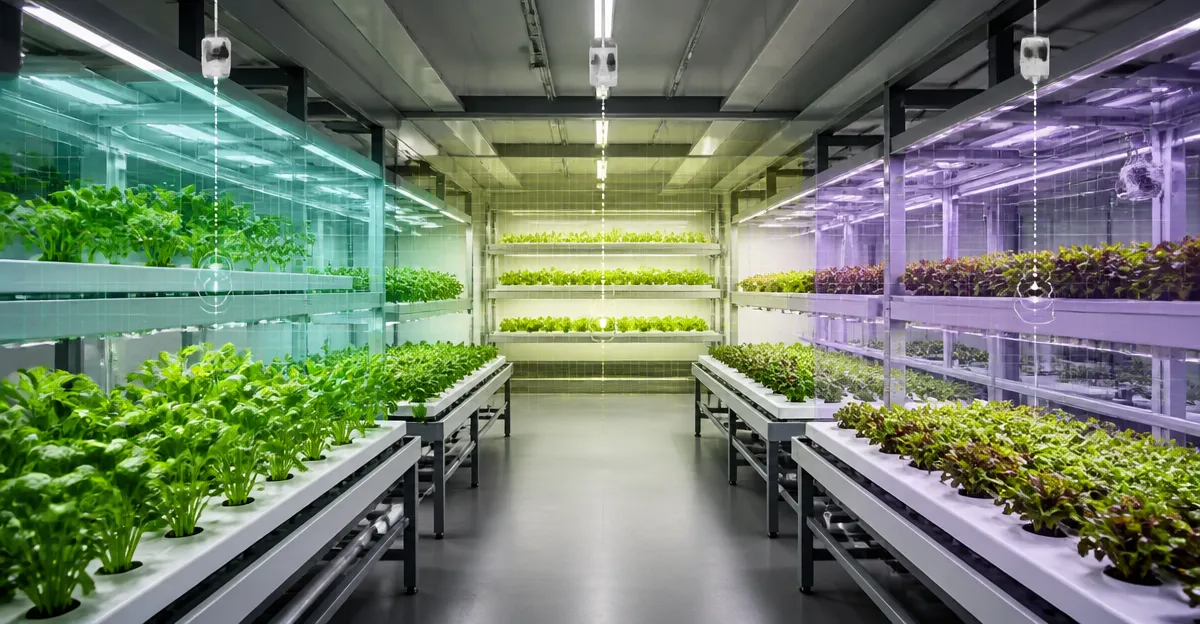
The modern indoor hydroponic grower must understand that each plant zone may require a distinct microclimate. This guide explains how to map those zones, install appropriate sensors, and automate climate control to maximise yield. Readers will learn the theory behind vapor pressure deficit, the practical steps for zoning, and which commercial products can simplify the process. By the end of the article the audience will be able to design a scalable multi‑zone system that delivers consistent results.
Background and Context
Hydroponics relies on delivering water, nutrients, and an optimal atmosphere directly to the plant roots. Unlike soil, the root environment is highly responsive to temperature, humidity, and carbon dioxide levels. When a grower expands to multiple plant varieties or growth stages, a single uniform environment often becomes sub‑optimal. Understanding the scientific basis of microclimates enables the grower to tailor conditions for each zone, thereby improving photosynthetic efficiency and reducing stress.
Mapping Sensor Zones
The first step in creating multi‑zone microclimates is to divide the grow space into logical zones. Zones may be defined by plant species, growth phase, or lighting intensity. For each zone a dedicated sensor suite should measure temperature, relative humidity, and optionally carbon dioxide. The data from these sensors feed a central controller that can trigger zone‑specific actions.
For growers who prefer an all‑in‑one solution, the Premium Mushroom Growing Tent Kit includes an integrated humidifier and fan that maintain a stable microclimate within a compact footprint. Although marketed for mushrooms, the built‑in humidifier provides precise moisture control that can be repurposed for delicate leafy greens. The kit also features a clear viewing window, allowing visual verification of sensor placement without disturbing the environment.
Climate Control Strategies
Once zones are defined, the grower must select equipment capable of delivering heating, cooling, and ventilation to each area independently. Two principal approaches exist: dedicated ducted systems for each zone, or a shared duct with smart switching based on sensor feedback. The former offers the highest precision but requires more hardware; the latter reduces cost and complexity while still delivering acceptable results for most hobbyists.
The AC Infinity TERRAFORM 8 provides an all‑in‑one air conditioner, heater, and dehumidifier that can be connected to a single duct. Its AI‑driven controller automatically switches between cooling, heating, and fan modes to maintain a target temperature or vapor pressure deficit (VPD). Although the device carries a modest rating of 3.2 stars from 13 reviews, its smart VPD control makes it a valuable component for growers who need both heating and cooling in a limited space.
Vertical Space Utilisation and Light Distribution
Efficient use of vertical space reduces the footprint of a multi‑zone system and improves light distribution. A pegboard‑style greenhouse allows growers to position trays at varying heights while keeping tools and supplies organised. Adjustable shelving also enables the placement of zone‑specific lighting fixtures, which can be crucial for seedlings versus mature plants.
The Barrina LH750 Pegboard Indoor Greenhouse offers three detachable pegboard tiers, a 90 W 5000 K full‑spectrum grow light array, and independent switches for each light bank. Its top ventilation window promotes passive airflow, supporting healthy transpiration across all zones. With a price of $219.99 and a rating of 4.5 stars from 612 reviews, the unit provides a robust platform for growers who need modularity and reliable lighting.
Comparison and Selection Guide
| Feature | Premium Mushroom Growing Tent Kit | Barrina LH750 Pegboard Greenhouse | AC Infinity TERRAFORM 8 |
|---|---|---|---|
| Primary Function | Microclimate enclosure with humidifier and fan | Vertical grow cabinet with full‑spectrum lighting | All‑in‑one climate controller (cool/heat/dehumidify) |
| Dimensions | 30.3" L × 16.9" W × 16.9" H | 29.5" L × 13.8" W × 67.9" H | 12000 BTU capacity, duct‑compatible |
| Price (USD) | 66.49 | 219.99 | Not listed (requires separate purchase) |
| Rating | 4.8 / 5 (5 reviews) | 4.5 / 5 (612 reviews) | 3.2 / 5 (13 reviews) |
| Key Advantage | Integrated humidity control for delicate crops | Modular shelving and independent lighting zones | Smart VPD management with AI switching |
Growers should match the product to the most critical need of their operation. If precise humidity is the limiting factor, the tent kit provides the simplest solution. For growers requiring flexible shelving and high‑intensity lighting, the Barrina cabinet excels. When temperature swings are a concern, the TERRAFORM 8 offers automated heating and cooling in a single unit.
Best Practices and Tips
- Calibrate each sensor at least once per month to avoid drift that could compromise zone data.
- Maintain a minimum of 2 ft clearance between lighting fixtures and the canopy to prevent heat buildup.
- Use the clear window of the tent kit to verify leaf morphology without opening the enclosure, thereby preserving microclimate stability.
- Leverage the independent switches on the Barrina greenhouse to stagger light cycles, mimicking natural day‑night patterns for different plant stages.
- Program the TERRAFORM 8 to target a VPD range of 0.8–1.2 kPa for most leafy vegetables, adjusting based on species requirements.
Frequently Asked Questions
1. How many zones can a single humidifier support?
A humidifier can effectively serve one to three zones depending on the volume of air and the desired relative humidity. The Premium Mushroom Growing Tent Kit is designed for a single enclosed space, but the humidifier can be paired with external ducting to reach adjacent zones if the airflow is balanced.
2. Do I need a separate CO₂ sensor for each zone?
While a single CO₂ sensor can provide a baseline reading, variations in airflow may cause zone‑specific differences. For high‑value crops, installing a dedicated CO₂ sensor per zone ensures accurate enrichment and prevents waste.
3. Can the Barrina greenhouse be used without the included grow lights?
Yes, the cabinet is compatible with any standard 2‑foot T5 or LED panel. The built‑in mounting brackets allow quick replacement, and the independent switches remain functional for any attached lighting source.
4. How does the TERRAFORM 8 determine when to switch between cooling and heating?
The device uses an internal algorithm that compares the current temperature and VPD against user‑defined set points. When the temperature falls below the lower threshold, the heater engages; when it exceeds the upper threshold, the cooling cycle activates.
5. What maintenance is required for the ventilation fans?
Fans should be cleaned of dust quarterly using a soft brush or compressed air. The filter paper in the tent kit should be inspected monthly and replaced when it shows signs of clogging to maintain optimal airflow.
Conclusion
Mapping multi‑zone microclimates in indoor hydroponics demands a systematic approach that combines scientific understanding with reliable hardware. By defining zones, installing accurate sensors, and selecting appropriate climate control equipment, growers can optimise each plant’s environment and achieve higher yields. The products highlighted in this guide illustrate how commercial solutions can be integrated into a cohesive system without overwhelming the budget.
Products Featured in This Guide
Premium Mushroom Growing Tent Kit
Price: $66.49 | Rating: 4.8/5 (5 reviews)
Featured because it provides integrated humidity and airflow control in a compact desktop enclosure, making it ideal for precise microclimate management.
Barrina LH750 Pegboard Indoor Greenhouse
Price: $219.99 | Rating: 4.5/5 (612 reviews)
Featured because its modular pegboard design and full‑spectrum lighting enable flexible zone creation and independent light scheduling.
AC Infinity TERRAFORM 8
Rating: 3.2/5 (13 reviews)
Featured because its AI‑driven VPD control and single‑duct design simplify temperature and humidity management across multiple zones.