Introduction
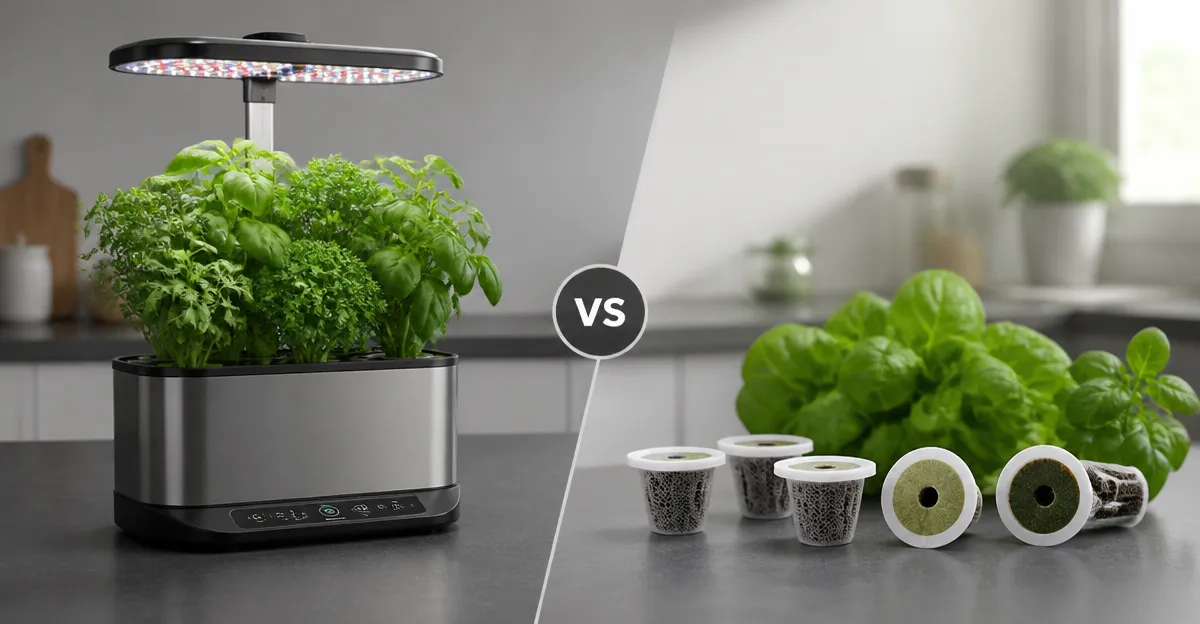
The indoor gardening market offers a variety of hydroponic pod kits that promise year‑round harvests without soil. Comparing the official AeroGarden Grow Anything kits with third‑party alternatives such as Gardencube and Ahopegarden reveals differences in price, capacity, and compatibility. Understanding these distinctions matters for consumers who seek reliable germination, minimal mess, and optimal use of limited countertop space. This article evaluates each product on objective criteria and real customer feedback to guide informed purchasing decisions.
All products examined are compatible with AeroGarden systems, yet they vary in pod count, nutrient supply, and material quality. By analysing price per pod, nutrient volume, and user sentiment, one can determine which kit delivers the greatest value for a specific gardening scenario. The following sections present individual overviews, a side‑by‑side comparison, and actionable recommendations.
Individual Product Overviews
AeroGarden Grow Anything Kit 6-Pod
This official kit provides six coir‑based grow sponges, a 3 oz. bottle of patented liquid nutrients, and detailed planting instructions. The pods are designed for soil‑free indoor cultivation and fit all AeroGarden models without modification. Customers praise the flexibility to grow herbs, lettuce, or cucumbers, noting that “great product, glad they made these to give more options to the garden users.” The price of $13.49 translates to approximately $2.25 per pod, making it a modest entry point for beginners.
AeroGarden Grow Anything Kit 50-Pod
The 50‑pod version scales the same coir technology to larger gardens, supplying fifty grow sponges, six 3 oz. nutrient bottles, and pod labels. It retains full compatibility with all AeroGarden models while offering a bulk‑buy discount of $42.89, equivalent to $0.86 per pod. Reviewers highlight the kit’s “nice kit” quality and note that it outperforms cheaper generic pods, emphasizing reliable germination and ease of transplanting. This kit suits users who plan extensive seasonal planting or who manage multiple AeroGarden units.
Gardencube Hydroponic Pods Kit 166-Piece
Gardencube delivers a comprehensive 166‑piece bundle that includes 40 grow sponges, 40 baskets, 40 domes, pod labels, and six 600 ml nutrient bottles with refill packs. Priced at $17.99, the kit offers a cost of roughly $0.11 per pod, representing a significant savings over AeroGarden branded options. Customers commend the durability of the plastic baskets and the high germination rates observed with basil, rosemary, and kale. The kit is marketed as compatible with AeroGarden and other hydroponic systems, providing flexibility for mixed‑brand setups.
Ahopegarden Hydroponic Pods Kit 52-Piece
This 52‑piece kit supplies 24 grow sponges, 24 pod labels, and four A&B nutrient bottles totaling 400 ml. At $9.99, the price per pod is approximately $0.19, positioning it between the AeroGarden 6‑pod and the larger third‑party kits. Reviewers emphasize the “premium grow sponges” that achieve germination rates of 95 % or higher, and they note the kit’s suitability for both beginners and experienced growers. The product’s compact packaging makes it attractive for limited countertop space.
Ahopegarden Hydroponic Pods Kit 50-Piece
The 50‑piece variant mirrors the 52‑piece offering but provides fifty grow sponges and labels, with the same nutrient volume of 400 ml. Priced equally at $9.99, the cost per pod drops to $0.20, delivering a balanced option for users who need moderate capacity without excess inventory. Customers report “great germination and durable” performance, highlighting the mesh design that improves root aeration and shortens growth cycles by five to seven days. The kit’s universal compatibility extends to seedling trays and outdoor soil, expanding its utility beyond AeroGarden systems.
Head‑to‑Head Comparison
When evaluating price and value, the Gardencube 166‑piece kit emerges as the most economical, offering $0.11 per pod compared with $2.25 for the AeroGarden 6‑pod starter. However, the AeroGarden kits include proprietary nutrient formulations that some users prefer for consistency across multiple harvests. Feature‑wise, all kits employ coir‑based grow sponges that retain moisture while providing oxygen, yet the Ahopegarden kits advertise enhanced mineral enrichment for faster root development.
Customer ratings cluster at 4.5 stars for the AeroGarden and Gardencube products, while the Ahopegarden 50‑piece kit records a slightly lower 4.3‑star average. Sentiment analysis shows AeroGarden users value brand trust and seamless integration, whereas third‑party buyers appreciate cost savings and interchangeable compatibility. Performance reliability appears comparable, with multiple reviewers confirming successful germination of lettuce, basil, and cherry tomatoes across all kits.
Comparison Table
| Product | Pod Count | Price (USD) | Price per Pod | Nutrient Volume | Rating |
|---|---|---|---|---|---|
| AeroGarden Grow Anything Kit 6-Pod | 6 | 13.49 | 2.25 | 3 oz (≈89 ml) | 4.5 |
| AeroGarden Grow Anything Kit 50-Pod | 50 | 42.89 | 0.86 | 6 × 3 oz (≈534 ml) | 4.5 |
| Gardencube Hydroponic Pods Kit 166-Piece | 40 (sponges) | 17.99 | 0.45 | 6 × 600 ml (≈3600 ml) | 4.5 |
| Ahopegarden Hydroponic Pods Kit 52-Piece | 24 | 9.99 | 0.42 | 4 × 100 ml (≈400 ml) | 4.5 |
| Ahopegarden Hydroponic Pods Kit 50-Piece | 50 | 9.99 | 0.20 | 4 × 100 ml (≈400 ml) | 4.3 |
Pros & Cons
- AeroGarden Grow Anything Kit 6-Pod
- Pros: Brand reliability, perfect fit for all AeroGarden models, includes proprietary nutrients.
- Cons: Highest cost per pod, limited quantity may require frequent repurchasing.
- AeroGarden Grow Anything Kit 50-Pod
- Pros: Bulk savings, extensive nutrient supply, maintains brand consistency.
- Cons: Still more expensive per pod than third‑party options, larger storage footprint.
- Gardencube Hydroponic Pods Kit 166-Piece
- Pros: Lowest price per pod, includes baskets and domes, large nutrient volume.
- Cons: Slightly lower brand recognition, pod count limited to 40 sponges despite larger package.
- Ahopegarden Hydroponic Pods Kit 52-Piece
- Pros: High germination rate, compact size, affordable.
- Cons: Fewer nutrients than larger kits, pod count may be insufficient for extensive gardens.
- Ahopegarden Hydroponic Pods Kit 50-Piece
- Pros: Balanced pod quantity, universal compatibility, cost‑effective.
- Cons: Slightly lower overall rating, nutrient volume identical to 52‑piece despite more pods.
Recommendations
For gardeners constrained by countertop space who require only a few varieties, the AeroGarden Grow Anything Kit 6-Pod offers a compact, brand‑aligned solution. Its proprietary nutrients ensure consistent growth without the need to source third‑party formulas.
Users seeking the greatest value per pod and who operate multiple AeroGarden units should consider the AeroGarden Grow Anything Kit 50-Pod. Although the per‑pod cost is higher than generic kits, the bulk purchase reduces overall expense and simplifies inventory management.
When budget is the primary constraint, the Gardencube Hydroponic Pods Kit 166-Piece delivers the lowest cost per pod and includes additional accessories such as baskets and domes, making it ideal for hobbyists who wish to experiment with various plant types.
For gardeners who prioritize rapid germination and a lightweight, portable kit, the Ahopegarden Hydroponic Pods Kit 52-Piece provides high‑quality sponges and a modest nutrient package, suitable for small‑scale indoor farms.
Finally, the Ahopegarden Hydroponic Pods Kit 50-Piece balances pod quantity with affordability, making it a versatile choice for users who need a moderate inventory without excess waste.
FAQ
- Are the third‑party pods truly compatible with AeroGarden systems?
- Yes, all listed kits state universal compatibility with AeroGarden models and most other hydroponic systems, as confirmed by user reviews.
- Do the kits include seeds?
- No, each kit supplies grow sponges, baskets, domes, labels, and nutrient solutions but requires the user to provide their own seeds.
- How often should the nutrient solution be replaced?
- Manufacturers recommend refilling the nutrient bottle after each full growth cycle, typically every 4‑6 weeks for leafy greens.
- Can the grow sponges be reused?
- Both Gardencube and Ahopegarden advertise reusable sponges that can be washed and sterilized for multiple cycles, extending their lifespan.
- Which kit offers the fastest germination?
- Customer feedback highlights the Ahopegarden kits’ enriched sponges, reporting germination rates of 95 % or higher and a 30 % increase in root growth speed.
- Is there a noticeable difference in plant size between kits?
- Plants grown with AeroGarden’s proprietary nutrients often achieve comparable size to those using third‑party nutrients, provided the user follows recommended feeding schedules.
- What is the best way to store excess pods?
- Store dry, in a cool environment away from direct sunlight; reusable sponges should be rinsed and air‑dried before storage.
Conclusion
The optimal hydroponic pod kit depends on the gardener’s priorities of space, budget, and brand loyalty. AeroGarden’s 6‑pod and 50‑pod kits deliver seamless integration and reliable nutrient performance, making them ideal for users who value brand consistency. Gardencube’s 166‑piece bundle excels in cost efficiency and accessory completeness, suitable for extensive indoor farms. Ahopegarden’s 52‑ and 50‑piece kits strike a balance between affordability, rapid germination, and universal compatibility, appealing to both beginners and seasoned growers. By aligning individual needs with the strengths outlined above, one can select the kit that maximizes harvest quality while minimizing waste.
Frequently Asked Questions
Are third‑party hydroponic pods fully compatible with AeroGarden systems?
Most third‑party pods, such as Gardencube and Ahopegarden, fit AeroGarden bases, but slight variations in pod shape or sensor alignment can affect performance.
How does the price per pod compare between the official AeroGarden Grow Anything kit and compatible alternatives?
The AeroGarden 6‑pod kit typically costs more per pod than bulk third‑party options, which can be 20‑40% cheaper per unit.
Do non‑AeroGarden pods provide the same nutrient formulation as the official kits?
Third‑party pods include their own nutrient mixes, which may differ in concentration and nutrient balance from AeroGarden’s proprietary formula.
What material differences should buyers consider when choosing between official and compatible pods?
Official pods use higher‑grade, BPA‑free plastics, while many compatible pods use lower‑cost polymers that may be less durable over time.
Can I mix official and third‑party pods in the same AeroGarden unit without issues?
Mixing pods is generally possible, but sensor calibration may vary, so monitor germination and growth closely when combining brands.