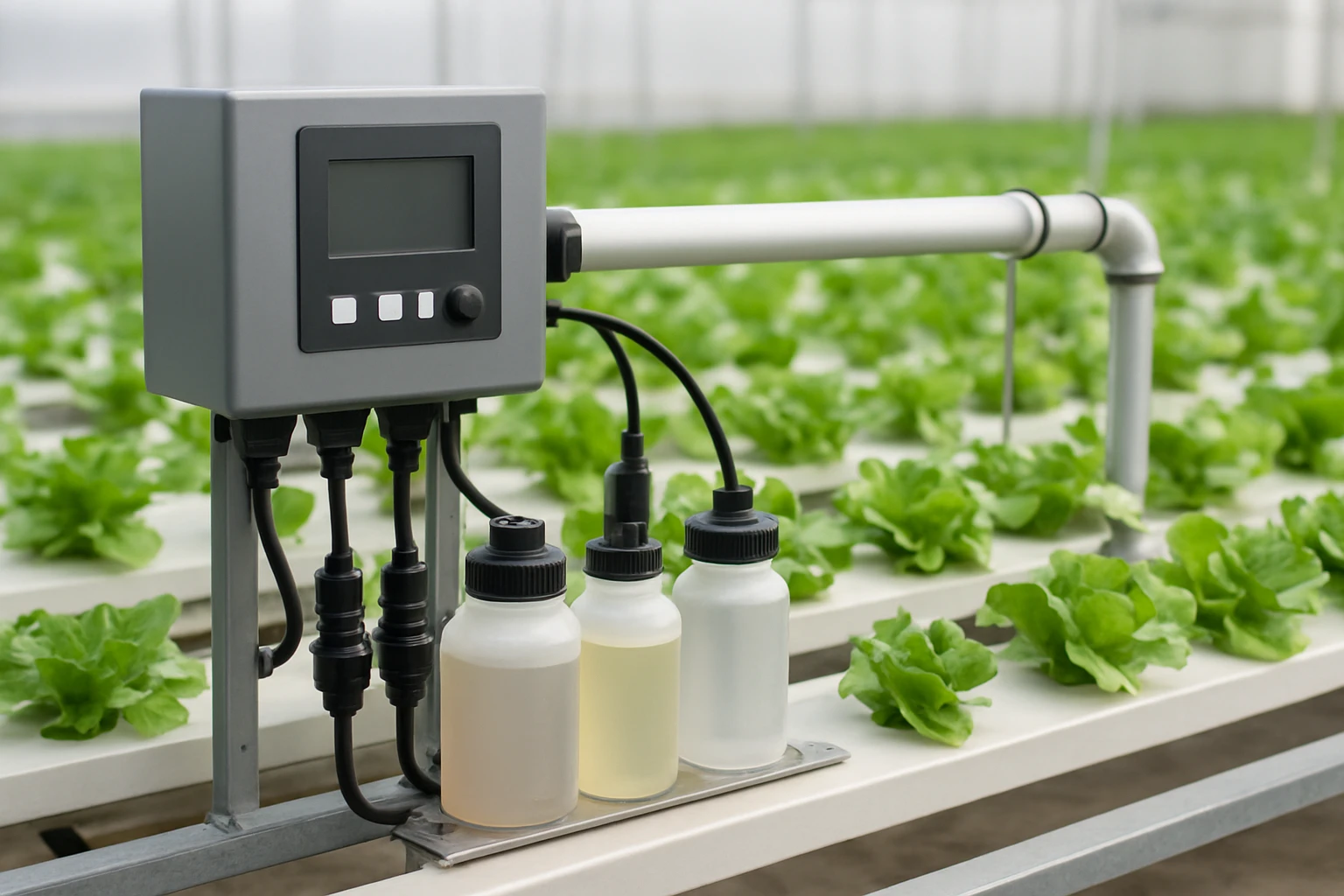
The Ultimate Guide to Automated Nutrient Dosing Systems in Hydroponics: Step‑by‑Step Setup, Calibration, and Troubleshooting
Introduction
Automated nutrient dosing has become a cornerstone of modern hydroponic cultivation, enabling growers to deliver precise concentrations of macro‑ and micronutrients with minimal manual intervention. This guide explains the underlying principles, walks the reader through a complete system installation, demonstrates how to calibrate dosing equipment, and offers troubleshooting strategies for common failures. By the end of the article, the reader will possess the knowledge required to design a reliable dosing workflow, select appropriate hardware, and maintain optimal plant health throughout the vegetative and flowering phases.
The content is organized into logical sections, each reinforced with real‑world product examples that have demonstrated effectiveness in professional and hobbyist environments. Although product recommendations are included, the guide remains valuable for readers who prefer alternative components.
Background and Context
Hydroponic systems rely on a water‑based nutrient solution rather than soil. Because the root zone is directly exposed to the solution, any deviation in concentration can quickly manifest as nutrient deficiency or toxicity. Traditional manual dosing requires frequent measurement, mixing, and adjustment, which is labor‑intensive and prone to human error. Automated dosing systems employ peristaltic pumps, solenoid valves, and microcontrollers to deliver exact volumes of nutrient stock solutions at predefined intervals.
Key concepts include:
- Electrical Conductivity (EC) – a measure of ionic concentration that correlates with nutrient strength.
- pH stability – essential for nutrient uptake; most crops thrive between pH 5.5 and 6.5.
- Flow rate precision – determined by pump tubing inner diameter and motor control.
- Redundancy and safety – overflow protection, fail‑safe switches, and power backup.
Understanding these parameters allows the grower to configure a dosing schedule that matches the crop’s growth stage, environmental conditions, and the specific formulation of the nutrient concentrate.
Key Concepts and Strategies
Understanding Peristaltic Pump Mechanics
Peristaltic pumps move fluid by compressing flexible tubing in a rotating sequence, creating a sealed channel that prevents cross‑contamination. The INTLLAB Peristaltic Liquid Pump is a compact unit designed for both viscous and non‑viscous liquids. It operates on AC 100‑240 V, delivering flow rates from 5 mL /min to 100 mL /min depending on tubing size. The pump includes a silicone tube (3 mm ID × 5 mm OD) that resists chemical degradation, making it suitable for chlorine, fertilizer concentrates, and pH‑adjusting solutions.
Specifications of the pump include:
- Input voltage: AC 100‑240 V, 50‑60 Hz.
- Flow range: 5‑100 mL/min (2 mm ID × 4 mm OD) or 19‑100 mL/min (3 mm ID × 5 mm OD).
- Operating temperature: 0‑40 °C, humidity < 80 %.
- Weight: 180 g, dimensions 100 × 60 × 55 mm.
Its LED indicator reflects pump speed, simplifying visual monitoring. The pump head is designed for easy disassembly, allowing routine cleaning without specialized tools.
Selecting a Nutrient Base
Hydroponic growers typically employ a two‑part nutrient system to prevent premature precipitation of calcium and phosphate. The VIVOSUN Base A & B Nutrients Bundle provides a balanced blend of macro‑ and micronutrients in 8 oz bottles. Base A contains nitrogen‑rich compounds for vegetative growth, while Base B supplies phosphorus, potassium, and micronutrients essential for flowering. Both components are 100 % water‑soluble, stabilizing pH and enhancing nutrient uptake.
Key attributes of the bundle include:
- Rich spectrum of N‑P‑K‑Ca‑Mg and trace elements.
- pH‑stabilizing formulation that reduces the need for separate pH‑up or pH‑down agents.
- Compatibility with soil, coco coir, hydroponic, and aquaponic media.
- Easy dosing: equal parts of Base A and B diluted separately before mixing.
The product holds a 4.5‑star rating from 636 reviews, indicating high customer satisfaction.
Integrating Controllers and Sensors
Automation requires a controller capable of reading EC and pH sensors, calculating the required nutrient volume, and commanding the pump accordingly. Open‑source platforms such as Arduino or Raspberry Pi, combined with commercial dosing modules, provide flexibility for custom schedules. Commercial controllers often feature touchscreen interfaces, programmable dosing cycles, and alarm notifications for out‑of‑range readings.
When selecting a controller, consider:
- Number of analog inputs for EC and pH probes.
- Compatibility with peristaltic pump drivers (e.g., 12 V DC motor control).
- Safety features such as dry‑run protection and power‑loss recovery.
- Community support and firmware updates.
Pairing the controller with the INTLLAB pump ensures that dosing commands translate into accurate fluid displacement, provided the tubing diameter matches the flow‑rate range selected in the software.
Comparison and Selection Guide
Choosing the right pump and nutrient base depends on system scale, crop type, and budget. The table below contrasts the two featured products against typical alternatives.
| Feature | INTLLAB Peristaltic Pump | Typical Low‑Cost Pump | VIVOSUN Nutrient Bundle | Generic Nutrient Mix |
|---|---|---|---|---|
| Price (CAD/USD) | CAD 37.94 | ≈ USD 15 | USD 17.99 | ≈ USD 12 per gallon |
| Flow Rate Range | 5‑100 mL/min (adjustable) | 5‑30 mL/min (limited) | Customizable via dilution | Fixed concentration |
| Voltage Compatibility | AC 100‑240 V | DC 12 V | Water‑soluble, no voltage | None |
| Rating | 4 / 5 (90 reviews) | ~3 / 5 (mixed) | 4.5 / 5 (636 reviews) | Varies |
| Durability | Silicone tubing, metal housing | Plastic housing, prone to kink | Stabilized pH, low precipitation | Higher risk of nutrient lockout |
For growers who require precise dosing across a wide flow‑rate spectrum, the INTLLAB pump offers superior control and a robust construction compared with inexpensive alternatives that may suffer from dead spots and inconsistent output. Likewise, the VIVOSUN bundle delivers a balanced nutrient profile with proven compatibility across media, reducing the likelihood of nutrient deficiencies that can arise with generic mixes.
Best Practices & Tips
- Validate Tubing Compatibility: Ensure the pump tubing inner diameter matches the flow‑rate setting; smaller diameters increase pressure and can cause premature wear.
- Calibrate EC Sensors Regularly: Use a standard calibration solution before each growth cycle to maintain measurement accuracy.
- Maintain pH Within Target Range: Adjust pH after each nutrient addition; excessive swings can lock out nutrients.
- Implement Redundancy: Install a float switch in the reservoir to shut off the pump if the water level falls below a safe threshold.
- Schedule Incremental Dosing: Rather than a single large dose, distribute nutrient delivery throughout the day to avoid spikes that stress roots.
- Document Every Change: Keep a log of dosing volumes, EC values, and plant responses; this data informs future optimizations.
- Perform Routine Cleaning: Disassemble the pump head weekly, rinse the silicone tube with distilled water, and inspect for wear.
- Use Separate Reservoirs for Base A and B: Prevent premature mixing that can cause precipitation; combine only at the point of dosing.
FAQ
- How often should I calibrate the peristaltic pump? Calibration should be performed after any tubing replacement and at least once per month for continuous operations. Measure the volume delivered over a fixed time and adjust the controller’s steps‑per‑ml setting accordingly.
- Can I use the INTLLAB pump for acidic nutrient solutions? Yes. The silicone tubing is chemically resistant to most acids used in hydroponics, including phosphoric and nitric acids, provided the temperature remains below 40 °C.
- What is the recommended EC range for lettuce in a recirculating system? For lettuce, maintain EC between 1.2 and 1.8 mS/cm during vegetative growth, increasing to 1.8‑2.2 mS/cm during the final growth stage.
- Do I need a separate pH‑adjuster when using the VIVOSUN bundle? The bundle includes pH‑stabilizing agents, but minor adjustments may still be required depending on water source hardness. Use a pH‑up or pH‑down solution sparingly.
- What safety measures protect against pump failure? Install a flow sensor downstream of the pump; if flow drops below a threshold, the controller can shut off power and trigger an audible alarm.
- Is it possible to automate nutrient dosing for multiple crops with different requirements? Yes. Advanced controllers allow multiple dosing profiles that can be switched based on zone selection, enabling distinct schedules for leafy greens versus fruiting plants.
- How do I prevent air bubbles from entering the pump? Prime the tubing by filling it with nutrient solution before connecting to the pump, and keep the reservoir level above the inlet to maintain positive pressure.
Conclusion
Automated nutrient dosing transforms hydroponic cultivation from a labor‑intensive practice into a precise, data‑driven operation. By understanding the mechanics of peristaltic pumps, selecting a balanced nutrient base, and integrating reliable sensors and controllers, growers can achieve consistent EC and pH levels that promote vigorous plant growth and high yields. The INTLLAB Peristaltic Liquid Pump and VIVOSUN Base A & B Nutrients Bundle exemplify products that combine affordability with performance, making them suitable for both commercial operations and dedicated hobbyists. Implementing the best‑practice guidelines and troubleshooting steps outlined in this guide will minimize downtime and ensure that the hydroponic system operates at peak efficiency.
Products Featured in This Guide
INTLLAB Peristaltic Liquid Pump
Price: CAD 37.94 | Rating: 4 / 5 (90 reviews)
Featured because it provides a wide flow‑rate range (5‑100 mL/min), universal voltage compatibility, and easy‑disassembly design that suits automated dosing applications.
VIVOSUN Base A & B Nutrients Bundle
Price: $17.99 | Rating: 4.5 / 5 (636 reviews)
Featured because it offers a comprehensive macro‑ and micronutrient profile, pH‑stabilizing formulation, and compatibility with all major growing media, simplifying the nutrient management workflow.
Frequently Asked Questions
What is automated nutrient dosing and why is it important for hydroponics?
It is a system that automatically adds precise amounts of macro‑ and micronutrients to the water, ensuring consistent plant nutrition and reducing manual errors.
How do I calibrate a nutrient dosing pump for accurate dosing?
Run a known volume of water through the pump, measure the nutrient concentration, adjust the pump’s flow rate settings, and repeat until the target ppm is achieved.
Which hardware components are essential for a reliable dosing setup?
A high‑precision peristaltic pump, a calibrated reservoir, a digital controller or timer, and a conductivity/EC sensor are the core components.
What are common troubleshooting steps when the dosing system stops working?
Check power supply, verify pump connections, clean clogged tubing, and confirm sensor calibration before resetting the controller.
Can I integrate an automated dosing system with existing smart‑grow controllers?
Yes, most dosing units support analog or digital outputs that can be linked to popular smart‑grow platforms for unified monitoring and control.