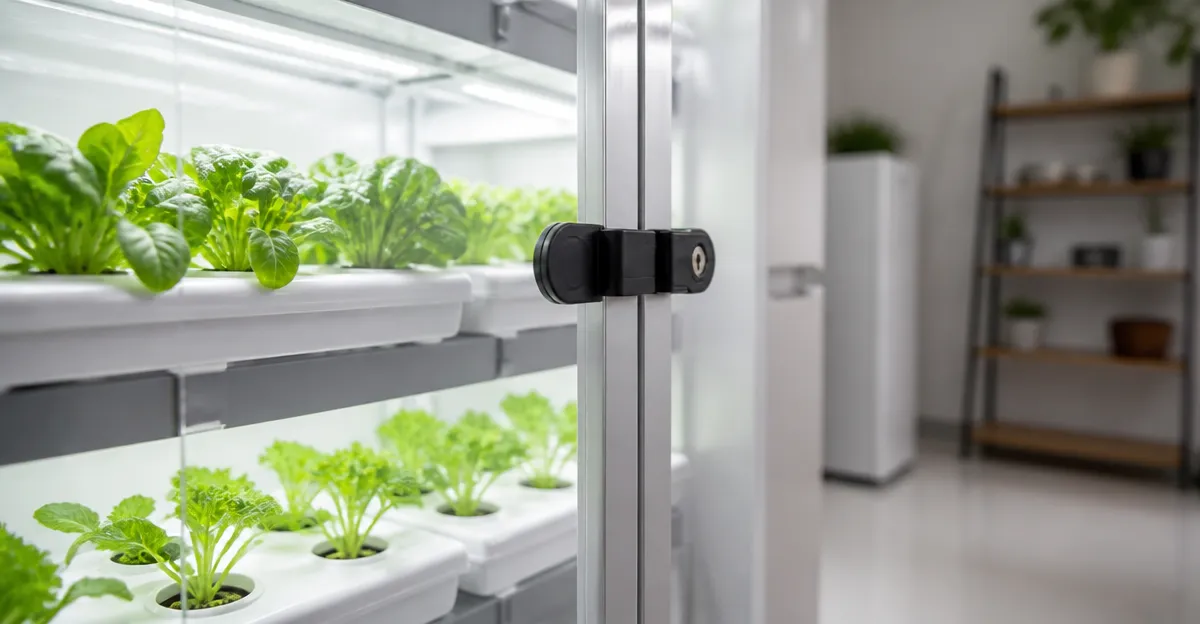
How to Childproof Hydroponic System Locks: Step‑by‑Step DIY Guide to Secure Your Indoor Grow
Introduction
One will learn how to transform a standard indoor hydroponic setup into a child‑proof environment that prevents accidental access to nutrient reservoirs, electrical components, and growing trays. This guide explains why securing these elements is valuable for families with curious toddlers and for growers who wish to maintain consistent system performance. By following the steps, one will protect both children and plants, reduce the risk of spills, and avoid costly damage to equipment. The information presented combines practical safety principles with product recommendations that simplify installation.
What You’ll Need (Optional)
The essential materials include adhesive cabinet locks, a clean cloth, mild cleaning solution, a measuring tape, and a marker for alignment. The following products have been selected for their high ratings, strong adhesive performance, and ease of use:
- Skyla Homes Cabinet Locks
- Infinno Baby Cabinet Locks
- LLOOC Baby Cabinet Locks
- Vmaisi Strap Locks
- Wappa Baby Child Safety Locks
One may also need a screwdriver only if the hydroponic frame includes removable panels that require minor adjustment. All recommended locks are tool‑free, using 3M‑grade adhesive that bonds without drilling.
Step 1: Assess Vulnerable Access Points
The first major step is to identify every opening that could allow a child to reach nutrient solution, power cords, or grow lights. Common vulnerable points include cabinet doors that house nutrient tanks, drawer‑style storage for pH test kits, and the front panel of the reservoir. One should map the layout on a piece of paper, marking each location with a numbered label. This assessment ensures that no critical area is overlooked during installation. By documenting the positions, one can select the appropriate lock size and strap length for each application.
For cabinet doors that store nutrient bottles, Skyla Homes Cabinet Locks are ideal because they feature ABS and TPE latches that open easily for adults but resist toddler force. They are priced at $8.98, have a 4.6‑star rating from 39,823 reviews, and require no screws, which preserves the integrity of the cabinet surface. The strong adhesive holds even in humid grow rooms, making them reliable for hydroponic environments.
Step 2: Clean and Prepare Installation Surfaces
Before applying any adhesive lock, one must ensure that the surface is free of dust, grease, and moisture. Use a lint‑free cloth dampened with a mild cleaning solution, then dry the area completely. This preparation maximizes the bond strength of the 3M adhesive and prevents premature failure. One should allow the surface to air dry for at least two minutes before proceeding. Proper cleaning also reduces the likelihood of residue that could attract mold in a high‑humidity setting.
When securing drawer fronts that hold pH strips, the Infinno Baby Cabinet Locks provide a heavy‑duty hold and are rated 4.6 stars from 663 reviews. Priced at $9.98, they include a premium 3M adhesive that does not damage paint or laminate, a critical factor for preserving the aesthetic of a grow‑room cabinet. Their adjustable strap design accommodates varying drawer depths, ensuring a snug fit.
Step 3: Install Locks on Cabinet Doors and Drawers
With the surfaces cleaned, one can begin the installation process. Peel the protective backing from the adhesive pad, align the lock with the pre‑marked position, and press firmly for 30 seconds to secure the bond. For locks that feature a sliding latch, such as the LLOOC Baby Cabinet Locks, one should ensure the curved side faces the interior to guarantee proper locking action. These locks are priced at $5.98, carry a 4.4‑star rating from 1,324 reviews, and install in under five seconds.
After placement, test the lock by opening and closing the door with one hand; the mechanism should glide smoothly for an adult while resisting a child’s attempt to lift the latch. If the lock feels loose, remove it, clean the area again, and reapply with a fresh adhesive pad. This step guarantees that each lock functions as intended before the system is fully operational.
Step 4: Secure Non‑Cabinet Elements such as Fridge‑Style Reservoirs
Hydroponic systems often incorporate a small refrigerator‑style reservoir to keep nutrient solution cool. To prevent a child from opening this unit, the Vmaisi Strap Locks are an excellent choice. Priced at $8.99 with a 4.4‑star rating from 12,696 reviews, they feature adjustable straps that can wrap around the door frame and a strong adhesive that does not require drilling. The multi‑use design also allows the same lock to secure the trash can or dishwasher, providing flexibility for future grow‑room expansions.
To install, wrap the strap around the reservoir door, press the adhesive pad onto a clean surface, and tighten the strap until it is snug but not overly strained. Over‑tightening can cause the adhesive to fail over time, as noted in user feedback. One should verify that the lock releases easily with a thumb press, ensuring adult accessibility while keeping the reservoir sealed from curious hands.
Step 5: Add Double‑Lock Safety for High‑Risk Areas
For areas that contain electrical panels or high‑voltage power strips, a double‑lock mechanism offers an additional layer of protection. The Wappa Baby Child Safety Locks include an optional double‑lock slide switch that prevents a child from opening the lock even if they manage to depress the primary button. These locks cost $8.99, have a 4.5‑star rating from 4,328 reviews, and feature a 3M peel‑and‑stick adhesive that will not damage finishes.
Install the lock on the power strip housing using the same cleaning and adhesive technique described earlier. Engage the double‑lock by sliding the switch to the locked position; the lock will only open when the switch is returned to the unlocked position and the button is pressed. This configuration is ideal for protecting the grow‑light power supply, which can pose an electrical hazard if tampered with.
Tips & Pro Tips
One should always test each lock after installation by applying a gentle pulling force that mimics a toddler’s grip. If the lock releases, re‑apply with a fresh adhesive pad. Use a level to ensure that straps are horizontal; uneven tension can reduce adhesive longevity. When installing in a high‑humidity zone, consider using a hair dryer on low heat to accelerate adhesive curing, but do not exceed 40°C to avoid damaging the lock material. Finally, keep a spare set of locks on hand for future expansions or replacements.
Troubleshooting
Problem: Adhesive fails after a few weeks.
Solution: Verify that the surface was completely dry and free of residue before application. If the surface is glossy, lightly sand it with fine‑grit sandpaper to create a better bonding surface. Re‑apply the lock using a new adhesive pad.
Problem: Lock is difficult for adults to open.
Solution: Ensure the latch is oriented correctly; many locks have a specific curved side that must face the interior. Adjust the strap tension so it is firm but not overly tight.
Conclusion
One has now learned how to evaluate vulnerable points, prepare surfaces, install a variety of adhesive cabinet locks, and add double‑lock safety to critical components of a hydroponic system. By following the step‑by‑step instructions, one can create a child‑proof grow environment that protects both children and plants, reduces accidental spills, and maintains system efficiency. The recommended products provide reliable, tool‑free solutions that integrate seamlessly with any indoor garden.
Products Mentioned in This Guide
Frequently Asked Questions
Why should I childproof the locks on my indoor hydroponic system?
Childproof locks prevent toddlers from accessing nutrient reservoirs, electrical components, and trays, reducing spill risks and equipment damage.
What type of lock is best for securing hydroponic cabinets?
Adhesive cabinet locks with strong bonding and a key‑or push‑button mechanism, such as Skyla Homes Cabinet Locks, are ideal.
Do I need any tools to install childproof locks on my hydroponic setup?
Only basic tools like a measuring tape, marker, and a clean cloth are required; no power tools are necessary.
How often should I check the lock’s adhesive strength?
Inspect the adhesive monthly, especially after cleaning or exposure to humidity, and reapply if the bond weakens.
Can childproof locks affect the ventilation of my hydroponic system?
No, the locks are surface‑mounted and do not obstruct airflow or nutrient circulation.