Introduction
The transportation of live hydroponic herbs demands a rigorously controlled cold chain to maintain freshness, nutritional value, and marketability. This guide explains the scientific principles behind temperature‑sensitive shipping, outlines the essential components of an effective packaging system, and recommends proven insulated solutions available on Amazon. Readers will learn how to evaluate product specifications, match insulation performance to shipment duration, and implement operational best practices that reduce waste and cost.
By the end of this article, growers, distributors, and logistics managers will be equipped to design a reliable cold‑chain workflow that safeguards delicate herb foliage from wilting, microbial growth, and temperature excursions.
Background and Context
Hydroponic herbs such as basil, cilantro, and mint are harvested at peak moisture content and are highly susceptible to temperature fluctuations above 45 °F (7 °C). Exposure to warm ambient air accelerates transpiration, leading to rapid wilting and loss of volatile essential oils. Consequently, the cold chain must maintain a narrow temperature window, typically between 32 °F (0 °C) and 38 °F (3 °C), from harvest to retail shelf.
Cold‑chain integrity relies on three interrelated factors: insulation material, thermal mass, and external logistics. Insulation reduces heat flow, thermal mass (ice packs, gel packs, or dry ice) absorbs residual heat, and logistics determine exposure time to ambient conditions. When any of these elements is sub‑optimal, temperature excursions occur, compromising product quality.
Regulatory guidelines for perishable plant material often reference the United Nations Recommendations for the Transport of Perishable Foodstuffs, which emphasize continuous temperature monitoring and validated packaging performance. Although these standards are primarily designed for food, they provide a useful benchmark for live herb shipments.
Key Concepts in Cold‑Chain Packaging
Understanding Insulation Performance
Insulation effectiveness is measured by its thermal conductivity (k‑value). Lower k‑values indicate superior resistance to heat flow. Polyurethane foam, as used in the EmmChill Insulated Shipping Cooler, offers a k‑value significantly lower than expanded polystyrene (EPS), resulting in longer temperature retention for the same wall thickness.
Wall thickness also plays a crucial role. A 1.5‑inch wall, common among the products reviewed, provides a balance between structural rigidity and thermal resistance while remaining lightweight enough for air freight.
Reusability and recyclability are additional considerations for sustainable operations. Materials such as the recycled foam used in the Polar Tech 245C Insulated Carton are both lightweight and recyclable, reducing environmental impact.
Selecting Thermal Mass
Thermal mass can be supplied by gel packs, dry ice, or phase‑change materials. Dry ice provides temperatures well below freezing but requires compliance with airline regulations. Gel packs, when frozen, maintain temperatures near 0 °C for up to 24 hours, making them suitable for most domestic shipments.
When using dry ice, it is essential to calculate the required mass based on shipment volume, ambient temperature, and transit time. A rule of thumb is 5 lb of dry ice per cubic foot of insulated volume for a 24‑hour journey.
Gel packs should be arranged to fill voids and surround the herb containers uniformly, eliminating air pockets that could act as thermal bridges.
Packaging Configuration for Live Herbs
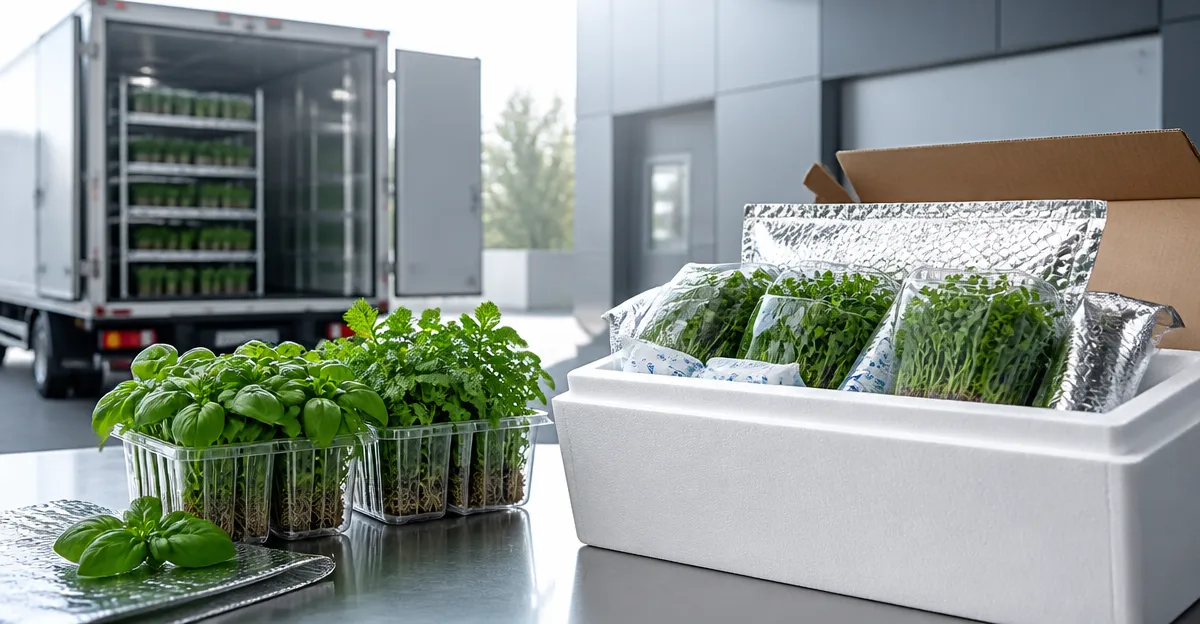
Live herbs should be packed in breathable containers that prevent condensation buildup, which can promote fungal growth. A common approach is to place herbs in perforated plastic clamshells, then nest these within the insulated carton. The outer insulated box protects against external heat, while the inner breathable container maintains humidity equilibrium.
For shipments exceeding 48 hours, consider adding a secondary insulated liner such as the EcoMax™ Thermal‑Paper Liners included with the IDL Packaging Insulated Shipping Box. The paper‑based liner absorbs moisture and extends cold retention without introducing plastic waste.
Finally, secure the package with tamper‑evident tape and label it clearly with handling instructions, including “Keep Refrigerated” and “Do Not Freeze” where appropriate.
Product Recommendations for Hydroponic Herb Shipping
Below are five insulated packaging solutions that have demonstrated reliable performance in real‑world cold‑chain applications. Each product is linked on first mention, and key specifications are highlighted.
- Polar Tech 245C Insulated Carton – Medium size (17" × 10" × 8.25"). Wall thickness 1.5 in, rating 4.6/5 from 1,316 reviews, price $30.00. Ideal for small‑batch herb shipments up to 12 hours with gel packs.
- Polar Tech 227C Insulated Carton – Larger footprint (15.5" × 13.75" × 10.5"). Rating 4.7/5 from 1,463 reviews, price $48.56. Suitable for medium‑scale growers needing 24‑hour protection.
- EmmChill Insulated Shipping Cooler – Cube design (17" × 17" × 17" exterior). Polyurethane foam, rating 4.5/5 from 124 reviews, price $58.99. Provides superior thermal resistance for longer hauls.
- IDL Packaging Insulated Shipping Box – 14" × 14" × 14" outer dimensions, includes EcoMax™ paper liners, rating 4.2/5 from 163 reviews, price $35.56. Best for environmentally conscious operations.
- Convivium Insulated Shipping Boxes (2 Pack) – Compact sizes (up to 12" × 5.5" × 7.5"), rating 4.4/5 from 19 reviews, price $19.95. Excellent for boutique growers shipping small herb kits.
Comparison and Selection Guide
| Product | External Size | Wall Thickness | Insulation Material | Price | Rating | Best Use Case |
|---|---|---|---|---|---|---|
| Polar Tech 245C | 17" × 10" × 8.25" | 1.5 in | Recycled Foam | $30.00 | 4.6 | Short‑haul (≤12 h) small herb batches |
| Polar Tech 227C | 15.5" × 13.75" × 10.5" | 1.5 in | Recycled Foam | $48.56 | 4.7 | Medium‑scale shipments up to 24 h |
| EmmChill Cooler | 17" × 17" × 17" | 1.5 in | Polyurethane Foam | $58.99 | 4.5 | Long‑haul (≥48 h) high‑value herb lots |
| IDL Packaging Box | 14" × 14" × 14" | 1.5 in | Paper‑based Liners | $35.56 | 4.2 | Sustainable packaging for moderate durations |
| Convivium 2‑Pack | 12" × 5.5" × 7.5" (max) | Varies | Kraft Paper + Foil | $19.95 | 4.4 | Small boutique orders, hot or cold foods |
When selecting a product, prioritize the following decision matrix: (1) shipment volume, (2) required duration, (3) environmental sustainability goals, and (4) budget constraints. For example, a grower shipping 30 lb of basil to a regional market within 18 hours should consider the Polar Tech 227C for its larger interior and proven 24‑hour performance.
Best Practices & Tips for Maintaining Herb Freshness
- Pre‑cool herbs to 32 °F (0 °C) before packing to reduce the thermal load on insulation.
- Use frozen gel packs that match the interior dimensions of the insulated box to eliminate air gaps.
- Place a breathable, perforated tray inside the insulated carton to allow moisture to escape while preventing condensation on leaf surfaces.
- Seal the outer carton with high‑quality tape and apply temperature indicator labels that change color if the temperature exceeds 45 °F (7 °C).
- Coordinate with carriers to minimize dwell time in non‑refrigerated sorting facilities; request “cold‑chain handling” when possible.
- Document the temperature profile using a data logger for quality assurance and regulatory compliance.
- For international shipments, verify airline dry‑ice regulations and consider using a secondary insulated liner for added protection.
Implementing these practices alongside a suitable insulated container dramatically improves the likelihood that live hydroponic herbs arrive in optimal condition, preserving both market value and consumer satisfaction.
Frequently Asked Questions
- How long can a standard insulated carton keep herbs frozen without dry ice?
- With frozen gel packs, a 1.5‑inch foam wall typically maintains temperatures below 38 °F (3 °C) for 12‑24 hours depending on ambient conditions.
- Is reusable foam packaging environmentally safe?
- Products such as the Polar Tech 245C Insulated Carton are manufactured from recyclable foam and can be reclaimed through specialized recycling programs.
- Can I ship live herbs using dry ice in a passenger aircraft?
- Yes, but airlines limit the quantity of dry ice to 5 kg per passenger and require proper labeling; consult carrier guidelines before booking.
- What is the advantage of paper‑based liners over plastic foam?
- Paper liners, like those in the IDL Packaging Insulated Shipping Box, absorb moisture, reduce condensation, and are fully biodegradable, aligning with sustainability goals.
- How should I handle temperature excursions during transit?
- Immediately assess product condition upon arrival, document the deviation, and if the herbs are still viable, re‑cool them in a controlled environment; otherwise, discard to avoid food safety risks.
Conclusion
Cold‑chain packaging for live hydroponic herbs integrates scientific understanding of temperature dynamics with practical product selection and operational discipline. By choosing an insulated container that matches shipment size and duration, employing appropriate thermal mass, and following best‑practice handling procedures, growers can reliably deliver fresh, high‑quality herbs to distant markets.
Investing in proven solutions such as the EmmChill Insulated Shipping Cooler or the sustainable IDL Packaging Insulated Shipping Box ensures that temperature excursions are minimized, waste is reduced, and customer satisfaction is maximized.
Products Featured in This Guide
Polar Tech 245C Insulated Carton
Price: $30.00 | Rating: 4.6/5 (1,316 reviews)
Featured for its lightweight, recyclable foam construction and 1.5‑inch wall thickness, making it ideal for short‑haul herb shipments.
Polar Tech 227C Insulated Carton
Price: $48.56 | Rating: 4.7/5 (1,463 reviews)
Featured for its larger interior volume and proven performance in 24‑hour cold‑chain scenarios.
EmmChill Insulated Shipping Cooler
Price: $58.99 | Rating: 4.5/5 (124 reviews)
Featured for its polyurethane foam core, which delivers superior insulation for long‑duration shipments.
IDL Packaging Insulated Shipping Box
Price: $35.56 | Rating: 4.2/5 (163 reviews)
Featured for its eco‑friendly paper‑based thermal liners that absorb moisture and extend cold retention.
Convivium Insulated Shipping Boxes (2 Pack)
Price: $19.95 | Rating: 4.4/5 (19 reviews)
Featured for its compact size options and affordability, perfect for boutique herb kit shipments.