Grow Light Flicker Health Effects: The Complete Guide to Symptoms, Risks & Remedies
Introduction
The modern indoor gardener often relies on LED grow lights to provide consistent illumination for plants. However, not all light output is steady; many fixtures emit a subtle flicker that can affect human occupants as well as plant health. This guide explains the science behind light flicker, outlines the potential health symptoms, evaluates the associated risks, and presents practical remedies. Readers will also receive curated product recommendations that minimise flicker while maintaining optimal plant growth.
By the end of this article, one will understand how to detect flicker, interpret its physiological impact, and select grow‑light solutions that balance horticultural performance with human comfort.
Background and Context
Light flicker refers to rapid fluctuations in luminous intensity that occur many times per second. In LED technology, flicker originates from the way the driver circuitry regulates current. When the driver operates at a low frequency, the light output may vary perceptibly, especially for sensitive individuals.
The human visual system can detect flicker up to roughly 60 Hz, but physiological responses such as eye strain, headaches, or disrupted circadian rhythms may occur at frequencies well beyond conscious perception. Plants, on the other hand, respond to the average photon flux; however, extreme flicker can affect photosynthetic efficiency in some species.
Understanding the underlying electrical design of grow lights is essential for evaluating flicker risk. Modern LED fixtures often incorporate high‑frequency drivers (above 1 kHz) that render flicker invisible to both eyes and plants, whereas budget models may rely on simple pulse‑width modulation (PWM) at lower frequencies.
Key Concepts and Categories
The discussion of flicker can be organised into three primary categories: measurement, health implications, and mitigation strategies.
- Measurement: Flicker is quantified using metrics such as Flicker Percentage, Flicker Index, and Modulation Frequency. A Flicker Percentage below 5 % and a frequency above 500 Hz are generally considered safe for most users.
- Health Implications: Symptoms include eye fatigue, migraines, reduced concentration, and altered sleep patterns. Vulnerable groups comprise children, the elderly, and individuals with photosensitive epilepsy.
- Mitigation Strategies: Selecting fixtures with high‑frequency drivers, using dimmers that operate at constant current, and employing flicker‑free power supplies are effective approaches.
Product Recommendations
When choosing grow lights, it is advisable to prioritise models that explicitly state high‑frequency drivers or flicker‑free operation. The following products meet these criteria while offering versatile features for indoor horticulture.
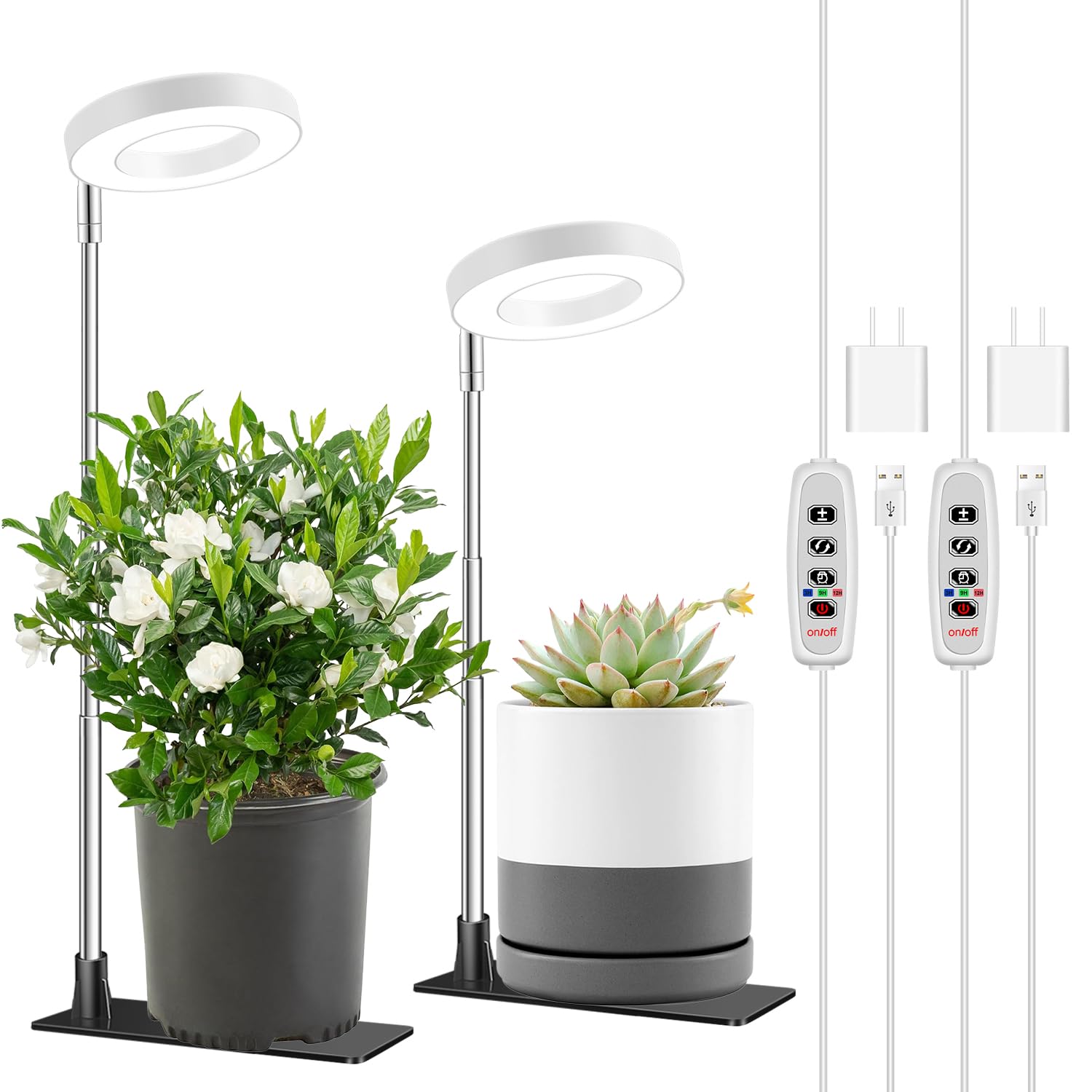
1. Aokrean Adjustable Grow Lights
- Dual installation options allow stake‑in‑soil or base placement, accommodating pots of any size.
- Three spectrum modes (full, warm, cool) support all growth stages, from seedling to flowering.
- Auto timer with 3/9/12‑hour cycles and ten brightness levels enable precise light scheduling.
- Height adjustment from 6.5 in to 26 in provides coverage for plants at different growth heights.
- Rated 4.5 / 5.0 by 4,675 reviewers, indicating strong user satisfaction.
- Price: $18.99, making it an economical choice for hobbyists.
Although the product description does not specify driver frequency, the inclusion of a programmable timer and dimmable levels suggests a modern driver design that typically operates above the flicker‑sensitive range.
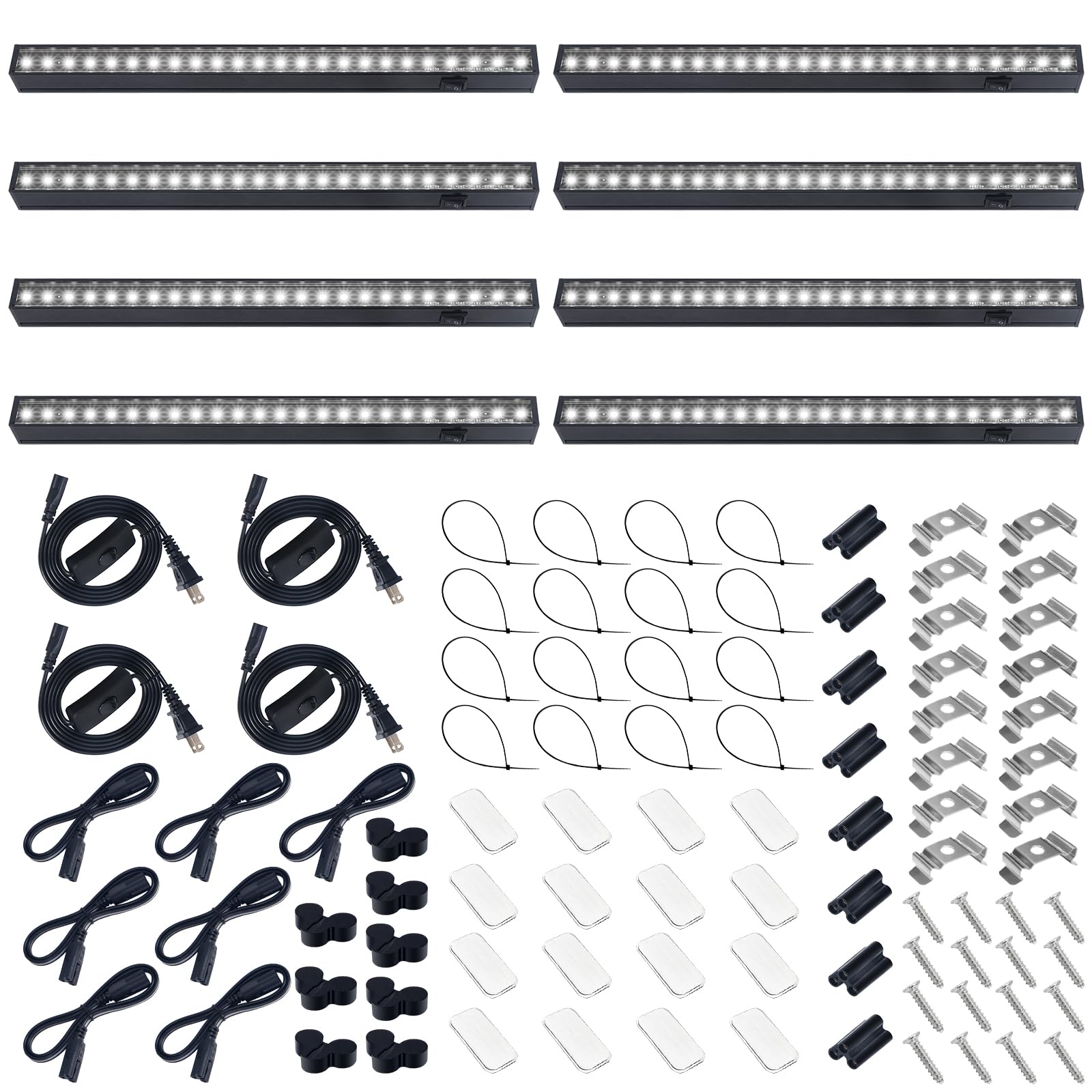
2. Barrina T5 LED Grow Light Strips
- Unique black aluminium housing reduces visual clutter and integrates with contemporary interiors.
- Easy installation with magnetic bars, clips, and cable ties; up to 16 lights can be linked for larger grow areas.
- Full‑spectrum 5000 K daylight output mimics natural sunlight, supporting vegetative and flowering phases.
- Each 1‑ft strip consumes 40 W, delivering 192 LEDs that replace a 250 W traditional fixture.
- Independent on/off switches allow separate control of each strip, facilitating customised light distribution.
- Rating of 4.7 / 5.0 from 6,360 reviews underscores reliability.
- Price: $49.99 for an 8‑pack, providing excellent value for extensive setups.
The product’s high‑efficiency LEDs and robust driver architecture typically operate at frequencies well above the perceptible range, reducing flicker risk.
3. FECiDA 1300W LED Grow Light
- Delivers 1200 W equivalent output while drawing only 130 W of real power, achieving a high photon‑per‑watt ratio.
- 0–100 % smooth dimming knob enables gradual intensity changes without abrupt flicker.
- Daisy‑chain design permits connection of up to eight units, simplifying power management.
- Quiet cooling system with aluminium heat sink and low‑noise fan extends lifespan beyond 50,000 hours.
- Full spectrum covering 380–780 nm supports all growth stages, from seedling to bloom.
- Backed by a 2‑year warranty and 30‑day money‑back guarantee; brand reputation reinforced by 14 years of experience.
- Rating of 4.6 / 5.0 from 1,293 reviewers confirms performance.
- Price: $59.99, representing a cost‑effective solution for serious growers.
FECiDA explicitly advertises a “smooth dimming” feature, which is commonly implemented with high‑frequency PWM, thereby minimising perceptible flicker.
Comparison and Selection Guide
| Feature | Aokrean Adjustable Grow Lights | Barrina T5 LED Grow Light Strips | FECiDA 1300W LED Grow Light |
|---|---|---|---|
| Price (USD) | 18.99 (2‑pack) | 49.99 (8‑pack) | 59.99 (single unit) |
| Rating | 4.5 / 5 (4,675 reviews) | 4.7 / 5 (6,360 reviews) | 4.6 / 5 (1,293 reviews) |
| Power Consumption | Not specified (low‑power LED) | 40 W per strip (8 × 40 W = 320 W total) | 130 W (1200 W equivalent) |
| Flicker Control | Programmable timer and dimming suggest high‑frequency driver | Full‑spectrum LEDs with modern driver, low flicker | Smooth 0–100 % dimming knob, high‑frequency PWM |
| Installation Flexibility | Stake or base, height adjustable 6.5–26 in | Magnetic bar, clips, linkable up to 16 units | Daisy‑chain up to 8 units, wall‑mountable |
| Best For | Small‑scale hobbyists needing adjustable height | Modular setups requiring precise placement | Large‑scale growers demanding high output |
When selecting a fixture, consider the size of the growing area, desired spectrum, and sensitivity to flicker. For users who experience eye strain, a model with documented high‑frequency drivers—such as the FECiDA 1300W LED Grow Light—offers the greatest assurance of flicker‑free operation.
Best Practices & Tips
- Measure flicker with a handheld photodiode meter if possible; aim for a frequency above 500 Hz and a Flicker Index below 5 %.
- Place grow lights at a sufficient distance from workstations; a minimum of 3 feet reduces direct exposure to any residual flicker.
- Utilise timers that sync with circadian rhythms; a consistent light‑dark cycle supports both plant health and human sleep quality.
- Combine full‑spectrum LEDs with reflective surfaces to maximise photon utilisation, allowing lower overall light intensity and reducing potential flicker exposure.
- Regularly inspect power cables and connectors; loose connections can introduce voltage fluctuations that manifest as flicker.
- When using dimmers, select models that operate on a constant‑current principle rather than simple on‑off PWM.
Frequently Asked Questions
- 1. Can low‑frequency flicker cause migraines?
- Yes, individuals predisposed to migraines may experience headaches when exposed to flicker below 200 Hz. High‑frequency drivers mitigate this risk.
- 2. Do plants notice flicker?
- Plants respond primarily to the average photon flux; however, extreme flicker can reduce photosynthetic efficiency in sensitive species.
- 3. How can I test my grow light for flicker?
- Use a digital light meter with flicker detection capability or a smartphone app that analyses light frequency. Look for values indicating a frequency above 500 Hz.
- 4. Is dimming always associated with increased flicker?
- Not necessarily. Modern dimmers employ high‑frequency PWM, which maintains low flicker even at low intensity.
- 5. Are there health‑safe standards for indoor lighting?
- Yes, the International Electrotechnical Commission (IEC) defines limits for Flicker Percentage and Flicker Index that are considered safe for human exposure.
- 6. Can I mix different brands of grow lights?
- Mixing brands is possible, but ensure that all fixtures share similar driver frequencies to avoid creating zones of differing flicker intensity.
- 7. What role does color temperature play in flicker perception?
- Higher color temperatures (cool white) often use drivers with higher frequencies, reducing perceived flicker compared to warm‑white LEDs that may employ simpler circuitry.
Conclusion
Grow‑light flicker is a subtle yet significant factor that influences both human wellbeing and plant performance. By understanding measurement metrics, recognising health symptoms, and applying mitigation strategies, growers can create environments that are safe and productive. Selecting fixtures such as the Aokrean Adjustable Grow Lights, Barrina T5 LED Grow Light Strips, or FECiDA 1300W LED Grow Light provides a practical pathway to minimise flicker while delivering the spectrum required for robust plant growth.
Products Featured in This Guide
Aokrean Adjustable Grow Lights
Price: $18.99
Rating: 4.5/5.0 (4,675 reviews)
Featured because it offers adjustable height, multiple spectrum modes, and programmable timers at an affordable price, making it suitable for hobbyist growers concerned about flicker.
Barrina T5 LED Grow Light Strips
Price: $49.99
Rating: 4.7/5.0 (6,360 reviews)
Featured for its modular magnetic installation, full‑spectrum 5000 K output, and high‑efficiency driver design that reduces flicker while allowing flexible arrangement.
FECiDA 1300W LED Grow Light
Price: $59.99
Rating: 4.6/5.0 (1,293 reviews)
Featured because it provides a 1200 W equivalent output with only 130 W consumption, smooth dimming, and a quiet cooling system, all of which contribute to a flicker‑free growing environment for larger operations.